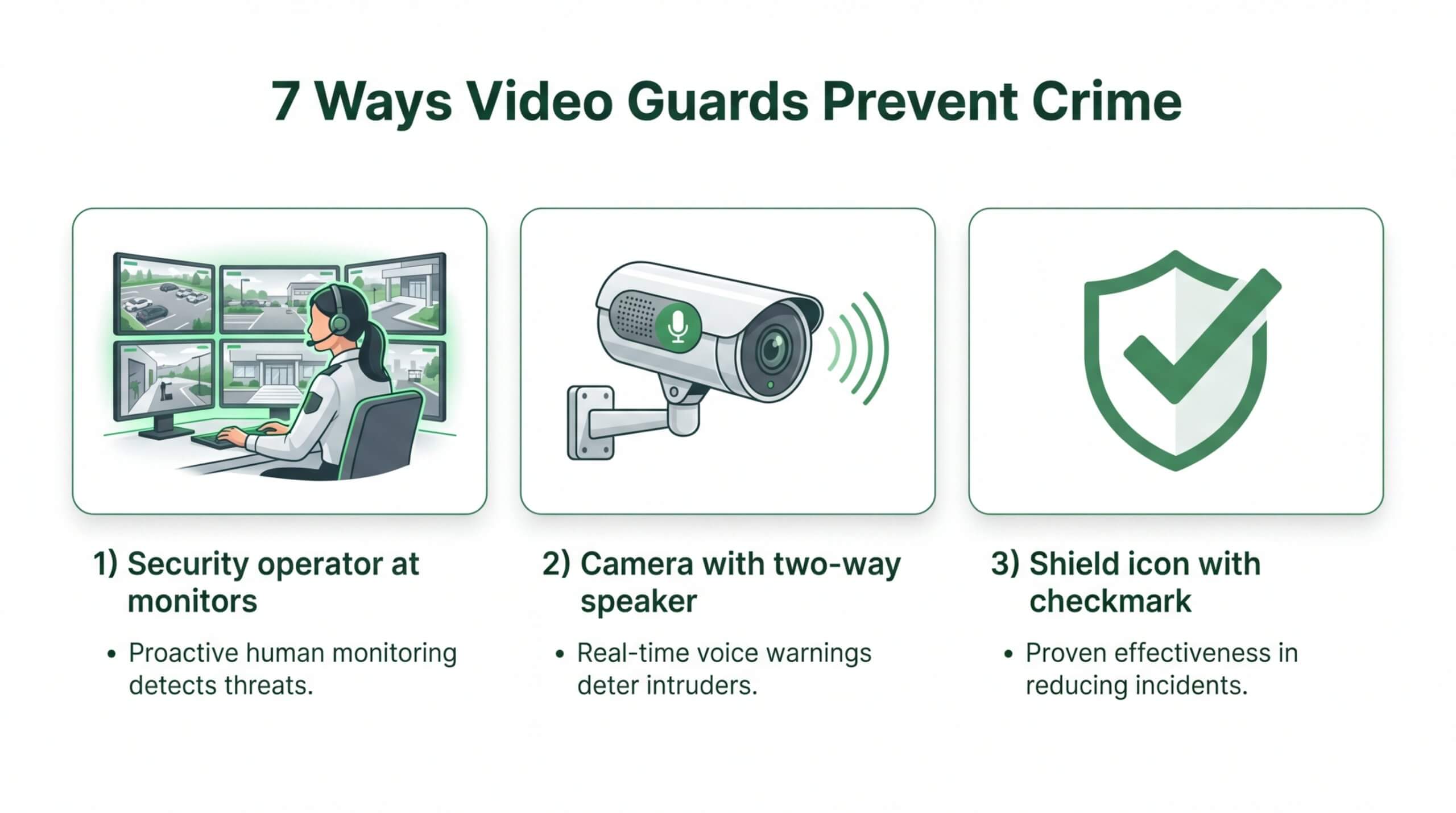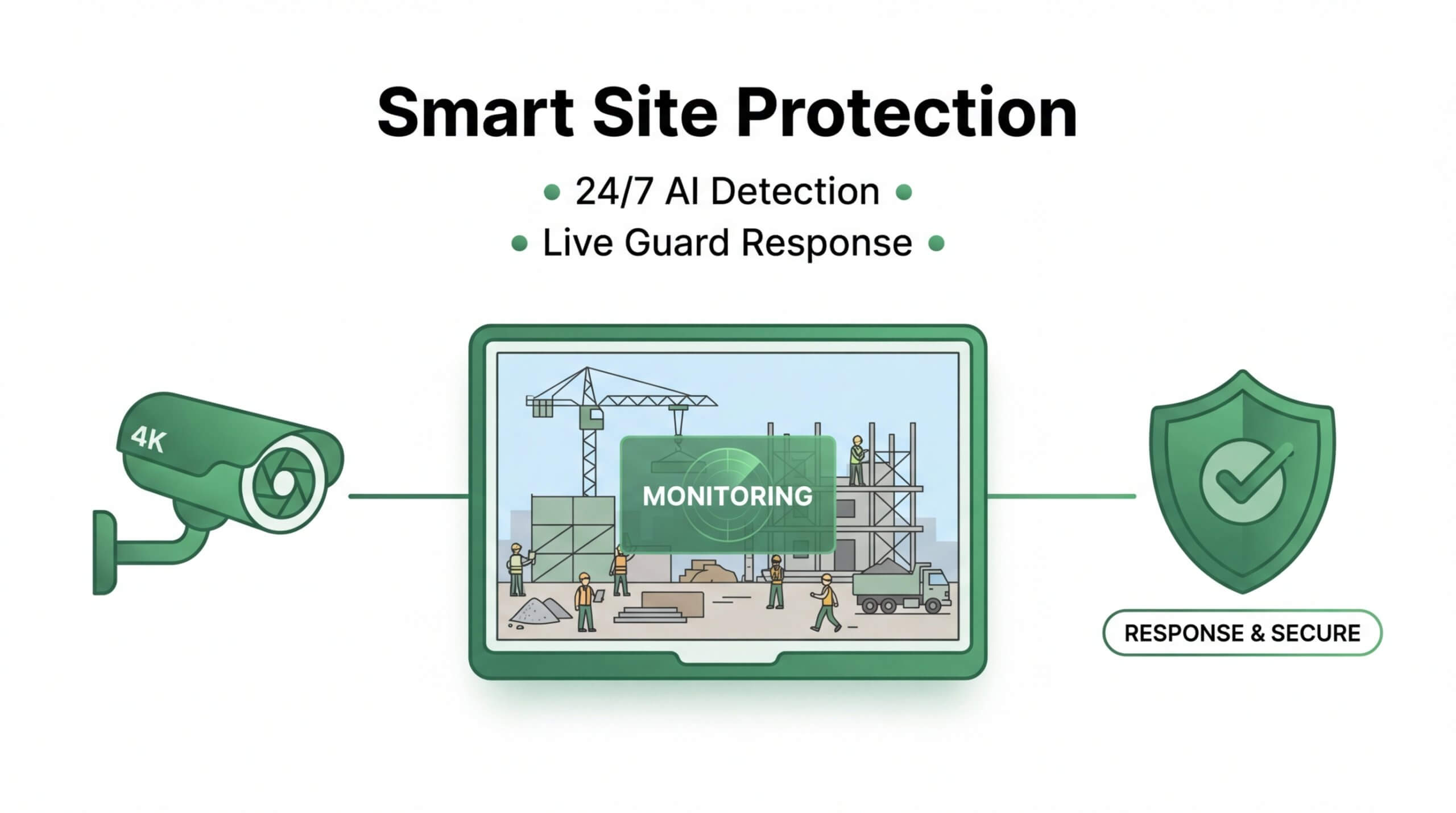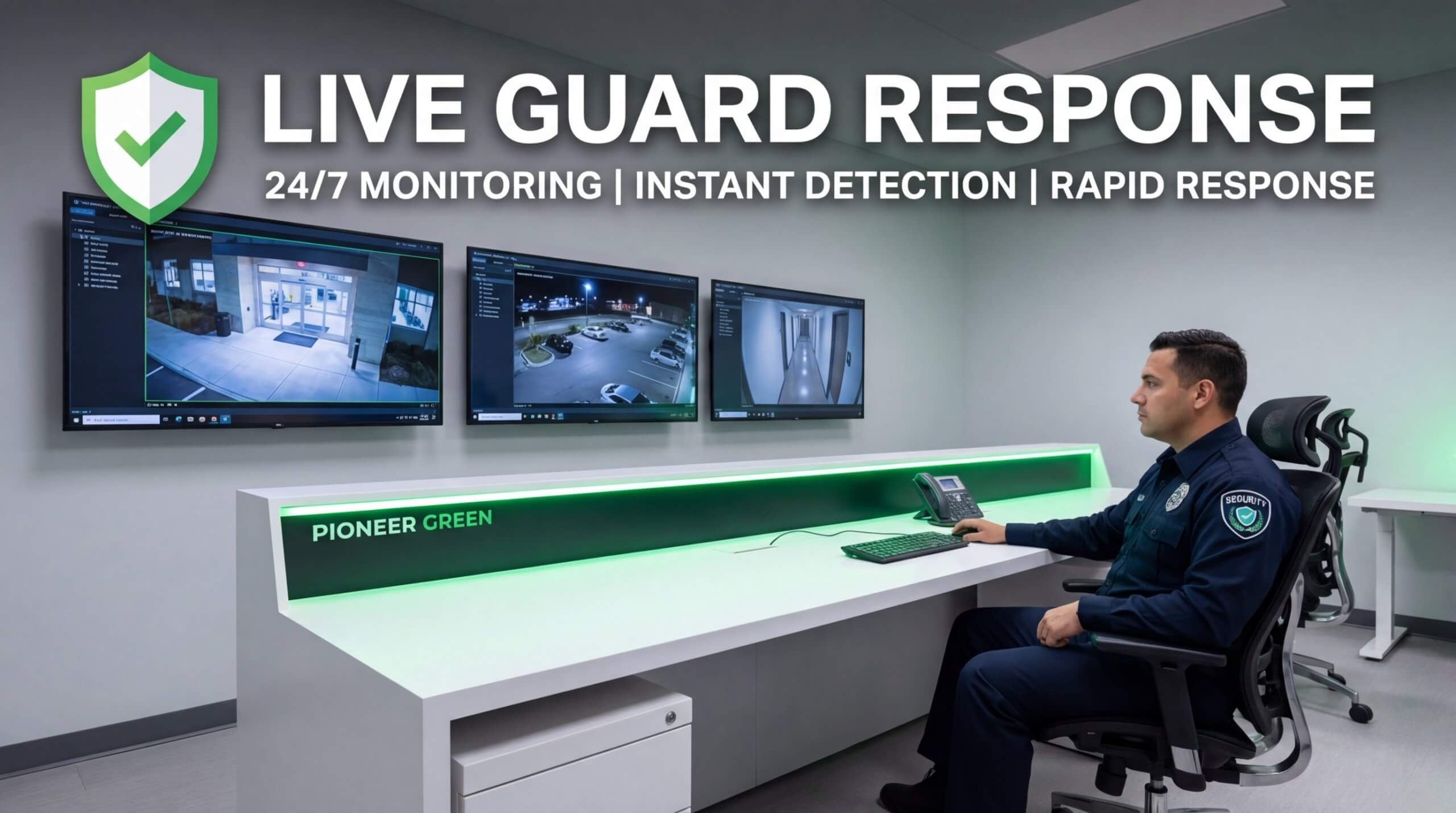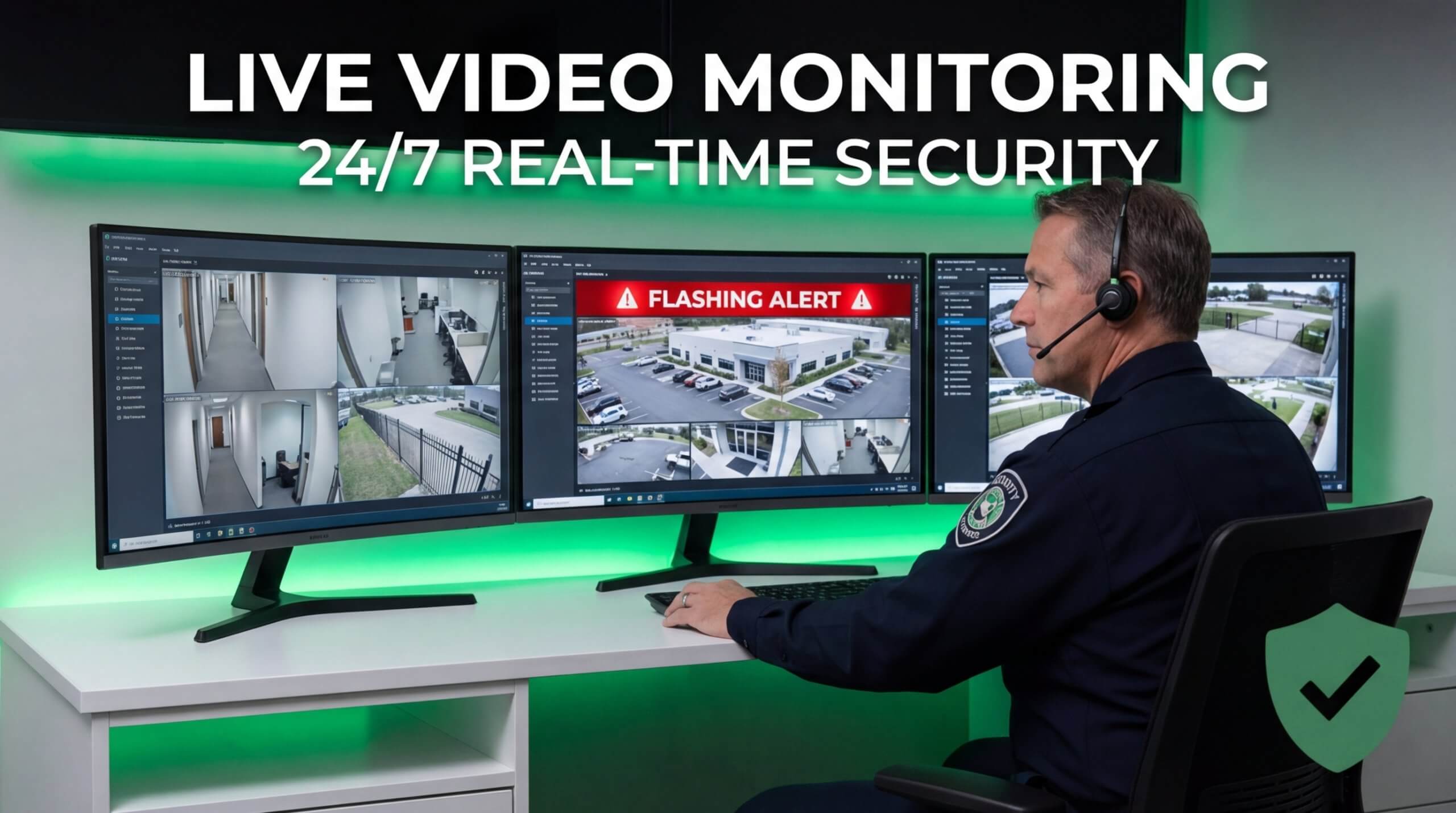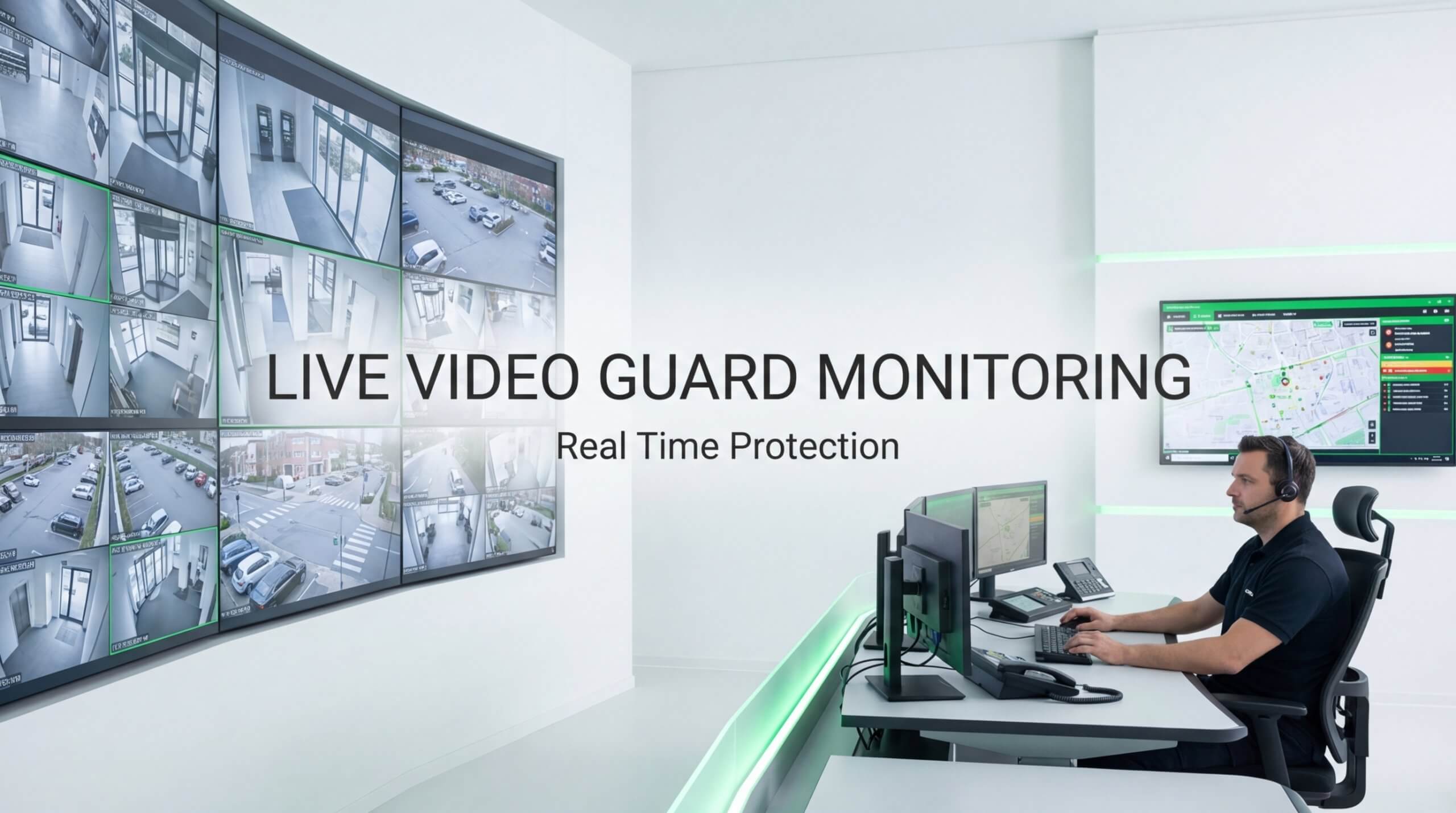
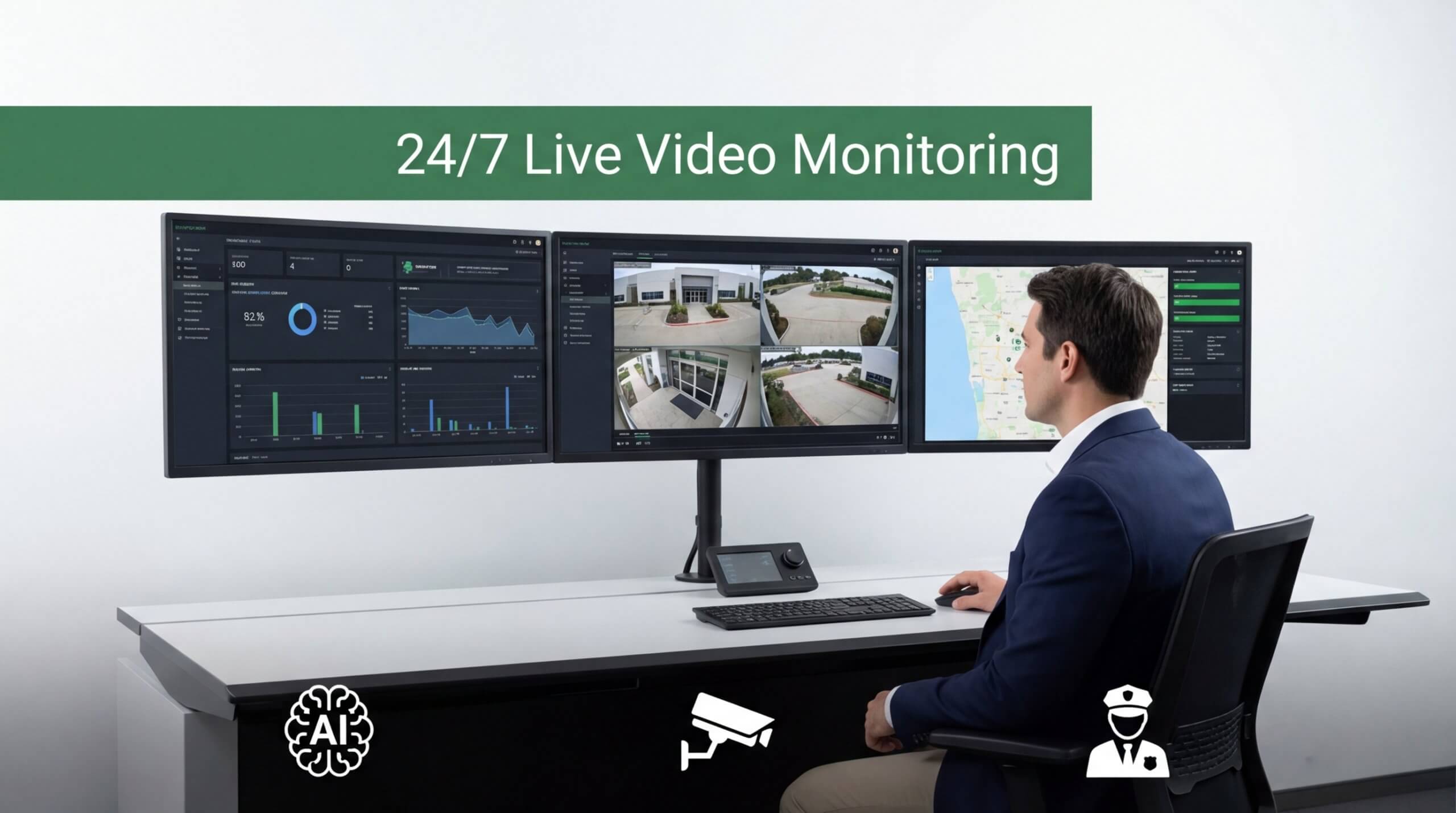
Live video guard monitoring is a security approach that pairs AI-powered cameras with trained remote operators who watch property feeds in real time, intervening through two-way audio and law enforcement dispatch to stop threats before damage occurs.
This guide covers how live video guards work, which industries and property types gain the most from this technology, how it compares to traditional security methods, and how Pioneer Security delivers proactive protection.
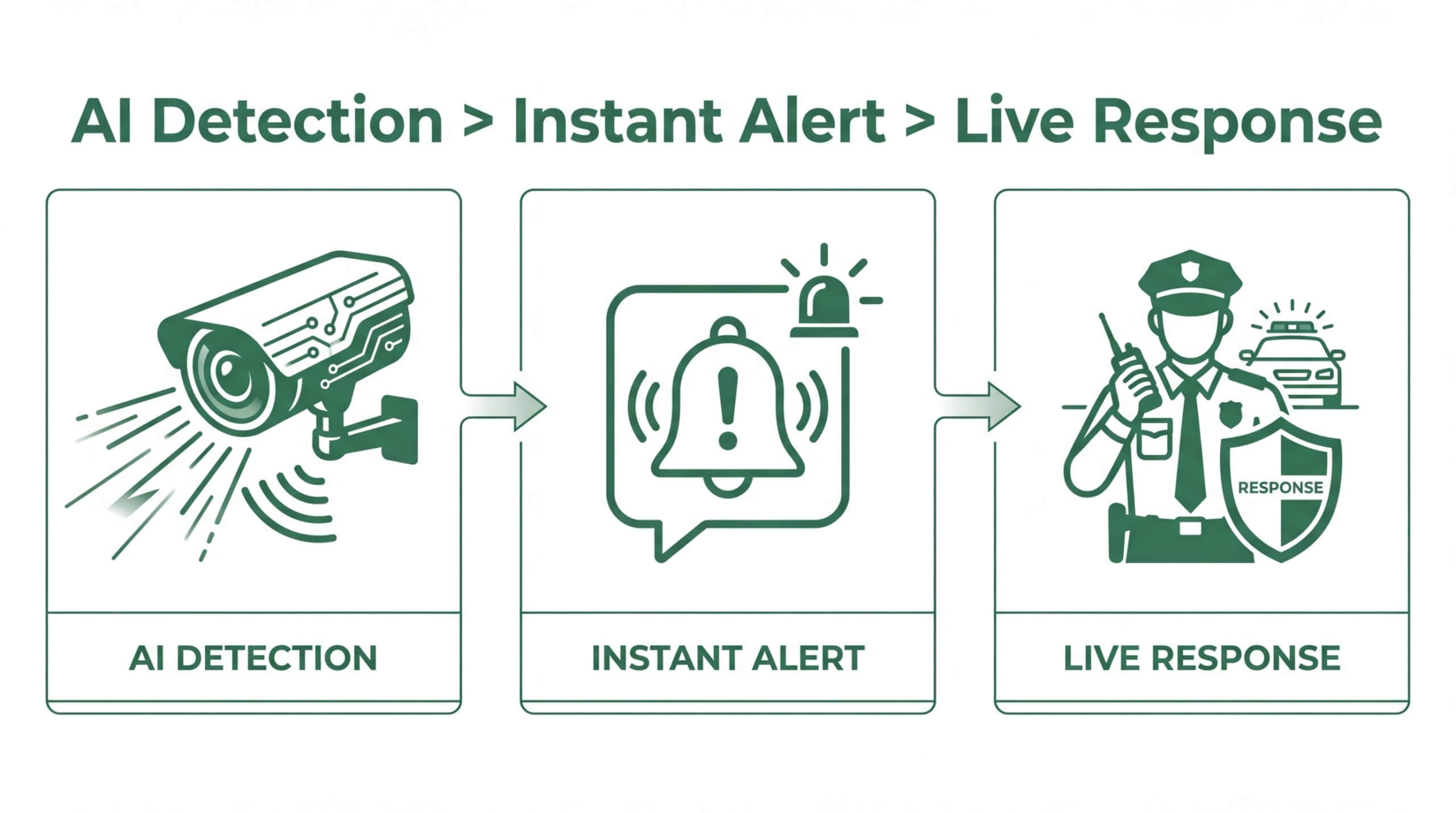
Live video guards operate through a layered system where AI detection handles speed and volume while human operators provide judgment and accountability. Intelligent sensors flag anomalies like perimeter breaches or loitering, and a trained guard verifies the threat visually before responding with audio warnings, sirens, or police dispatch.
The range of properties that benefit spans auto dealerships, construction sites, warehouses, retail stores, healthcare facilities, schools, and parking structures, among others. Small businesses gain enterprise-level protection at a fraction of on-site guard costs, while large corporations scale centralized monitoring across dozens of locations simultaneously. Homeowners receive proactive exterior surveillance that passive alarm systems simply cannot replicate.
Properties with high-value inventory, large perimeters, or extended vacancy periods see the strongest return on investment because preventing even one major incident can offset an entire year of monitoring costs. High liability exposure adds another layer of urgency, as verified footage from live guards strengthens legal defenses and can reduce insurance premiums over time.
Compared to on-site officers, unmonitored cameras, and standard alarm systems, live video guards consistently deliver broader coverage, faster verified response, and significantly lower operating costs.
What Are Live Video Guards and How Do They Work?
Live video guards are trained security professionals who monitor property camera feeds in real time from a remote command center. They combine AI-powered detection with human judgment and two-way audio intervention to stop threats before damage occurs.
How Does AI-Powered Detection Trigger Live Guard Response?
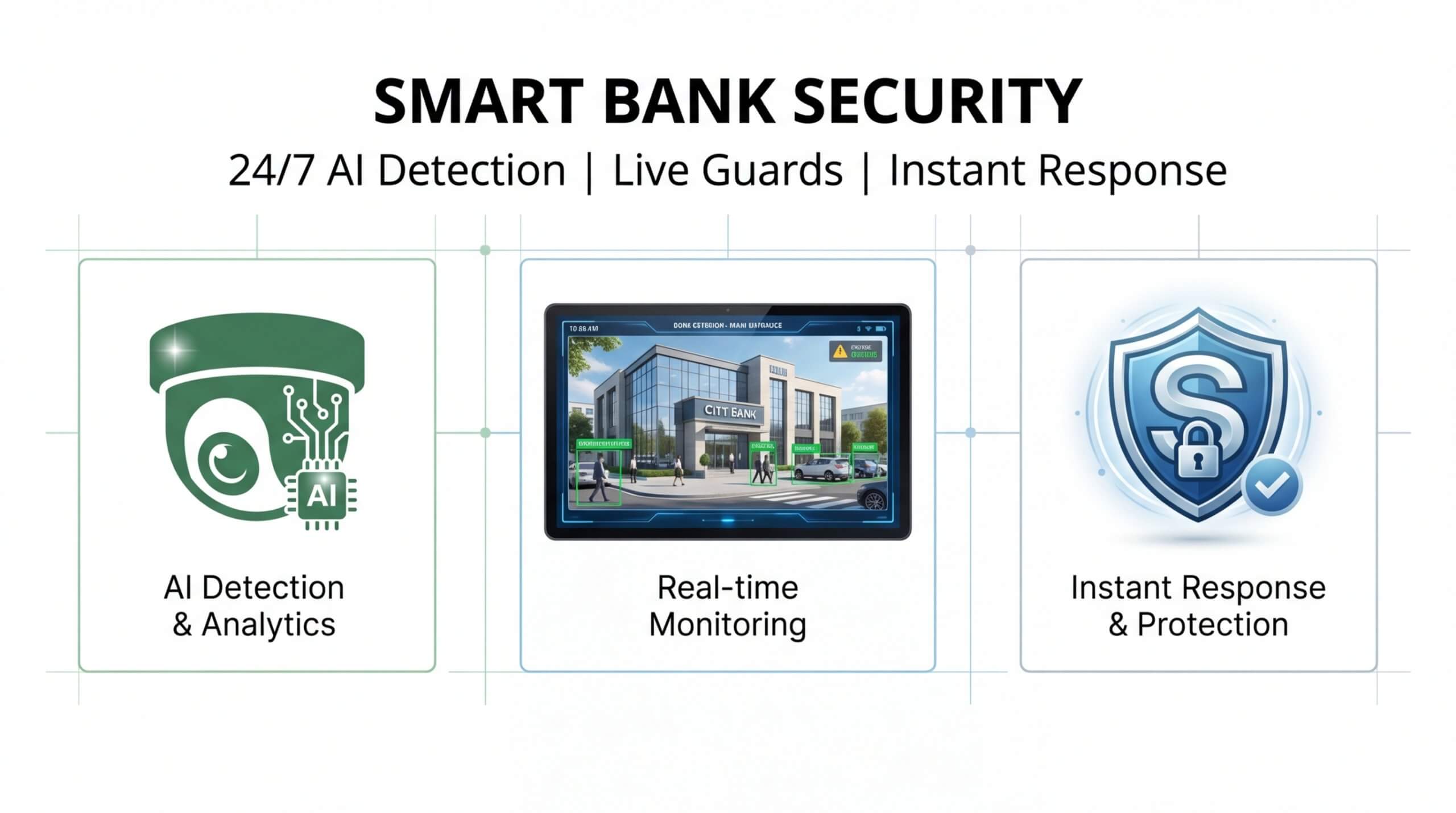
AI-powered detection triggers live guard response by using intelligent cameras and sensors to analyze video feeds continuously, identifying anomalies such as unauthorized movement, perimeter breaches, or loitering behavior. When the system flags a credible event, it instantly alerts a live video guard at the monitoring center.
The guard then verifies the threat visually and decides on the appropriate action, whether that involves issuing a verbal warning through on-site speakers, activating deterrents like sirens and strobes, or dispatching law enforcement. According to Defencify Training, “AI cameras and sensors work together to provide real-time detection and alerts, improving response times and ensuring guards react to credible threats rather than false alarms.”
This layered approach matters because AI alone cannot interpret context the way a trained professional can. The technology handles volume and speed; the human guard provides judgment and accountability.
What Role Does Two-Way Audio Play in Deterring Intruders?
Two-way audio plays a critical role in deterring intruders by enabling live video guards to communicate directly with trespassers through on-site camera speakers in real time. A security camera with two-way audio contains both a microphone and a speaker, allowing the remote monitoring agent to hear what is happening on-site and respond verbally without delay.
When a guard identifies suspicious activity, they issue a direct verbal warning, such as announcing that the individual is being recorded and that authorities have been contacted. This real-time human interaction creates an immediate psychological deterrent that passive cameras and silent alarms cannot replicate. Most intruders flee once they realize a live person is watching and speaking to them.
For property owners evaluating security options, two-way audio transforms cameras from passive recording devices into active intervention tools, bridging the gap between detection and deterrence.
Which Industries Benefit Most from Live Video Guard Monitoring?
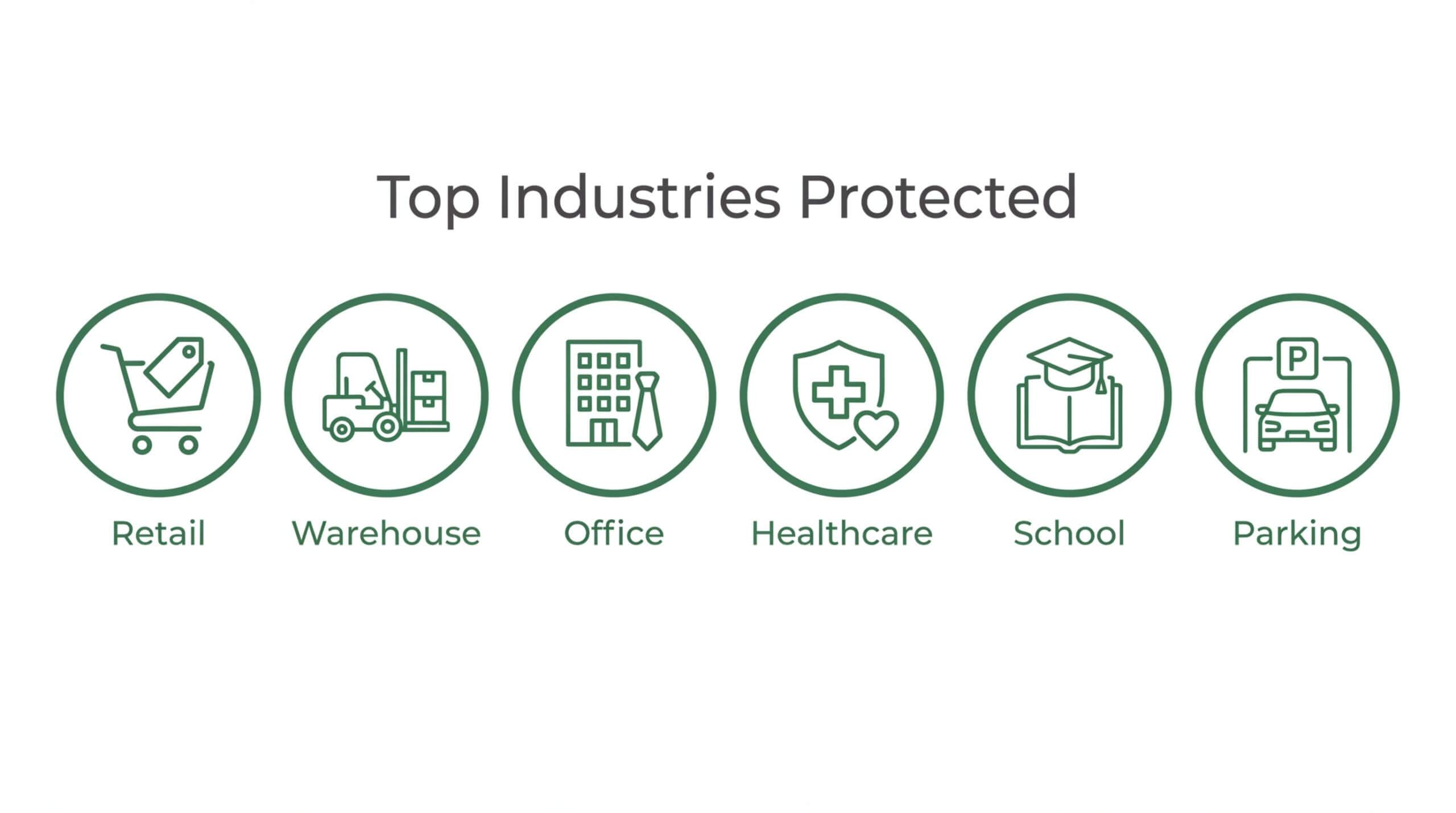
The industries that benefit most from live video guard monitoring include auto dealerships, construction sites, warehouses, retail stores, office buildings, healthcare facilities, schools, houses of worship, self-storage facilities, and parking structures.
Auto Dealerships
Auto dealerships benefit from live video guard monitoring because large outdoor lots filled with high-value inventory create prime targets for theft and vandalism. Vehicles, catalytic converters, and parts stored across open perimeters are difficult to protect with static cameras alone. Live video guards detect suspicious activity in real time, issuing two-way audio warnings before criminals can act. According to the National Insurance Crime Bureau, nationwide motor vehicle thefts decreased by 17% from 2023 to 2024 as security measures intensified. Despite this decline, dealerships remain high-risk due to after-hours vulnerability windows when no staff is present. Proactive monitoring fills that gap far more cost-effectively than overnight on-site guards.
Construction Sites
Construction sites benefit from live video guard monitoring because they face extreme theft exposure with limited physical barriers. National losses from equipment theft on construction sites exceed $1 billion annually, according to Mobile Video Guard, with organized crime rings now using RFID scanners to disable GPS tracking and drones for nighttime reconnaissance. Recovery rates for stolen equipment drop to less than 7% for single-item thefts, and theft adds an estimated 1 to 5% to overall project costs. These numbers make prevention far more valuable than recovery. Live video guards monitoring temporary perimeters can identify unauthorized entry and intervene before heavy machinery or materials disappear from the site.
Warehouses and Distribution Centers
Warehouses and distribution centers benefit from live video guard monitoring because they manage high-value cargo across large, often dimly lit facilities with multiple entry points. According to the U.S. Chamber of Commerce, cargo theft incidents in the second quarter of 2025 increased by 13% over 2024, following record-high reported thefts the previous year. Loading docks, overnight shift changes, and perimeter blind spots create consistent vulnerabilities. Live video guards provide continuous oversight of these weak points, verifying deliveries, flagging unauthorized access, and coordinating with on-site teams when anomalies occur.
Retail Stores and Shopping Centers
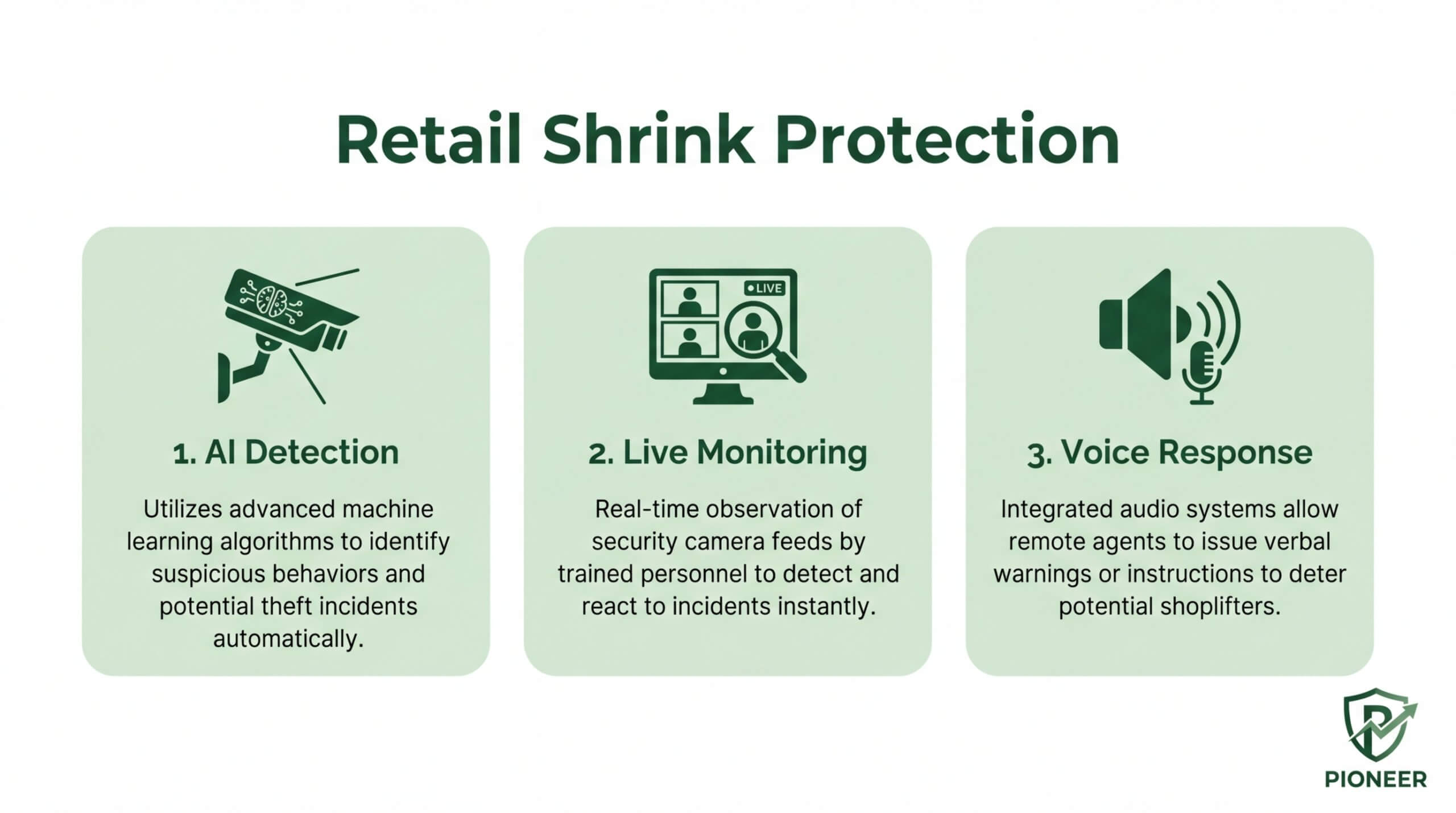
Retail stores and shopping centers benefit from live video guard monitoring because rising theft and violence demand real-time intervention. The National Retail Federation reported an 18% increase in the average number of shoplifting incidents per year in 2024 versus 2023, while threats or acts of violence during these events increased by 17%. Parking lots, back entrances, and after-hours storefronts are particularly vulnerable. Live video guards can issue audio warnings to deter shoplifters and loiterers, verify alarms before dispatching police, and monitor multiple store locations simultaneously. For shopping centers with sprawling footprints, this scalability is essential.
Office Buildings and Corporate Campuses
Office buildings and corporate campuses benefit from live video guard monitoring because they require access control across lobbies, parking garages, and restricted floors during both business and after-hours periods. Unauthorized entry, tailgating through secured doors, and vandalism in parking areas represent persistent concerns. Live video guards verify visitor credentials remotely, monitor stairwells and emergency exits, and respond to unusual activity without the cost of staffing multiple guard posts. Corporate campuses with multiple buildings particularly benefit, since a single monitoring team can oversee an entire property from a centralized station.
Healthcare Facilities
Healthcare facilities benefit from live video guard monitoring because they face unique security challenges, including emergency room violence, pharmacy theft, and patient elopement. Hospitals and clinics operate around the clock with open public access points that are difficult to secure. Live video guards monitor entrances, restricted medication storage areas, and parking structures in real time. The ability to intervene through two-way audio or immediately alert on-site security teams helps de-escalate volatile situations before they become dangerous. For facilities balancing patient privacy with safety, remote monitoring offers oversight without intrusive physical presence.
Schools and Educational Institutions
Schools and educational institutions benefit from live video guard monitoring because campus safety requires vigilance across large grounds with multiple buildings. According to the National Center for Education Statistics, approximately 93% of public schools in the United States now utilize security cameras as part of their safety protocols. Live video guards transform these cameras from passive recording devices into active deterrence tools. Monitoring agents can identify unauthorized visitors, detect perimeter breaches after hours, and coordinate lockdown procedures during emergencies. For districts managing tight budgets, centralized monitoring across multiple school sites delivers broader coverage than placing guards at every location.
Houses of Worship
Houses of worship benefit from live video guard monitoring because they are open, welcoming spaces that face growing security concerns. Churches, synagogues, mosques, and temples often lack dedicated security staff and have irregular occupancy schedules, creating vulnerable windows. Live video guards provide discreet, continuous oversight of parking lots, entrances, and gathering areas without disrupting the atmosphere of the space. Two-way audio allows monitoring agents to address trespassers or suspicious individuals during off-hours. This approach respects the community-oriented nature of these properties while delivering meaningful protection.
Self-Storage Facilities
Self-storage facilities benefit from live video guard monitoring because they operate with minimal on-site staff while housing tenants’ valuable belongings across dozens or hundreds of units. Gate access, hallway corridors, and perimeter fencing all require continuous observation. Live video guards verify access credentials, detect tailgating through gates, and respond to after-hours break-in attempts with immediate audio warnings and police dispatch. Since most self-storage crimes occur during evening and overnight hours, remote monitoring provides consistent protection without the expense of staffing a guard around the clock.
Parking Structures and Garages
Parking structures and garages benefit from live video guard monitoring because their multi-level, low-visibility environments create ideal conditions for vehicle theft, break-ins, and personal safety incidents. Stairwells, elevators, and dimly lit corners are difficult to patrol effectively with on-site guards alone. Live video guards monitor every level simultaneously, using two-way audio to warn off suspicious individuals and guide emergency responders to exact locations. For property managers, this level of coverage reduces liability exposure while maintaining a safer environment for tenants, employees, and visitors throughout the day and night.
How Do Small Businesses Benefit from Live Video Guards?
Small businesses benefit from live video guards through lower security costs, real-time theft deterrence, and continuous after-hours protection. The following sections cover how live monitoring cuts losses, compares in cost to on-site guards, and secures locations overnight.
How Does Live Monitoring Reduce Theft and Vandalism Costs?
Live monitoring reduces theft and vandalism costs by detecting suspicious activity in real time and triggering immediate intervention before damage occurs. Rather than reviewing footage after a break-in, live video guards identify threats as they develop and respond with audio warnings, strobe lights, or police dispatch.
This proactive approach eliminates the costly cycle of reactive security, where businesses discover losses only the next morning. According to a 2026 SiteOwl physical security outlook, edge computing now allows security systems to handle AI analytics on-site, reducing bandwidth costs by sending only metadata or critical alerts to central monitoring hubs. For small businesses operating on tight margins, preventing even one incident per quarter can offset the entire cost of a monitoring service.
Can Small Businesses Afford Live Video Guards Over On-Site Security?
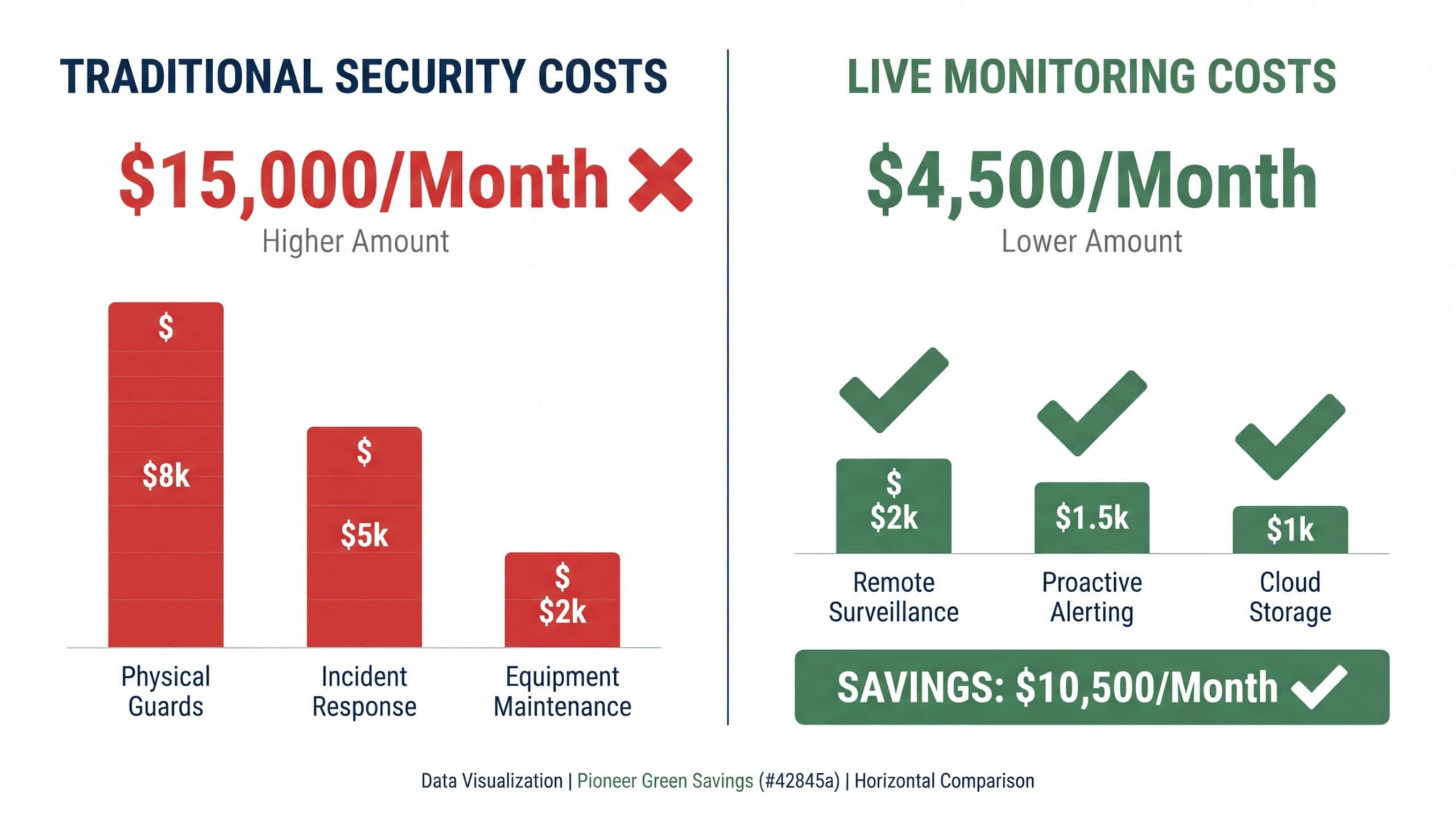
Yes, small businesses can afford live video guards over on-site security. Remote video monitoring costs significantly less than staffing a physical guard, which often runs between $15,000 and $25,000 per month per location.
Live video monitoring combines real-time video feeds with continuous human or AI-powered observation, intervening through two-way audio and escalating to authorities when needed. Cameras equipped with microphones and speakers enable direct communication between the monitoring agent and anyone on-site, replacing the need for a physical presence during most hours.
According to ResearchGate research on dynamic AI portfolio governance, enterprises with mature, unified AI governance frameworks achieve 30% higher realized ROI compared to those with fragmented security infrastructure. Small businesses that consolidate their cameras, sensors, and monitoring into a single platform see the greatest return per dollar spent.
How Does After-Hours Monitoring Protect Small Business Locations?
After-hours monitoring protects small business locations by maintaining continuous surveillance during the overnight hours when properties are unoccupied and most vulnerable. Without staff on-site, break-ins, vandalism, and unauthorized access often go undetected until the next business day.
Live video guards watch camera feeds throughout the night, responding instantly to motion alerts or perimeter breaches. If someone approaches a locked facility, the monitoring agent can issue a verbal warning through two-way audio or activate sirens and strobe lights to deter entry. When a verified threat is confirmed, operators dispatch law enforcement directly, ensuring faster police response than a standard alarm.
For small businesses without the budget for 24/7 on-site guards, after-hours live monitoring fills the most critical security gap at a fraction of the cost.
How Do Large Corporations Benefit from Live Video Guards?
Large corporations benefit from live video guards through scalable, centralized monitoring that covers multiple sites simultaneously. The sections below explain how live monitoring scales across corporate locations and how virtual guards support existing security teams.
How Does Live Monitoring Scale Across Multiple Corporate Sites?
Live monitoring scales across multiple corporate sites by connecting all locations to a centralized command hub where trained operators oversee every feed in real time. Instead of staffing each facility independently, corporations unify camera networks from offices, warehouses, and campuses under one monitoring platform.
According to a 2024 ResearchGate study on dynamic AI portfolio governance, enterprises with mature, unified AI governance frameworks across multi-site operations achieve a 30% higher realized ROI compared to those with fragmented security infrastructure.
Edge computing further improves scalability. On-site AI analytics process video locally and transmit only critical alerts to the central hub, reducing bandwidth costs. For corporations managing dozens of properties, this architecture delivers consistent coverage without proportionally increasing headcount or operational expense.
How Do Live Video Guards Support Existing Corporate Security Teams?
Live video guards support existing corporate security teams by serving as a force multiplier, not a replacement. On-site officers handle physical patrols, access control, and direct engagement, while remote operators provide continuous visual coverage that fills surveillance gaps between rounds.
This layered approach means AI-powered cameras flag anomalies, such as unauthorized after-hours access or perimeter breaches, and virtual guards verify the threat before alerting the on-site team. Officers respond only to confirmed incidents, which reduces wasted effort on false alarms and keeps personnel focused on credible security events.
For large corporations with complex security operations, combining physical and virtual guard resources creates a more resilient defense structure than either approach achieves alone. With scalability addressed, homeowners also stand to gain from this same monitoring technology.
How Do Homeowners Benefit from Live Video Guard Monitoring?
Homeowners benefit from live video guard monitoring through real-time threat detection, immediate human intervention, and proactive crime prevention that passive systems cannot deliver. The following sections explain how live monitoring differs from standard alarms and when homes face the greatest risk.
How Does Live Monitoring Protect Homes Differently Than Alarm Systems?
Live monitoring protects homes differently than alarm systems by combining continuous human observation with instant intervention, rather than simply triggering alerts after a breach occurs. Traditional alarm systems detect an event, send a signal to a monitoring center, and wait for verification before dispatching help. That delay creates a window where damage, theft, or harm can escalate unchecked.
Live video guards watch camera feeds in real time, identify suspicious behavior as it develops, and issue two-way audio warnings before an intruder reaches a door or window. This proactive approach stops incidents during the attempt phase. According to BOS Security, properties utilizing remote video monitoring systems experience a 50% reduction in criminal incidents within their first year of implementation.
For homeowners, that distinction matters most at the moment of crisis. An alarm tells you something happened; a live guard works to ensure it never fully unfolds.
When Are Residential Properties Most Vulnerable Without Live Guards?
Residential properties are most vulnerable without live guards during predictable low-activity windows when no one is watching. According to FBI data reported by Safe and Sound Security, approximately 28.2% of residential burglaries occur during daylight hours, while nighttime incidents account for 21.8% of cases. This means vulnerability is not limited to darkness; daytime hours when residents are at work or away carry significant risk.
Properties without live monitoring face several high-risk scenarios:
- Extended vacations leave homes unoccupied with no active observer to detect early intrusion signs.
- Overnight hours between 2:00 and 5:00 AM see minimal neighborhood activity, giving intruders longer operational windows.
- Weekday mornings create routine absence patterns that experienced criminals study and exploit.
Passive cameras record evidence but cannot intervene. A live video guard fills that gap by maintaining constant situational awareness during every vulnerability window. Understanding these risk periods helps homeowners see why continuous monitoring outperforms set-and-forget security solutions.
What Types of Properties See the Highest ROI from Live Monitoring?
Properties with high-value inventory, remote or unoccupied locations, and large perimeters see the highest ROI from live monitoring. Each property type faces distinct vulnerabilities that live video guards address more cost-effectively than traditional security.
How Do High-Value Inventory Sites Benefit from Live Video Guards?
High-value inventory sites benefit from live video guards through real-time threat detection during peak vulnerability windows, particularly after hours when staff are absent. Auto dealerships, warehouses storing electronics, and construction sites with expensive equipment face concentrated theft risk that passive cameras alone cannot prevent.
Live guards verify threats instantly and intervene through two-way audio before losses occur. Recovery rates for stolen construction equipment drop below 7%, according to Building Security, making prevention far more valuable than post-theft investigation. For sites where a single incident can cost tens of thousands of dollars, the ROI calculation favors proactive monitoring heavily. Eliminating even one major theft event per year can offset the entire annual monitoring cost.
How Do Remote or Unoccupied Properties Benefit from Live Monitoring?
Remote or unoccupied properties benefit from live monitoring by maintaining continuous security presence without the prohibitive cost of stationing on-site guards at locations with no regular staff. Vacant commercial buildings, seasonal properties, and development sites under construction often sit unattended for extended periods, creating easy targets.
According to Magellanic Cloud, remote video monitoring can deliver up to 90% cost savings compared to traditional security guards. For properties generating no active revenue during vacancy, this cost reduction is critical to justifying any security investment at all. Live monitoring agents detect unauthorized access, trespassing, and environmental hazards like water intrusion or fire, protecting both the asset and the owner’s liability exposure.
How Do Properties with Large Perimeters Benefit from Live Guards?
Properties with large perimeters benefit from live guards by replacing the need for multiple roving patrols with strategically positioned cameras monitored in real time. Sprawling sites like solar farms, logistics yards, and industrial complexes have too many access points for on-site officers to cover simultaneously.
Live video guards monitor the entire perimeter from a centralized station, detecting breaches at fence lines, gates, and blind spots that physical patrols would reach only intermittently. AI-powered detection flags movement across wide zones, and guards respond with audio warnings or law enforcement dispatch within seconds. This layered coverage model delivers stronger deterrence per dollar than adding patrol officers, especially across multi-acre properties where response gaps create exploitable windows.
With ROI factors identified by property type, understanding liability risks reveals another critical reason properties invest in live monitoring.
Why Do Properties with High Liability Risks Need Live Video Guards?
Properties with high liability risks need live video guards because real-time surveillance creates a verified record of incidents, deters negligent behavior, and reduces the financial exposure that drives costly claims. The escalating scale of liability losses makes proactive monitoring essential for risk mitigation.
Liability costs are climbing at an alarming rate. According to a 2025 Carrier Management report, the median casualty loss amount exceeding $1 million jumped more than 70 percent to over $5 million in the past decade, underscoring the volatility property owners face. When an incident occurs on an unmonitored property, the absence of verified footage weakens legal defenses and inflates settlement demands.
Live video guards address this exposure directly. Continuous monitoring with two-way audio intervention documents exactly what happened, when it happened, and how the property responded. This verified evidence strengthens defense in slip-and-fall lawsuits, workplace injury claims, and trespasser liability disputes. Insurance carriers increasingly favor properties that demonstrate proactive risk management, which can translate into lower premiums over time.
For property managers overseeing sites with heavy foot traffic, hazardous conditions, or public access, the combination of deterrence and documentation is difficult to replicate with passive cameras alone. A recorded incident without real-time intervention still leaves the property owner vulnerable to claims of negligence. Live guards close that gap by proving the property took reasonable steps to prevent harm.
Understanding liability protection through live monitoring leads naturally into how this technology compares against traditional security approaches.
How Does Live Video Guard Monitoring Compare to Traditional Security?
Live video guard monitoring compares to traditional security by offering continuous remote surveillance with real-time intervention at a fraction of the cost. The sections below compare live video guards against on-site officers, unmonitored cameras, and standard alarm monitoring.
How Do Live Video Guards Compare to On-Site Security Officers?
Live video guards compare to on-site security officers by providing simultaneous multi-camera coverage across an entire property, while a single on-site officer can only patrol one area at a time. On-site guards cost between $15,000 and $25,000 per month per location, and 24/7 coverage can reach $438,000 annually. Remote video monitoring delivers up to 90% cost savings compared to traditional security guards, according to a Magellanic Cloud analysis, by building a unified e-surveillance ecosystem that eliminates shift gaps, sick days, and human fatigue.
On-site officers still serve a purpose for properties requiring physical access control or hands-on emergency response. For most perimeter security needs, though, live video guards deliver broader coverage at a lower cost, making them the stronger default for budget-conscious property owners.
How Do Live Video Guards Compare to Unmonitored Camera Systems?
Live video guards compare to unmonitored camera systems by adding real-time human observation and active intervention to what would otherwise be passive recording equipment. Unmonitored cameras capture footage for review after an incident has already occurred; they do not prevent the crime itself. According to a Pye-Barker Fire & Security report, proactive video monitoring in residential areas produced a 12% reduction in crime compared to control areas without such systems.
The difference is response capability. When a live video guard detects suspicious activity, they can activate sirens, issue two-way audio warnings, and dispatch law enforcement within seconds. An unmonitored camera simply records. For any property where prevention matters more than post-incident evidence, live monitoring is the clear upgrade.
How Do Live Video Guards Compare to Standard Alarm Monitoring?
Live video guards compare to standard alarm monitoring by verifying threats visually before triggering a response, rather than relying solely on sensor activation. Standard alarm systems detect breaches through door contacts, motion sensors, or glass-break detectors, then send an alert to a central station for dispatcher evaluation. This process often generates false alarms, which slow police response and erode law enforcement prioritization over time.
Live video guards confirm whether an alarm event involves an actual threat by viewing real-time camera feeds. Verified alarms receive faster police dispatch because officers know the threat is genuine. This visual confirmation layer also eliminates costly false alarm fines that accumulate with sensor-only systems. For properties needing reliable, rapid emergency response, combining alarm sensors with live video verification produces the most effective security outcome.
What Security Challenges Do Live Video Guards Solve Best?
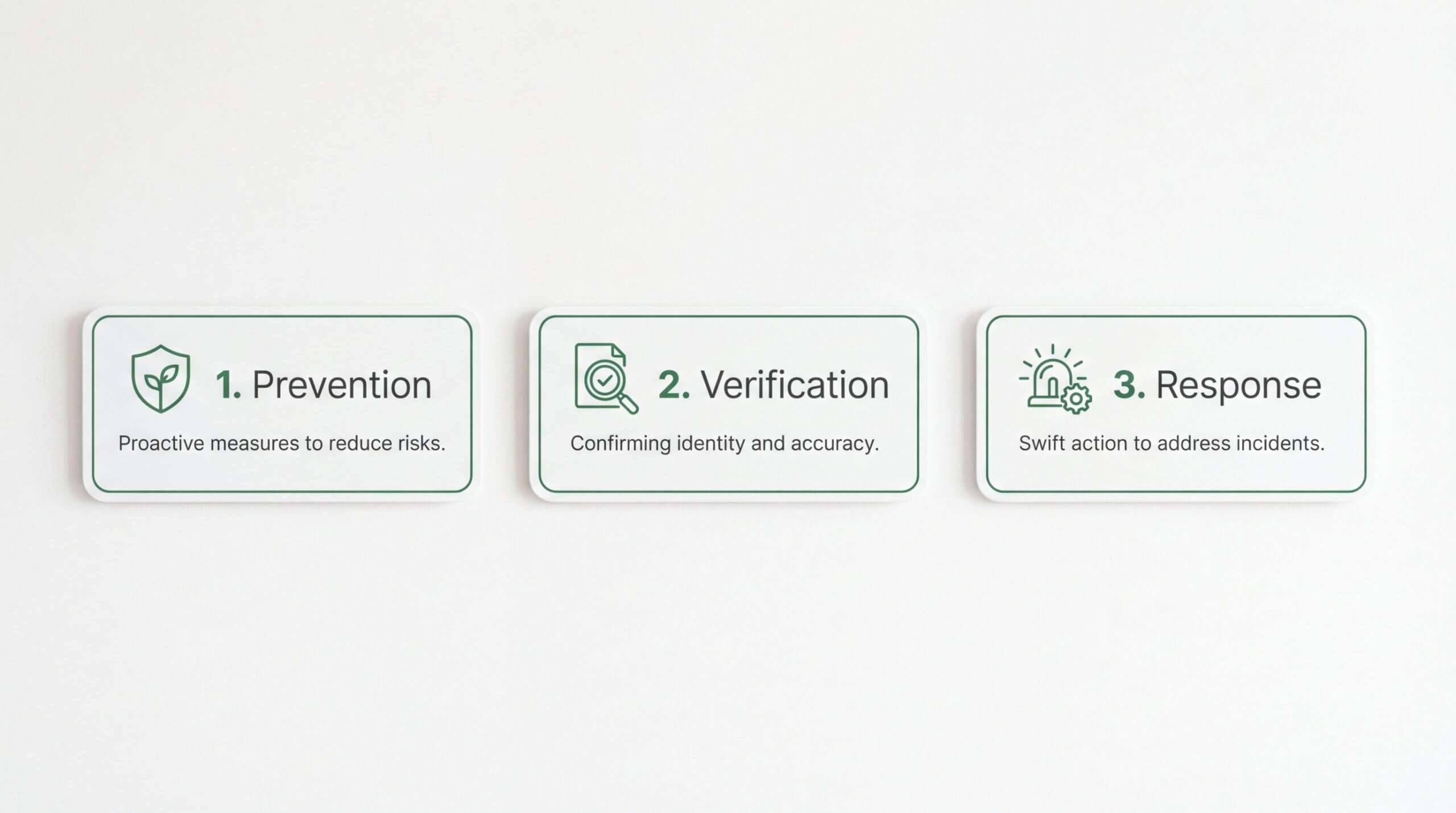
Live video guards solve security challenges that passive systems and delayed responses cannot address. The three most critical problems they resolve are crime prevention before incidents occur, false alarm cost reduction, and faster emergency response times.
How Do Live Video Guards Prevent Crimes Before They Happen?
Live video guards prevent crimes before they happen by combining AI-powered detection with real-time human intervention. When sensors identify suspicious behavior, such as loitering, perimeter breaches, or unauthorized vehicle activity, a live operator immediately assesses the threat and responds through two-way audio warnings, strobe activation, or police dispatch.
This proactive approach shifts security from documenting crimes to stopping them. According to Pye-Barker Fire & Security, proactive video monitoring in residential areas has produced a 12% reduction in crime compared to unmonitored control areas. That gap widens significantly for commercial properties with high-value assets, where deterrence at the earliest stage of criminal reconnaissance eliminates the opportunity entirely. Reactive-only systems, by contrast, capture evidence after the damage is done.
How Do Live Video Guards Reduce False Alarm Costs?
Live video guards reduce false alarm costs by visually verifying every alert before dispatching police. Traditional alarm systems trigger automatic responses to motion sensors, environmental shifts, and wildlife activity, generating costly false dispatches that strain municipal resources and result in fines for property owners.
With live video verification, a trained operator reviews the camera feed within seconds of an alert and determines whether the threat is real. Only confirmed incidents escalate to law enforcement. This verification step eliminates the vast majority of unnecessary dispatches. For properties running multiple alarm zones, the savings compound quickly. Verified alarms also receive priority police response in most jurisdictions, which makes the real emergencies more effective to resolve.
How Do Live Video Guards Improve Emergency Response Times?
Live video guards improve emergency response times by providing law enforcement with verified, real-time incident details at the moment of dispatch. Instead of responding to an unverified alarm signal with no context, officers receive confirmed visual information: number of intruders, location on the property, direction of movement, and whether weapons are visible.
This verified intelligence changes how police prioritize the call. A 2024 report from Defencify Training noted that AI cameras and sensors working alongside live guards ensure responders react to credible threats rather than false alarms. Priority dispatch for verified crimes in progress can cut arrival times substantially compared to standard unverified alarm calls. Faster, better-informed responses reduce property loss and lower the risk of confrontation escalating.
How Can Pioneer Security’s Live Video Monitoring Protect Your Property?
Pioneer Security’s live video monitoring protects your property through US-based live video guards, AI-powered detection, and real-time intervention. The following sections cover crime prevention capabilities and key takeaways about who benefits most.
Can Pioneer Security’s US-Based Live Video Guards Help Prevent Crime at Your Site?
Yes, Pioneer Security’s US-based live video guards can help prevent crime at your site through proactive, real-time intervention before incidents escalate. Pioneer Security combines AI-powered detection with trained human operators stationed in US-based monitoring centers, enabling two-way audio engagement with trespassers the moment suspicious activity is identified.
According to BOS Security, properties utilizing remote video monitoring systems experience a 50% reduction in criminal incidents within their first year of implementation. Pioneer Security’s approach aligns with this proactive model: AI flags threats, live guards verify and intervene, and 911 dispatch occurs directly from the business address when needed.
For property owners seeking verified, human-driven crime prevention rather than passive camera recording, this layered system represents one of the most effective deterrence strategies available today.
What Are the Key Takeaways About Who Benefits Most from Live Video Guards Monitoring?
The key takeaways about who benefits most from live video guards monitoring center on property type, risk level, and operational vulnerability:
- High-value inventory sites such as auto dealerships, construction yards, and warehouses see the strongest ROI due to elevated theft exposure.
- Small businesses with limited security budgets gain enterprise-level protection without the cost of on-site guards.
- Large corporations managing multiple locations benefit from scalable, centralized monitoring across all sites.
- Homeowners in high-risk areas receive proactive exterior monitoring that passive alarm systems cannot match.
- After-hours and unoccupied properties face the greatest vulnerability windows, making live monitoring essential during off-peak periods.
As Volt AI notes, live video monitoring shifts security from reactive to proactive by combining real-time video feeds with continuous human or AI-powered observation to detect threats as they develop. Pioneer Security, a family-owned provider with over 45 years of experience, delivers this proactive protection through AI-powered PoE hubs, 4K cameras, and trained US-based guards who stop crime before it starts.