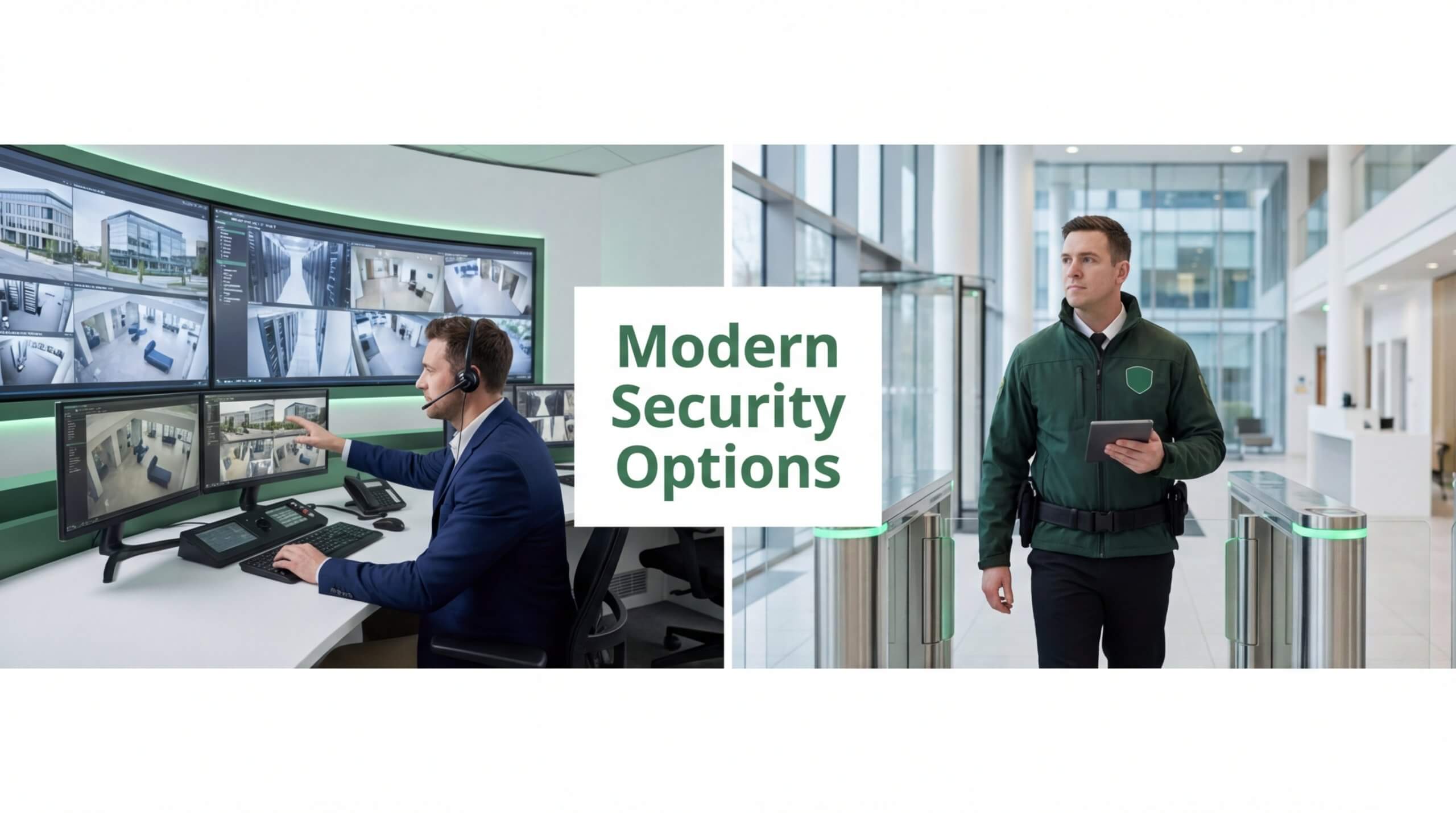
Live video guards are trained security professionals who monitor property cameras remotely in real time, using AI-powered analytics and two-way audio to detect and deter threats. On-site security guards are licensed personnel physically stationed at a property to patrol, control access, and intervene in person. Choosing between them requires a direct comparison across the factors that matter most to property owners.
This guide covers the core differences in cost and budgeting, coverage range and scalability, crime prevention effectiveness, response time mechanics, property-type fit, hybrid deployment strategies, and the technology behind modern live video monitoring.
Live video monitoring typically costs $50 to $150 per camera monthly, while a single on-site guard post runs $130,000 to $218,000 annually. For 24/7 coverage, remote monitoring can cost over 90 percent less than staffing physical guards across all shifts. Hidden expenses like turnover, overtime, and workers’ compensation widen the gap further.
Coverage scales differently for each model. A single live video operator monitors tens of thousands of square feet simultaneously through multiple camera feeds, while an on-site guard patrols roughly 10,000 to 25,000 square feet per circuit, leaving other zones unmonitored during each pass.
Live video guards detect and respond to threats within seconds through AI-triggered alerts, verbal warnings, and verified police dispatch. On-site guards must physically travel to each incident, adding minutes on large properties. However, on-site personnel remain essential where direct physical intervention, customer interaction, or hands-on access control is required.
Property type determines the best fit. Auto dealerships, construction sites, and warehouses favor remote monitoring for after-hours perimeter protection, while retail stores benefit from a guard’s physical presence during operating hours. For most properties, combining both methods into a hybrid system delivers the strongest protection at the best value.
What Is a Live Video Guard?
A live video guard is a trained security professional who monitors property cameras remotely in real time from a centralized monitoring station. Unlike passive surveillance systems that simply record footage, live video guards actively watch feeds, detect threats using AI-powered analytics, and intervene immediately through two-way audio, sirens, strobe lights, or direct police dispatch.
This model combines human judgment with advanced technology. When AI-driven motion detection or object recognition flags suspicious activity, the live video guard verifies the threat and responds within seconds. According to a joint report by the Security Industry Association and ASIS International, these systems have the potential to provide remote eyes and ears across a site, supplement guarding, and operate in remote locations where conditions are difficult for a person.
The core components of a live video guard system include:
- High-resolution cameras (4K/8MP) positioned at strategic entry points and perimeters.
- AI-powered video analytics for automated object detection and motion tracking.
- Two-way audio speakers enabling direct verbal warnings to intruders.
- Sirens and strobe lights activated remotely to deter trespassers.
- A US-based monitoring center staffed by trained security operators around the clock.
Because live video guards can monitor multiple camera feeds simultaneously across different locations, a single operator often covers far more ground than a physical guard patrolling on foot. This scalability makes remote monitoring particularly effective for properties with large perimeters, multiple access points, or after-hours vulnerability. For property managers weighing their options, understanding how this approach compares to traditional on-site guards starts with knowing what each model actually delivers.
What Is an On-Site Security Guard?
An on-site security guard is a licensed professional physically stationed at a property to deter crime, control access, and respond to incidents in person. These guards perform patrols, monitor entry points, and provide a visible human presence that discourages criminal activity. The following subsections cover core duties, typical deployment settings, and operational limitations.
There were 1,272,400 security guard jobs in the U.S. in 2024, according to the U.S. Bureau of Labor Statistics, reflecting the scale of physical security staffing nationwide. On-site guards remain a foundational layer of property protection, particularly where direct human judgment and physical intervention are required. However, understanding what these professionals actually do, and where they fall short, is essential when comparing them to technology-driven alternatives like live video monitoring.
How Much Do Live Video Guards Cost Compared to On-Site Security Guards?
Live video guards cost significantly less than on-site security guards across nearly every deployment scenario. The sections below break down monthly pricing for each option, compare costs for 24/7 and multi-site coverage, and identify hidden expenses that affect total security budgets.
How Much Does a Single Live Video Guard Cost Per Month?
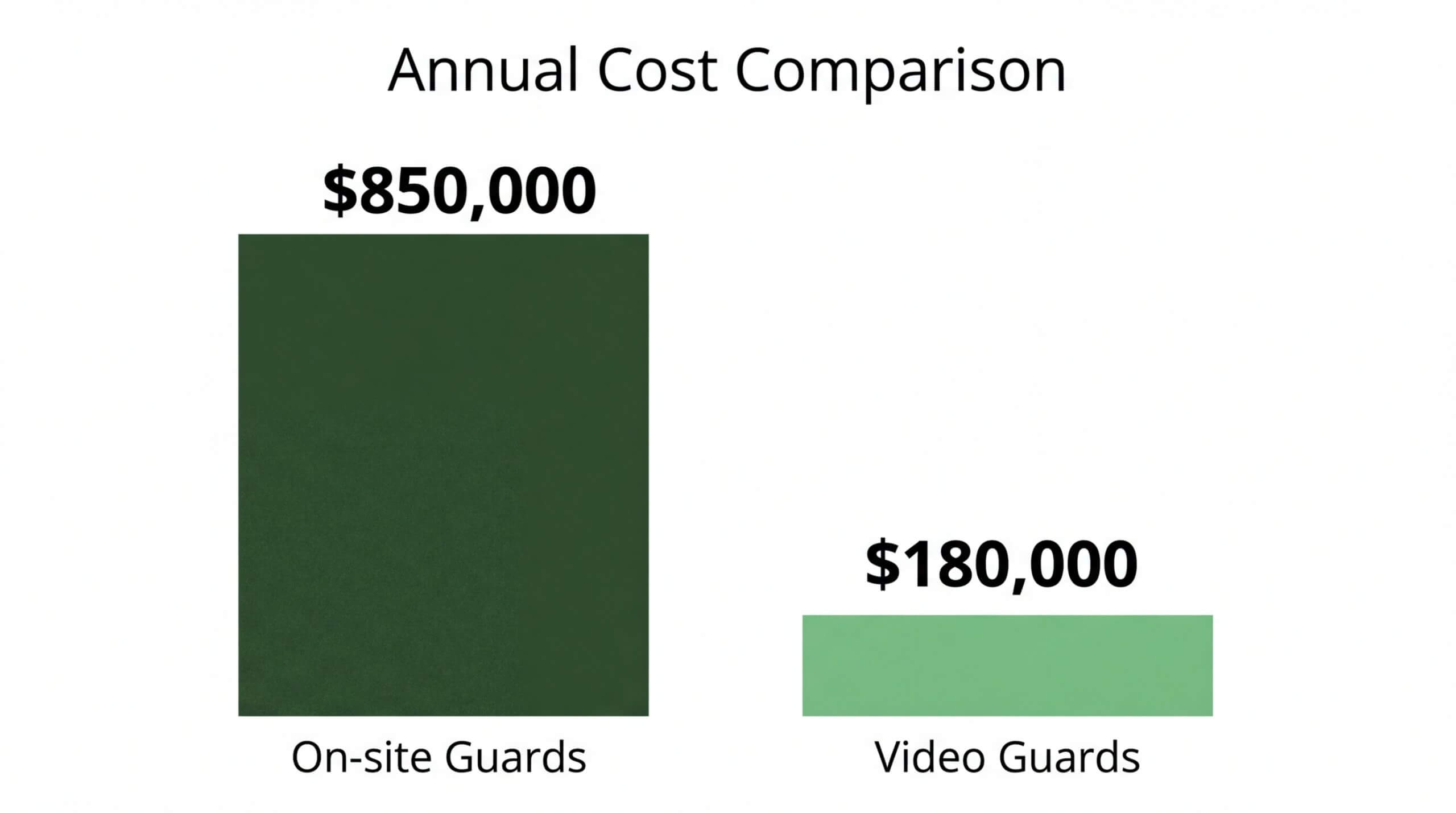
A single live video guard costs between $50 and $150 per month per camera for standard monitoring. Basic monitoring packages start around $30 per camera monthly, according to Safe and Sound Security. A typical property requiring six to eight cameras would spend roughly $300 to $1,200 per month for full remote video guard coverage.
That predictable, flat-rate pricing model eliminates overtime calculations and benefit costs entirely. For budget-conscious property managers, this consistency makes remote monitoring one of the most financially transparent security options available.
How Much Does a Single On-Site Security Guard Cost Per Month?
A single on-site security guard costs between $130,000 and $218,000 annually for one guard post, which translates to roughly $10,800 to $18,200 per month. Hourly rates range from $27 to over $100 depending on training requirements, location, and shift type.
These figures only cover base wages. According to Eldorado Insurance, high turnover introduces costly hidden risks that reduce team cohesion, erode client trust, and may drive up insurance premiums for security firms. When factoring in benefits, workers’ compensation, uniforms, and management overhead, the true monthly cost often exceeds base salary estimates by 25 to 40 percent.
How Do Costs Compare for 24/7 Coverage at a Single Location?
Costs for 24/7 coverage at a single location differ dramatically between the two options. On-site guards require a minimum of 4.2 full-time employees to cover all shifts, accounting for weekends, holidays, and sick leave. At $130,000 to $218,000 per guard post annually, 24/7 on-site coverage runs $546,000 to $915,000 per year.
Live video monitoring for 24/7 coverage at the same location typically costs $3,600 to $14,400 annually, assuming eight cameras at $50 to $150 each per month. That represents savings of 90 percent or more, making remote monitoring the clear winner for round-the-clock protection.
How Do Costs Compare for Multi-Site Coverage?
Costs for multi-site coverage multiply quickly with on-site guards but scale efficiently with live video monitoring. Each additional location requires its own dedicated guard team, duplicating the full $130,000 to $218,000 annual expense per post at every site.
Live video guards monitor multiple locations from a single command center. Adding a new site means adding cameras, not personnel. A five-location operation might spend $18,000 to $72,000 annually on remote monitoring versus $650,000 to over $1,000,000 for on-site guards. For businesses managing distributed properties, this scalability advantage is difficult to overstate.
What Are the Hidden Costs of On-Site Security Guards?
The hidden costs of on-site security guards include expenses that rarely appear in initial vendor quotes:
- Turnover and recruitment consume thousands per replacement cycle in advertising, interviewing, background checks, and training.
- Overtime and holiday pay increase labor costs by 1.5 to 2 times the standard hourly rate.
- Workers’ compensation insurance adds 10 to 15 percent on top of base payroll.
- Supervision and management require dedicated account managers or shift supervisors.
- Liability exposure from guard misconduct or negligence creates legal and insurance costs.
According to a 2025 ASIS International report, 55 percent of security professionals said other departments had a much easier or somewhat easier time getting approval for projects and resources. Hidden guard costs are a major reason security budgets face that scrutiny.
What Are the Hidden Costs of Live Video Monitoring?
The hidden costs of live video monitoring include upfront infrastructure and ongoing maintenance expenses that vendors sometimes understate:
- Camera hardware and installation require an initial capital investment ranging from a few thousand to tens of thousands of dollars depending on site complexity.
- Network bandwidth and internet reliability must support continuous high-definition video streaming without interruption.
- Camera maintenance and replacement become recurring expenses as equipment weathers outdoor conditions.
- False alarm management can generate nuisance fees or desensitize response teams if analytics are poorly calibrated.
Despite these costs, the total expenditure remains far below on-site guard budgets. Properly configured systems also deliver evidentiary value; when a high-profile car chase passed an auto dealership, the owner provided video footage directly to law enforcement, illustrating how remote monitoring creates value beyond deterrence.
Understanding total cost across both models sets the foundation for evaluating coverage differences.
How Does Coverage Differ Between Live Video Guards and On-Site Guards?
Coverage differs between live video guards and on-site guards primarily in scale, consistency, and how each handles environmental challenges. The following sections compare monitoring range, patrol limitations, blind spot management, and perimeter protection.
How Many Square Feet Can a Live Video Guard Monitor at Once?
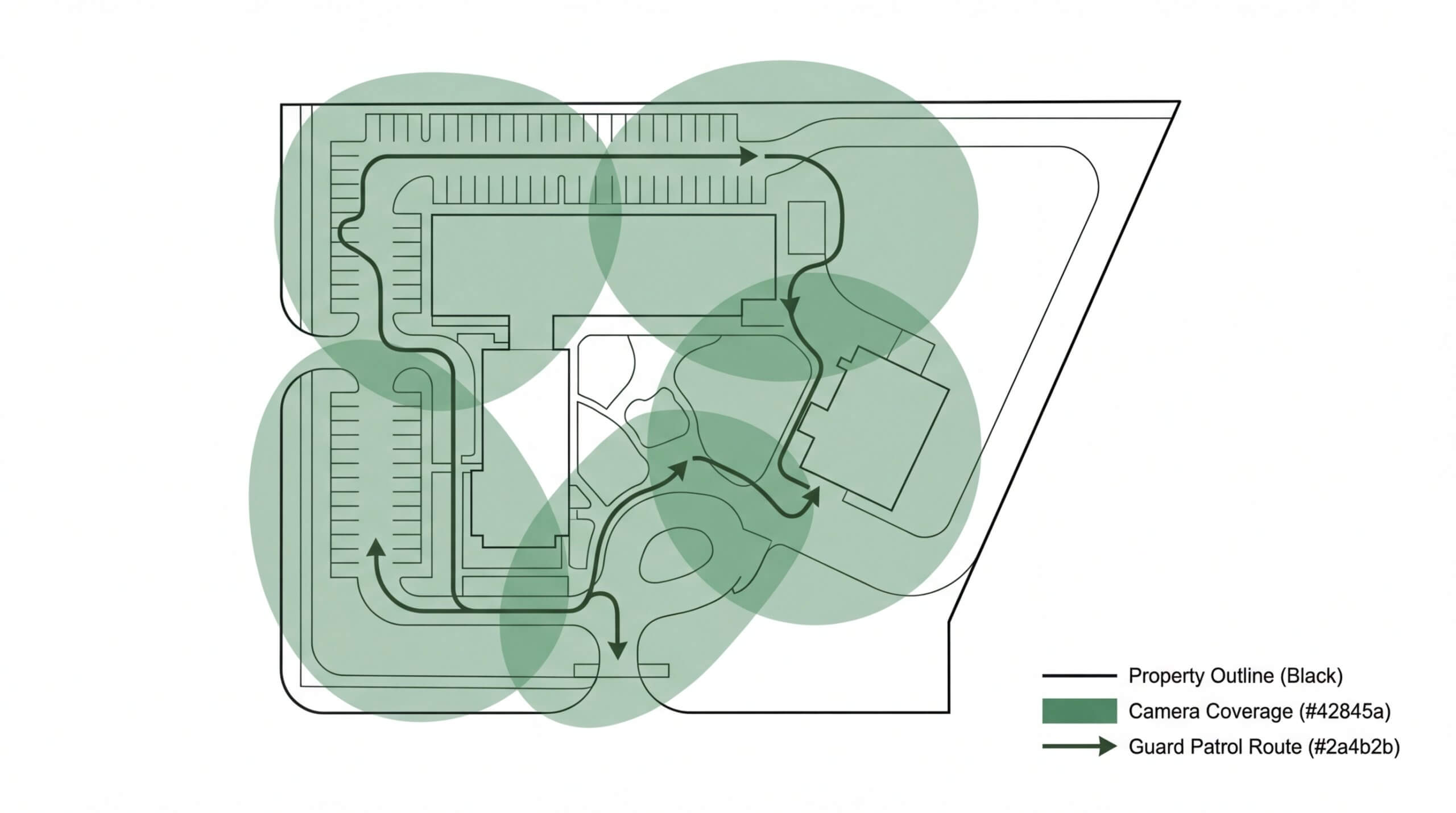
A live video guard can monitor tens of thousands of square feet simultaneously by viewing multiple camera feeds from a centralized station. Each operator typically watches several high-definition cameras covering distinct zones across a property, with AI-powered analytics flagging motion or anomalies in real time.
This means a single remote operator can maintain visual coverage over parking lots, building perimeters, loading docks, and entry points all at once. The effective square footage scales with the number of cameras deployed rather than with physical stamina. Properties spanning 100,000 square feet or more can fall under one operator’s oversight when camera placement is strategic and analytics filter routine activity from genuine threats.
How Much Area Can a Single On-Site Guard Patrol Effectively?
A single on-site guard can patrol effectively across a limited area, typically covering a few thousand square feet at any given moment. Physical patrol routes are constrained by walking speed, terrain, and the time required to inspect each zone thoroughly.
Most facilities find that one guard patrolling on foot covers roughly 10,000 to 25,000 square feet per circuit, depending on layout complexity. During the time spent inspecting one area, every other zone remains unmonitored. According to a 2024 SIA and ASIS International joint report, remote systems “have the potential to provide remote eyes and ears across a site, supplement guarding, and operate in remote locations, often where conditions are difficult for a person.” This fundamental constraint makes scaling on-site coverage expensive, since each additional zone requires another guard.
How Do Live Video Guards Handle Blind Spots and Dark Areas?
Live video guards handle blind spots and dark areas through a combination of infrared cameras, thermal imaging, and AI-driven motion detection. Cameras equipped with night vision or thermal sensors maintain visibility in complete darkness, eliminating the visual limitations that affect human patrols.
When AI analytics detect movement in a previously unmonitored zone, operators receive instant alerts and can activate two-way audio speakers or strobe lights to deter intruders. Strategic camera repositioning or adding supplemental cameras to known dead zones further reduces coverage gaps. For properties with evolving layouts, such as construction sites, operators can adjust monitoring priorities without redeploying personnel.
How Do On-Site Guards Handle Blind Spots and Dark Areas?
On-site guards handle blind spots and dark areas by physically walking patrol routes with flashlights, adjusting their paths to cover known vulnerable zones. Guards rely on personal observation, handheld lighting, and familiarity with the property layout to identify threats in low-visibility conditions.
However, human night vision is inherently limited. A guard inspecting one dark corner leaves other blind spots unattended until the next patrol cycle. Fatigue compounds this problem during overnight shifts, when alertness naturally declines. Guards can request additional lighting installations or recommend layout changes, but their real-time ability to cover multiple dark areas simultaneously remains constrained by being in one physical location at a time.
Which Option Provides Better Coverage for Large Perimeters?
Live video monitoring provides better coverage for large perimeters than on-site guards alone. Camera networks can span miles of fencing, open lots, and facility boundaries without gaps in observation time.
According to a 2025 ASIS International report, AI has enabled 33 percent of security departments to expand perimeter patrolling capability and 33 percent to allow frontline security to spend less time patrolling. For sprawling properties like distribution centers, auto dealerships, or multi-building campuses, remote monitoring delivers continuous perimeter oversight that would require multiple on-site guards working simultaneous routes. On-site guards still add value for interior access control and physical intervention, but for sheer perimeter reach, live video monitoring scales more efficiently.
With coverage capabilities established, the next comparison examines how effectively each option prevents crime.
How Effective Are Live Video Guards at Preventing Crime?
Live video guards prevent crime by detecting threats in real time and intervening before incidents escalate. Their effectiveness spans trespassing deterrence, theft prevention, vandalism reduction, and after-hours monitoring.
How Do Live Video Guards Deter Trespassers in Real Time?
Live video guards deter trespassers in real time by combining AI-powered motion detection with immediate human intervention. When cameras detect unauthorized movement, a trained operator assesses the feed and issues a live audio warning through two-way speakers. This direct verbal confrontation catches intruders off guard, since most trespassers expect passive, unmonitored cameras.
The combination of visual confirmation and voice intervention creates unpredictability that static signage alone cannot match. According to the Security Industry Association, these systems provide remote eyes and ears across a site, supplementing guarding and operating in remote locations where conditions are difficult for a person. For properties with large perimeters or multiple entry points, this real-time response capability closes the gap between detection and deterrence almost instantly.
How Effective Are Live Video Guards at Preventing Theft?
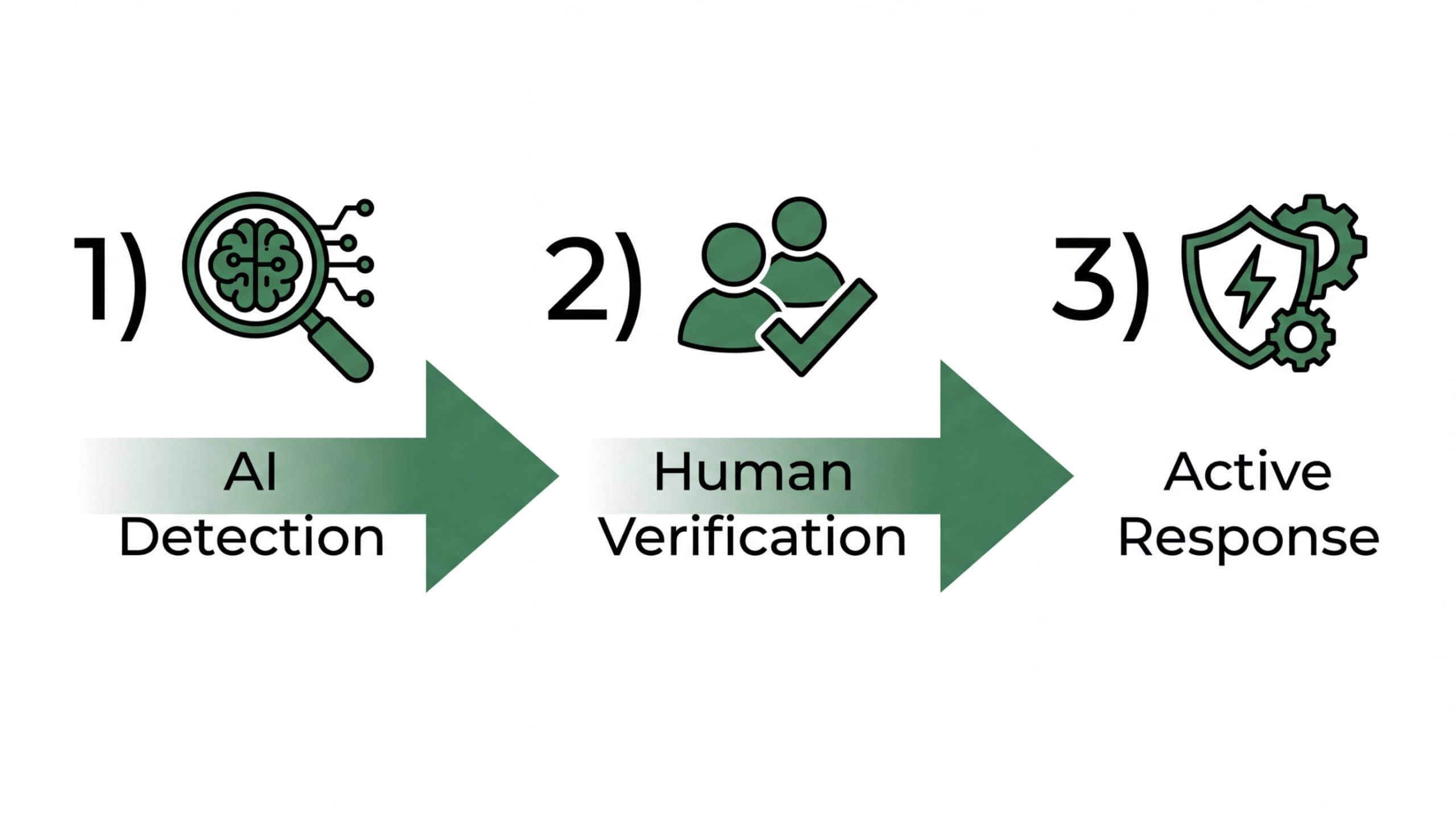
Live video guards are highly effective at preventing theft because they verify suspicious behavior before it escalates into a crime. Unlike passive CCTV, which only records evidence after the fact, a live operator can track a potential thief across multiple camera feeds, activate sirens and strobes, and dispatch law enforcement simultaneously.
This layered response transforms surveillance from a documentation tool into an active prevention system. When a high-profile car chase sped past an auto dealership, according to ASIS International, the owner provided video of the incident to law enforcement, demonstrating the evidentiary value of remote monitoring. That same real-time capability applies to theft scenarios; operators who witness criminal activity in progress give police verified, actionable intelligence rather than after-the-fact reports.
How Effective Are Live Video Guards at Preventing Vandalism?
Live video guards are effective at preventing vandalism because they detect and respond to destructive behavior within seconds of its onset. AI analytics flag unusual activity, such as loitering near building exteriors or tampering with fencing, and alert the monitoring operator before damage occurs.
A live verbal warning delivered through on-site speakers is often enough to stop vandals immediately. Most vandalism is opportunistic; when offenders realize they are being watched and recorded by a live human, the perceived risk of arrest rises sharply. Properties that rely solely on recorded footage typically discover vandalism hours or days later, well after the damage is done. The immediacy of live intervention is what separates prevention from documentation.
How Do Live Video Guards Perform During After-Hours Monitoring?
Live video guards perform exceptionally well during after-hours monitoring because overnight and weekend periods represent peak vulnerability for most properties. With no employees present, unmonitored sites become easy targets. Live video operators maintain continuous surveillance throughout these windows, scanning feeds and responding to AI-triggered alerts without fatigue-related lapses.
According to the ASIS International 2025 Security Trends report, AI has enabled 33 percent of security departments to expand perimeter patrolling capability and 33 percent to allow frontline security to spend less time patrolling. This same technology powers after-hours video monitoring, ensuring consistent coverage when traditional staffing would be most expensive. For businesses seeking round-the-clock protection, this reliability makes live video guards a practical alternative to overnight guard shifts.
Understanding how live video guards prevent crime sets the stage for evaluating how on-site guards compare in the same scenarios.
How Effective Are On-Site Security Guards at Preventing Crime?
On-site security guards prevent crime primarily through visible physical presence and direct human intervention. Their effectiveness depends on staffing levels, site size, and operational limitations.
How Do On-Site Guards Deter Criminal Activity Through Physical Presence?
On-site guards deter criminal activity through physical presence by creating a visible risk of detection and confrontation that discourages potential offenders. A uniformed guard stationed at an entry point signals active surveillance, making trespassers, shoplifters, and vandals reconsider targeting that property.
Key deterrence mechanisms include:
- Controlled access points where guards verify credentials before granting entry.
- Randomized patrol routes that create unpredictable coverage patterns.
- Direct verbal engagement with suspicious individuals before incidents escalate.
- Immediate physical intervention during active security breaches.
This human element carries weight that cameras alone cannot replicate. Someone who might ignore a security sign will often change course when a guard makes eye contact.
What Are the Limitations of On-Site Guards in Crime Prevention?
The limitations of on-site guards in crime prevention stem from human constraints that no amount of training fully eliminates. A single guard can only observe one area at a time, leaving other zones unmonitored during patrols.
According to a 2025 ASIS International report, 55% of security professionals reported that security departments faced a harder time getting project and resource approval compared to other departments, contributing to chronic understaffing.
Additional limitations include:
- Fatigue and attention decline during long overnight shifts.
- Inability to monitor multiple camera feeds simultaneously with consistent accuracy.
- Vulnerability to high turnover, which erodes site-specific knowledge and team cohesion.
- Coverage gaps during shift changes, breaks, and sick-day absences.
These constraints make on-site guards most effective as one layer within a broader security strategy rather than a standalone solution. Understanding these gaps helps clarify where technology-driven alternatives add value.
What Are the Response Time Differences Between Live Video Guards and On-Site Guards?
The response time differences between live video guards and on-site guards depend on detection speed, location relative to the incident, and escalation protocols. Live video guards detect threats instantly through continuous camera feeds, while on-site guards must physically travel to the alarm location before assessing the situation.
Live video monitoring systems detect motion or intrusion the moment it occurs on camera. Operators verify the threat within seconds and can immediately activate deterrents such as two-way audio warnings, sirens, and strobe lights. If the situation escalates, they dispatch law enforcement directly, often providing real-time visual confirmation that qualifies the call as a verified crime in progress. Police departments typically prioritize verified alarm calls over unverified ones, which can significantly compress overall law enforcement arrival times.
On-site security guards, by contrast, must first receive an alert or notice something during patrol, then physically walk or drive to the incident location. On large properties like construction sites, warehouses, or multi-building campuses, this transit time alone can add several minutes. According to a joint report by the Security Industry Association and ASIS International, remote monitoring systems “have the potential to provide remote eyes and ears across a site, supplement guarding, and operate in remote locations, often where conditions are difficult for a person.” This advantage eliminates the patrol gap that slows physical response.
The practical difference breaks down across three response phases:
- Detection: Live video guards detect threats in real time through AI-triggered alerts and continuous surveillance. On-site guards detect threats only when they are nearby or when an alarm system notifies them.
- Assessment: Video operators verify incidents visually within seconds. On-site guards must reach the scene first, then evaluate, which delays assessment on larger properties.
- Escalation: Live video guards contact police with verified visual evidence immediately. On-site guards must call in after arriving and confirming the threat, adding time to the escalation chain.
For smaller, single-entry properties where a guard is stationed at the door, on-site response can be nearly instantaneous for incidents at that specific point. However, for any property with multiple access points, large perimeters, or after-hours vulnerability, live video monitoring consistently compresses the total time from detection to intervention. This speed advantage becomes especially relevant when choosing the right security option for specific property types.
Which Security Option Works Best for Each Property Type?
The best security option for each property type depends on site layout, risk profile, and operational hours. Auto dealerships and construction sites favor live video guards, while retail stores often need on-site presence.
Which Is Better for Auto Dealership Security?
Live video guards are better for auto dealership security. Dealerships feature large open lots with high-value inventory spread across wide perimeters, making physical patrol impractical after hours. AI-powered cameras cover every row of vehicles simultaneously, triggering real-time audio warnings when motion is detected.
According to a 2025 SDM Magazine report, bringing together video security, access control, and environmental sensors into one cohesive view allows security operators to automate workflows and focus on the most critical events. This integrated approach suits dealerships perfectly, where a single break-in can mean losses on multiple vehicles. On-site guards struggle to monitor dozens of rows at once, especially at night. For high-value lots that sit empty after closing, live video monitoring delivers faster detection and broader coverage at a fraction of the staffing cost.
Which Is Better for Construction Site Security?
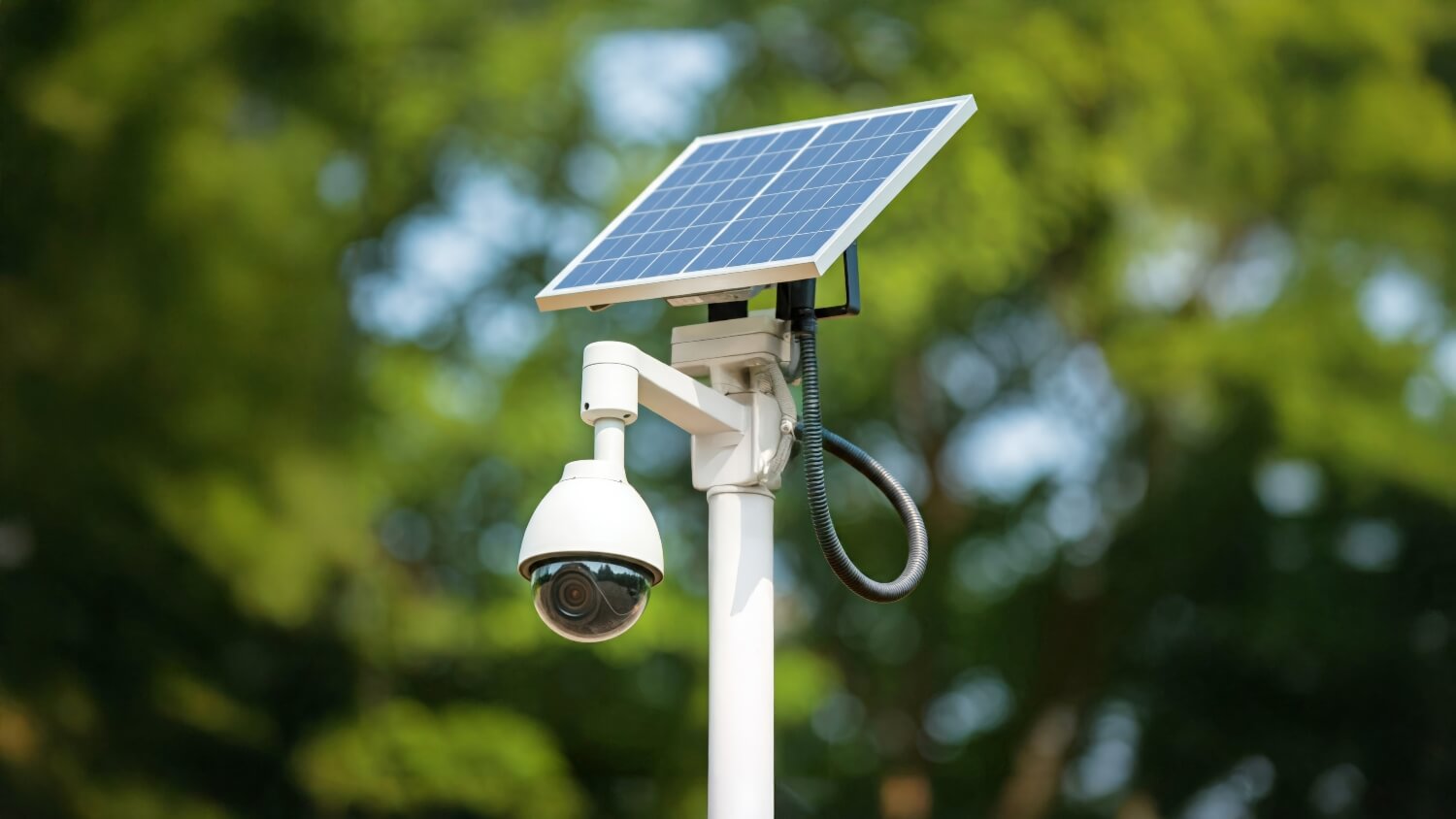
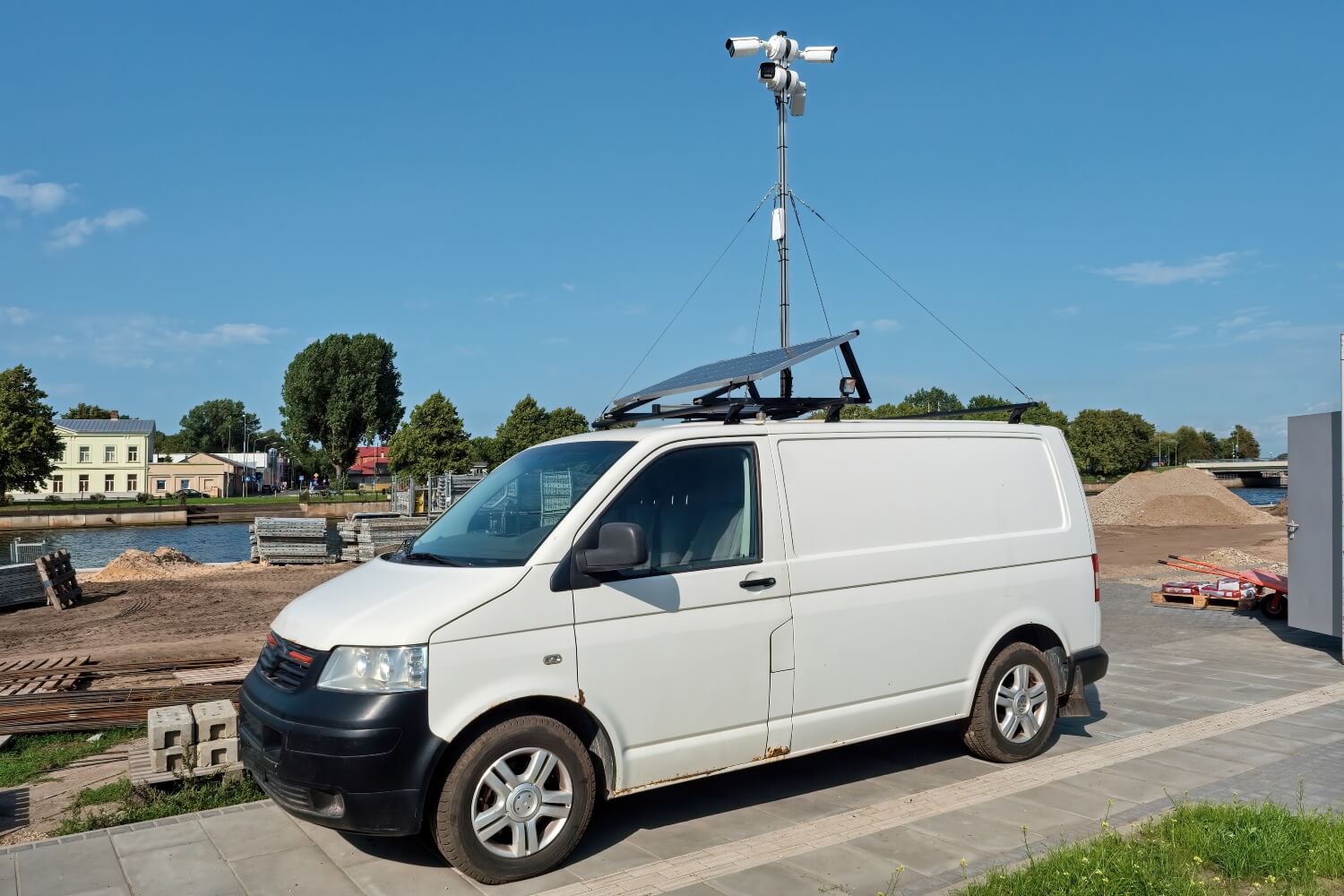
Live video guards are better for construction site security in most scenarios. Construction sites present unique challenges: shifting layouts, temporary fencing, exposed materials, and no permanent power infrastructure on many parcels. Remote cameras with solar-powered options and cellular connectivity can adapt as the site evolves, repositioning with each build phase.
On-site guards face hazardous terrain during night patrols across active construction zones. Live video monitoring eliminates that liability while maintaining continuous surveillance of equipment yards, material storage, and entry points. For sites in remote locations where hiring local guards proves difficult, video monitoring provides consistent coverage regardless of geography. The one exception involves sites requiring physical access control at active gates during work hours, where a guard may supplement the camera system.
Which Is Better for Commercial Property Security?
Commercial property security works best with a hybrid approach. Office buildings, medical facilities, and mixed-use complexes typically need a physical presence at lobby entry points for visitor management, access verification, and tenant assistance during business hours.
After hours, live video guards take over perimeter and interior monitoring at lower cost. This combination provides:
- Daytime front-desk security for access control and client-facing professionalism
- Overnight video monitoring of parking structures, loading docks, and building exteriors
- Automated alerts for unauthorized access attempts at restricted areas
Commercial properties that operate strictly nine-to-five benefit most from live video guards covering the 16 unoccupied hours, reserving guard budgets for occupied periods when human interaction matters.
Which Is Better for Warehouse and Distribution Center Security?
Live video guards are better for warehouse and distribution center security. These facilities feature vast square footage, multiple loading bays, and continuous shipment activity that creates natural security gaps. Camera systems with AI analytics monitor dock doors, inventory zones, and perimeter fencing simultaneously.
According to a 2025 SDM Magazine analysis, security systems are rapidly shifting from cost centers to revenue drivers thanks to intelligent technologies that transform physical security into a dynamic engine for actionable business insight. Warehouses benefit directly from this shift; video analytics can track inventory movement patterns, flag unauthorized access to high-value zones, and provide operational data beyond basic security. On-site guards patrolling a 200,000-square-foot facility simply cannot match that simultaneous coverage.
Which Is Better for Retail Store Security?
On-site security guards are generally better for retail store security. Retail environments require real-time human judgment for customer interactions, shoplifting intervention, and de-escalation of confrontations. A physical presence at store entrances deters theft more effectively than cameras alone because guards can engage directly with suspicious individuals.
Live video guards serve as a strong supplement for:
- After-hours monitoring of storefronts and parking lots
- Back-of-house inventory room surveillance
- Multi-location oversight from a central monitoring station
Stores with high shrinkage rates benefit from combining both approaches. However, the customer-facing nature of retail makes on-site guards the primary security layer during operating hours. Combining live video guards with on-site personnel creates a layered defense that addresses both customer-facing and after-hours security needs.
Can You Combine Live Video Guards with On-Site Security Guards?
Yes, you can combine live video guards with on-site security guards to create a layered security system that maximizes coverage and cost efficiency. This hybrid approach pairs remote surveillance with physical presence, addressing the limitations each method has when deployed alone.
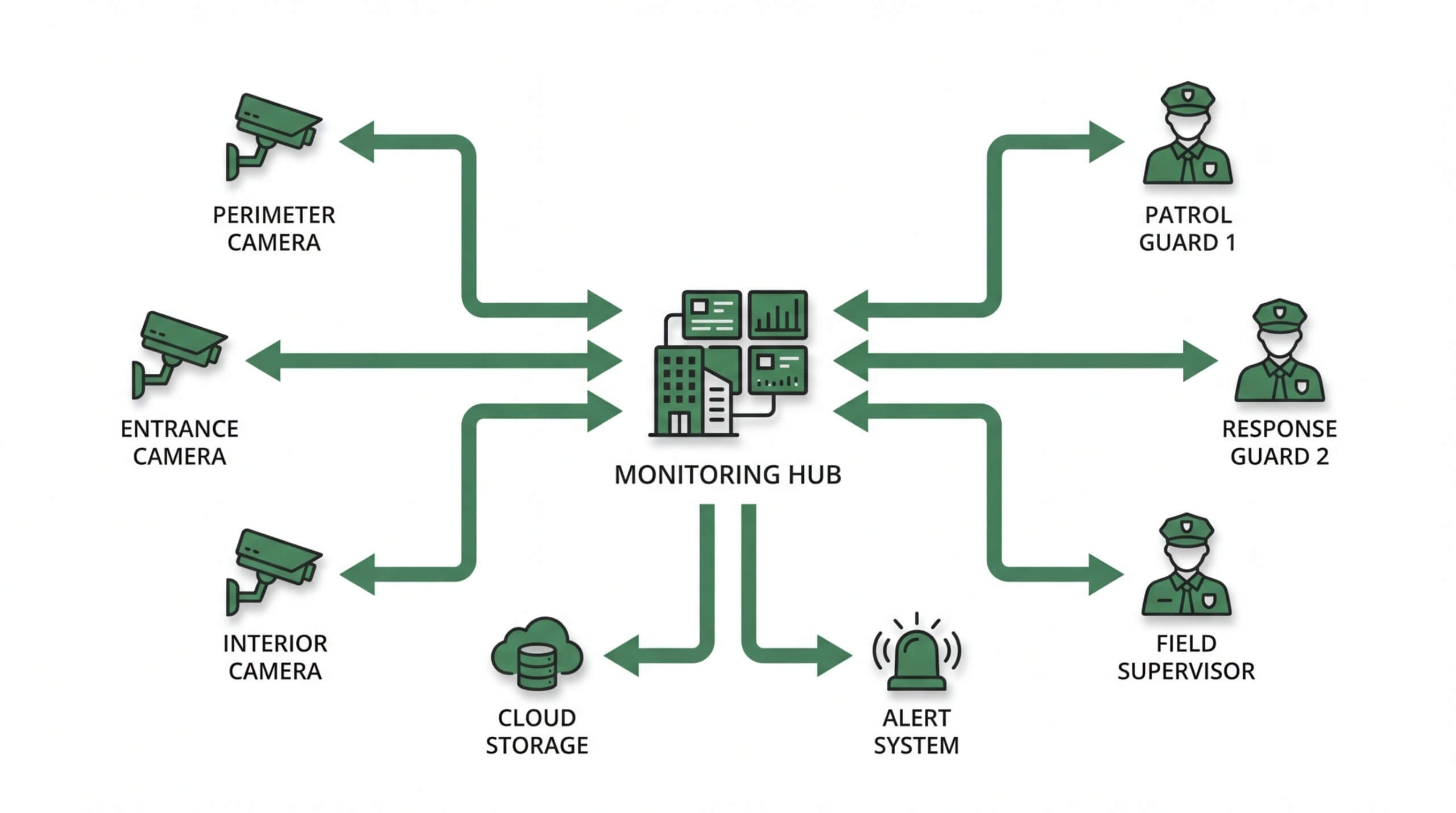
A hybrid model works particularly well for high-value or complex properties. Live video guards provide continuous wide-area monitoring and AI-driven threat detection, while on-site guards handle physical interventions, access control, and situations requiring a human presence. When integrated, remote operators can direct on-site personnel to verified threats in real time, eliminating wasted patrols and reducing false alarm responses.
According to the ASIS International 2025 Security Trends Report, 57 percent of security professionals report their organization uses AI in some capacity in security, with 23 percent incorporating AI into surveillance for object detection or motion tracking. This growing adoption reflects how organizations are blending technology with traditional guarding rather than choosing one over the other.
The financial case for hybrid security is also compelling. With on-site guard median hourly pay at $18.46 (U.S. Bureau of Labor Statistics, May 2024), staffing multiple posts around the clock becomes expensive fast. Replacing some guard posts with live video monitoring while retaining on-site personnel at key access points can significantly reduce total security spend without sacrificing coverage quality.
Measuring hybrid security ROI requires clear benchmarks. Fifty-three percent of organizations now evaluate their security ROI, with 62 percent relying on qualitative measures and 34 percent using quantifiable calculations. For hybrid deployments, tracking metrics like incident response times, false alarm rates, and cost per monitored square foot provides the clearest picture of whether the blend is working.
The most effective hybrid configurations typically follow this structure:
- Live video guards monitor perimeters, parking areas, and low-traffic zones continuously.
- On-site guards staff main entrances, reception areas, and high-interaction zones.
- AI-powered analytics flag anomalies and route alerts to both remote operators and on-site teams simultaneously.
- Two-way audio from remote stations enables immediate verbal intervention before on-site guards arrive.
For most commercial properties, combining both security layers delivers stronger protection than either option alone. The key is matching each method to the zones and scenarios where it performs best, rather than duplicating coverage unnecessarily. With the right integration, understanding technology requirements becomes the next step toward building an effective system.
What Technology Powers Live Video Monitoring Services?
Live video monitoring services are powered by a combination of AI-driven analytics, high-resolution camera systems, cloud connectivity, and trained human operators working from remote monitoring centers. These technologies work together to detect threats, verify incidents, and enable real-time intervention.
The core components include:
- AI-powered video analytics use object detection and motion tracking to distinguish genuine threats from false triggers like animals or weather. According to the ASIS International 2025 Security Trends Report, 23 percent of security organizations now incorporate AI into surveillance specifically for object detection or motion tracking.
- High-resolution cameras (4K/8MP) paired with night vision and thermal imaging capture detailed footage across large areas, even in complete darkness.
- Two-way audio systems allow remote operators to issue live verbal warnings to trespassers, creating an active deterrent without physical presence on site.
- Unified security platforms integrate video feeds, access control, and environmental sensors into one cohesive view. This consolidation allows operators to define automated workflows that escalate only the most critical events, reducing response delays.
- Cloud-based infrastructure enables centralized monitoring of multiple properties from a single command center, making multi-site coverage scalable without additional staffing.
- AI-assisted perimeter patrolling has expanded capability for 33 percent of security departments while allowing frontline personnel to spend less time on routine patrols, according to ASIS International data.
These technologies are transforming physical security from a static cost center into what SDM Magazine describes as “a dynamic engine for actionable business insight.” The shift reflects broader industry confidence; 95 percent of security experts rated the video surveillance market in 2025 as “good to excellent.”
For property owners, the practical takeaway is significant. AI handles the volume of constant monitoring that exhausts human attention, while trained operators handle the judgment calls that algorithms cannot make alone. This layered approach is what separates modern live video monitoring from passive camera recording.
Understanding the technology behind these systems helps clarify which security approach fits your property best.
How Do You Choose Between Live Video Guards and On-Site Guards for Your Property?
You choose between live video guards and on-site guards by evaluating your property’s size, risk profile, budget, and need for physical intervention. The sections below cover how Pioneer Security can help and the key takeaways from this comparison.
Can Pioneer Security’s AI-Powered Live Video Monitoring Protect Your Property?
Yes, Pioneer Security’s AI-powered live video monitoring can protect your property through real-time human surveillance and proactive intervention. Pioneer Security uses Nvidia GPU-powered AI hubs paired with 4K/8MP cameras to detect threats before intruders reach a building. US-based live video guards monitor feeds around the clock, using two-way audio with sirens and strobes to deter trespassers on contact.
Pioneer Security specializes in protecting high-value sites, including auto dealerships, construction sites, warehouses, and commercial facilities. Founded in 1978, Pioneer Security brings over 45 years of experience to every security evaluation. Every client receives a free professional assessment tailored to their property’s unique vulnerabilities, because Pioneer Security treats every client like family, not an account number.
What Are the Key Takeaways About Live Video Guards vs. On-Site Security Guards?
The key takeaways about live video guards vs. on-site security guards center on cost efficiency, coverage scalability, and the growing role of AI in security operations.
- Live video monitoring can reduce security labor costs by 25% to 50% compared to staffing on-site guards, making it the more budget-friendly option for continuous coverage.
- On-site guards provide irreplaceable physical intervention capabilities for properties that require hands-on access control, emergency response, or direct human presence.
- AI-powered analytics enable live video guards to monitor larger perimeters simultaneously, automate threat detection, and escalate only critical events to human operators.
- Combining both solutions creates layered security where remote monitoring handles routine surveillance while on-site personnel respond to verified incidents.
- Properties with large perimeters, multiple sites, or after-hours vulnerability benefit most from live video monitoring’s scalable, always-on coverage model.
According to a 2025 SDM Magazine industry report, 95% of security experts described the video surveillance market as “good to excellent,” confirming the industry’s confidence in remote monitoring technology. For most property owners weighing these options, the right answer is rarely one or the other; a hybrid approach that pairs AI-driven video monitoring with strategic on-site staffing delivers the strongest protection at the best value.