Live video guards dispatch police faster than a standard alarm by providing real-time visual verification of threats directly to 911 dispatchers, bypassing the multi-step delays that downgrade traditional alarm calls to low priority. This guide covers the bottlenecks in standard alarm response, how live video monitoring works, the step-by-step dispatch comparison, police prioritization of verified calls, property-specific benefits, proactive crime deterrence, and choosing the right provider.
Between 94% and 98% of all burglar alarm activations are false, which trains dispatchers to treat unverified signals as low-urgency events. Sequential call center protocols stack additional minutes onto every incident before a request for help ever reaches 911.
Live video guards eliminate that delay chain. AI-powered analytics filter out routine motion like shadows and animals, pushing only genuine threats to US-based guards who verify intrusions visually within seconds and call 911 with confirmed suspect descriptions, vehicle details, and location data.
The dispatch priority difference is significant. Verified alarm calls receive Priority 1 or 2 classification from 911, while unverified alarms may be downgraded to the lowest tier or ignored entirely. With 19 U.S. law enforcement agencies now requiring verification before sending officers, properties using traditional sensors face growing risk of delayed or absent response.
Auto dealerships, construction sites, commercial facilities, and residential homes each gain measurable protection from faster verified dispatch. Beyond speed, live two-way audio intervention stops many intruders before police are even needed, resolving incidents in seconds through direct verbal confrontation.
Why Do Standard Alarm Systems Create Delays in Police Response?
Standard alarm systems create delays in police response because of rampant false alarms, missing visual verification, and slow call center protocols. Each bottleneck compounds the next, pushing response times further out.
How Does the High False Alarm Rate Affect Police Priority?
The high false alarm rate affects police priority by training dispatchers to treat unverified alarm calls as low-urgency events. Between 94% and 98% of all burglar alarm activations are false alarms, according to the Electronic Security Association, which means officers respond to genuine break-ins with the same skepticism they bring to accidental triggers.
This volume carries real financial weight. According to CentralSquare Technologies, a single false alarm response can cost law enforcement agencies $100 or more per call, while fire departments may incur costs exceeding $500 per incident. Approximately 62% of security system owners experience at least one false alarm annually. When nearly every call turns out to be nothing, departments naturally deprioritize these signals, and real emergencies get buried in the queue.
What Happens When No One Visually Verifies an Alarm Trigger?
When no one visually verifies an alarm trigger, police departments increasingly refuse to respond at all. As of October 2024, the Seattle Police Department became the 19th U.S. law enforcement agency to adopt a “verified response” policy, requiring audio, video, or human verification of a crime before officers are dispatched, according to the Security Industry Association.
Another fifteen agencies broadcast unverified alarms to officers but do not guarantee a response. Without visual proof that an actual intrusion is occurring, a triggered alarm is treated as background noise. This policy shift means properties relying solely on traditional sensors may wait indefinitely, or receive no police response whatsoever. For property owners, the implication is stark: an alarm without verification is increasingly an alarm without protection.
How Do Alarm Monitoring Call Centers Add Time to the Process?
Alarm monitoring call centers add time to the process through sequential communication steps that stack minutes onto every incident. Traditional alarm systems typically rely on a “Contact ID” protocol that requires the system to open a phone line and wait for a dial tone before transmitting a signal to the monitoring center.
Once the signal reaches the center, operators follow Enhanced Call Verification procedures, placing at least two phone calls to the site or responsible parties before requesting emergency dispatch. Each unanswered call, each voicemail, each callback attempt burns critical seconds. By the time a dispatcher finally receives the request, an intruder may have been on the property for several minutes. This relay-style workflow is where live video monitoring offers its most decisive advantage over traditional systems.
What Is a Live Video Guard and How Does Real-Time Monitoring Work?
A live video guard is a US-based security professional who monitors property cameras in real time, verifying threats and dispatching police with visual evidence. The sections below cover daily guard duties, AI-powered alert filtering, and the critical first seconds after detection.
What Does a US-Based Video Guard Actually Do During a Shift?
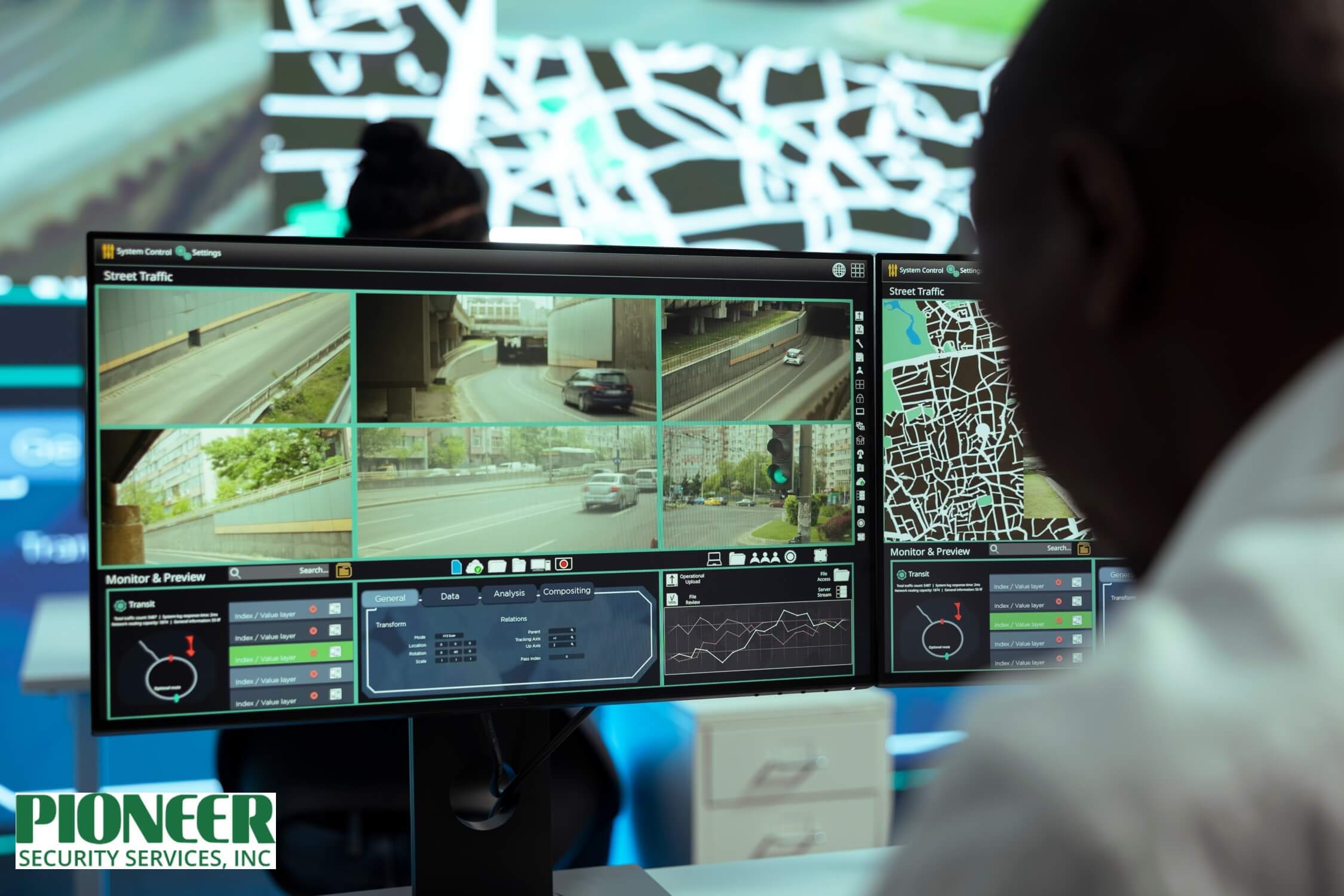
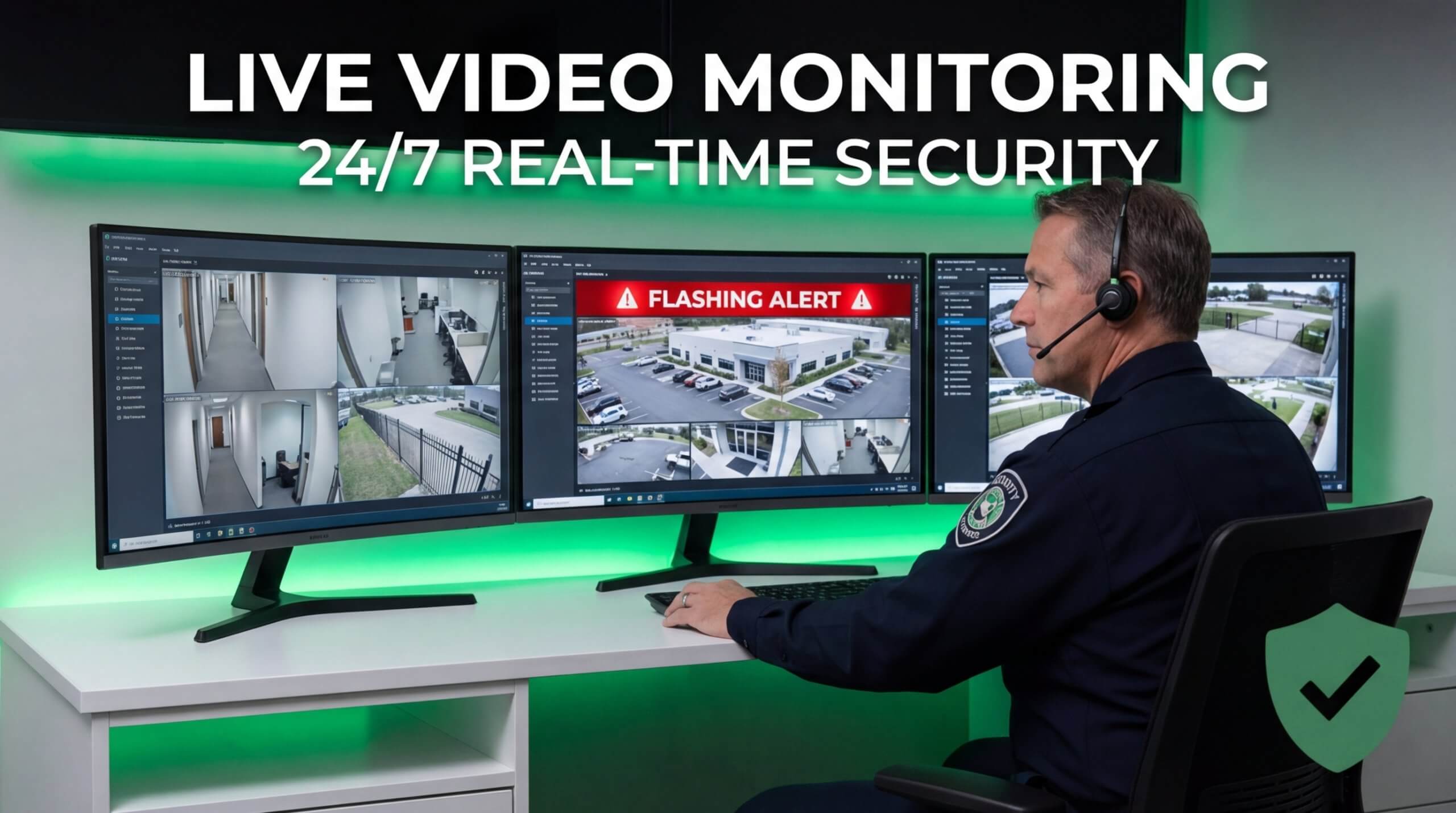
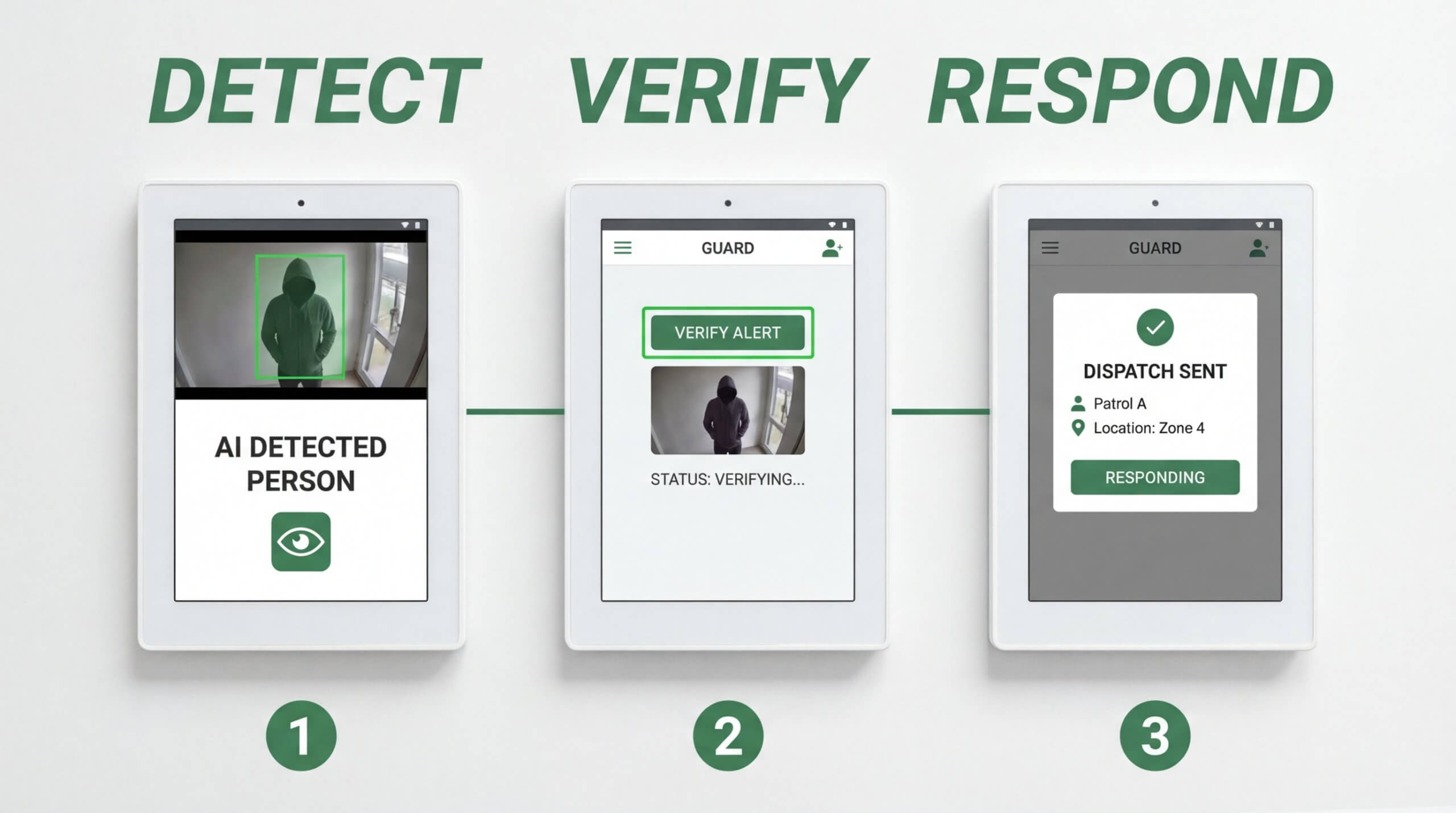
A US-based video guard watches live camera feeds from multiple properties throughout an entire shift, actively scanning for unauthorized activity. When motion is detected, the guard visually verifies whether the alert represents a genuine threat or a harmless event.
If a real intrusion is confirmed, the guard can issue a live voice warning through two-way audio speakers, activate sirens and strobes, and contact 911 with a verified crime-in-progress report. Consumer interest in virtual security guards continues to grow, with major providers now offering live video monitoring and real-time intruder deterrence for monthly subscription fees as low as $99 per location, according to Ring. This combination of continuous human observation and immediate intervention capability separates live video guards from passive camera recording systems that only capture footage for later review.
How Does AI-Powered Motion Detection Alert a Live Video Guard?
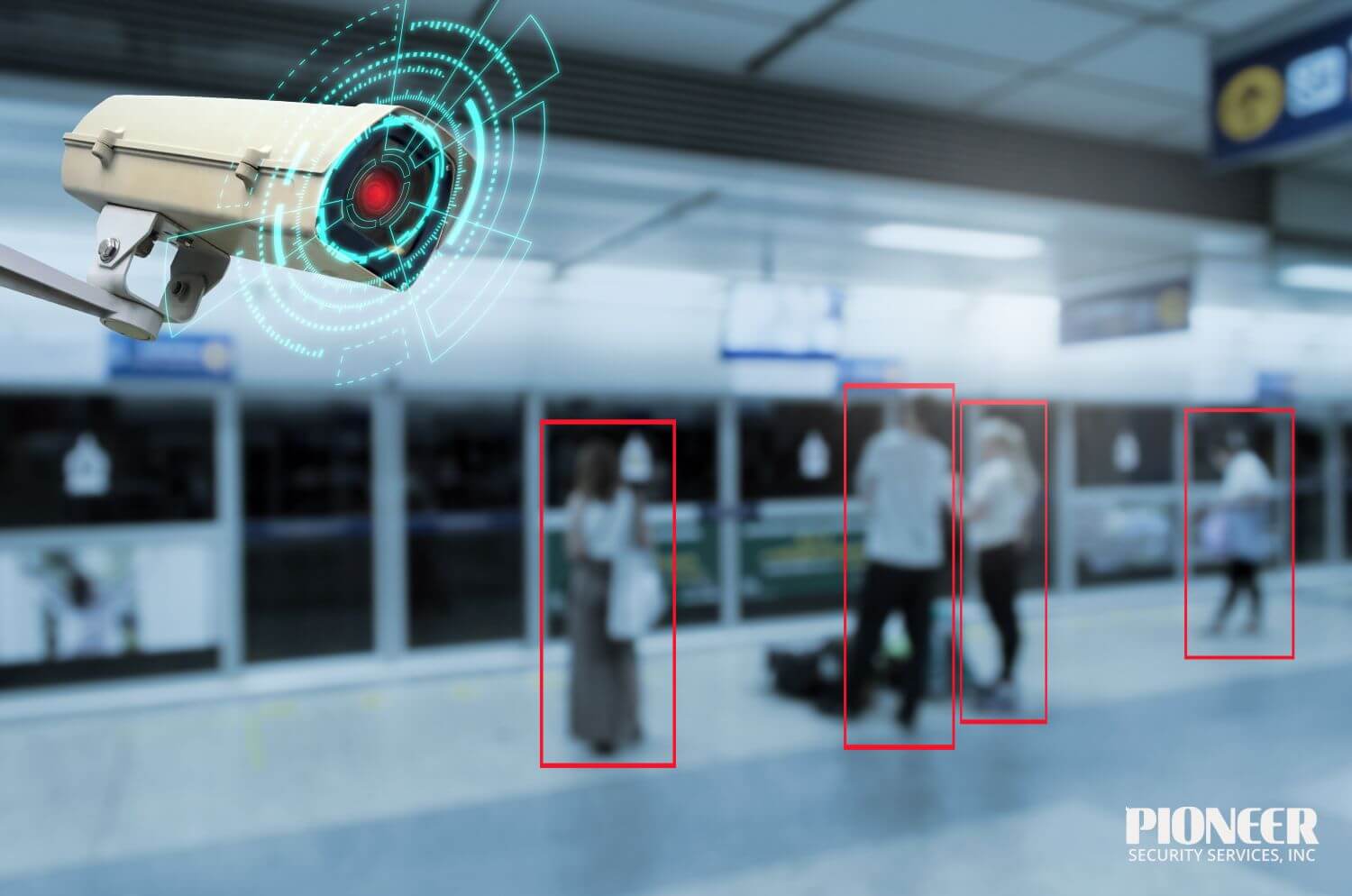
AI-powered motion detection alerts a live video guard by analyzing camera feeds continuously and distinguishing genuine security events from irrelevant movement. According to Resolute Partners, AI-powered video analytics filter out routine movements like shadows or animals, allowing human guards to focus only on genuine security threats and reducing verification time for 911 dispatch.
The system uses trained algorithms to classify objects by size, shape, speed, and behavior pattern. When movement matches threat criteria, the AI sends an instant alert with a highlighted video clip directly to the guard’s monitoring station. This pre-filtering eliminates the noise that overwhelms traditional motion sensors, so every alert a guard receives is already worth investigating.
What Happens in the First 10 Seconds After a Threat Is Detected?
The first 10 seconds after a threat is detected follow a rapid verification-and-response sequence. The AI flags the movement and pushes a live video feed to the guard’s screen within moments. The guard visually confirms the threat, noting the number of intruders, physical descriptions, direction of movement, and any vehicles involved.
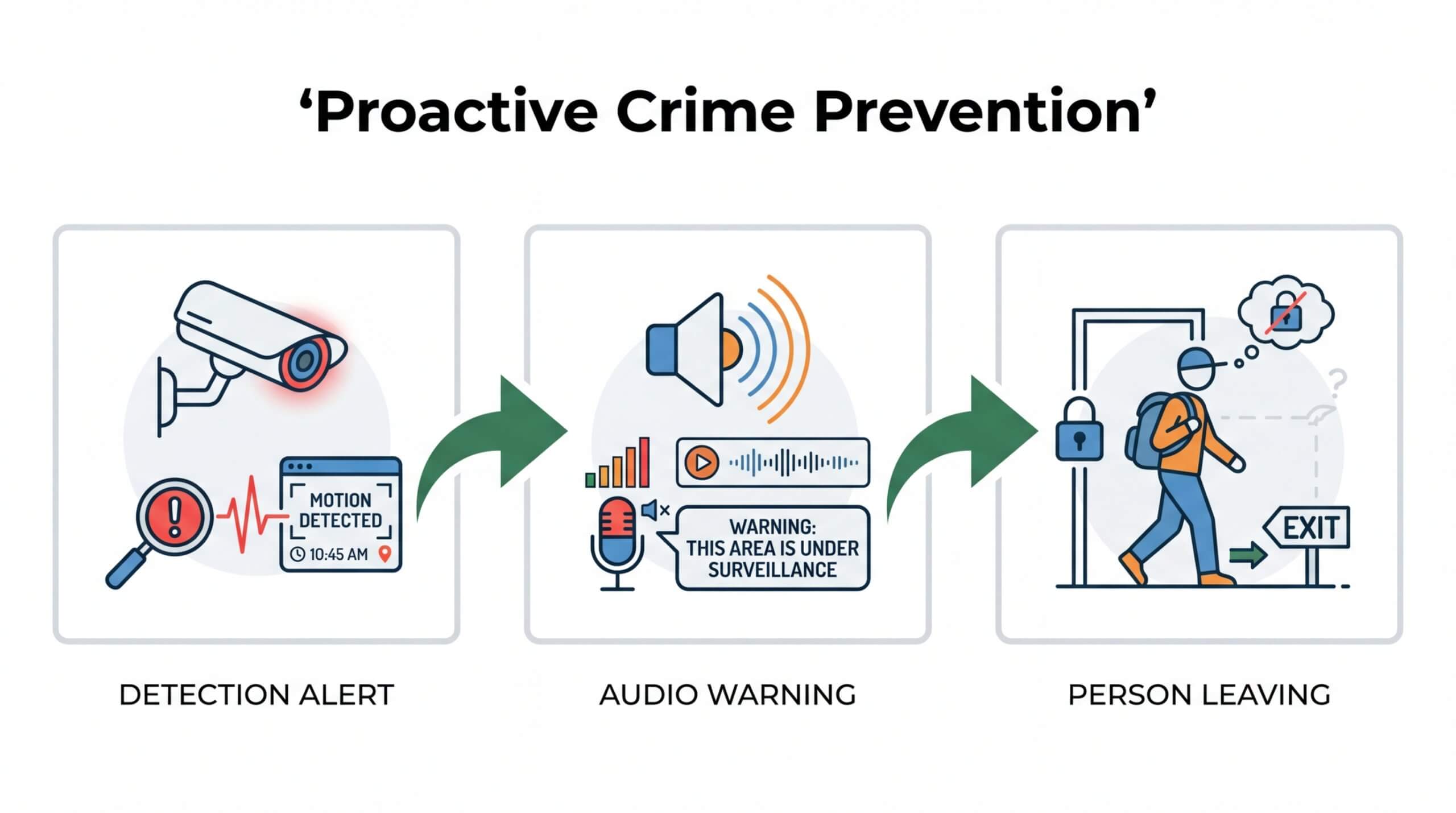
Within that same window, the guard can issue a live audio warning through on-site speakers, often startling intruders into fleeing before entry. Simultaneously, the guard contacts 911 with a verified crime-in-progress call that includes real-time suspect descriptions. Active deterrence monitoring systems are designed to respond within 15 to 30 seconds of detection, according to Valley Alarm. This speed transforms security from a documentation tool into an active prevention system.
Understanding how this real-time workflow operates reveals why dispatch timelines differ so sharply between systems.
How Does the Live Video Guard Dispatch Process Differ Step by Step?
The live video guard dispatch process differs from standard alarm dispatch by eliminating multiple verification delays and providing visual confirmation directly to 911. Below, each timeline is broken down side by side.
What Is the Standard Alarm Dispatch Timeline From Trigger to Police Arrival?
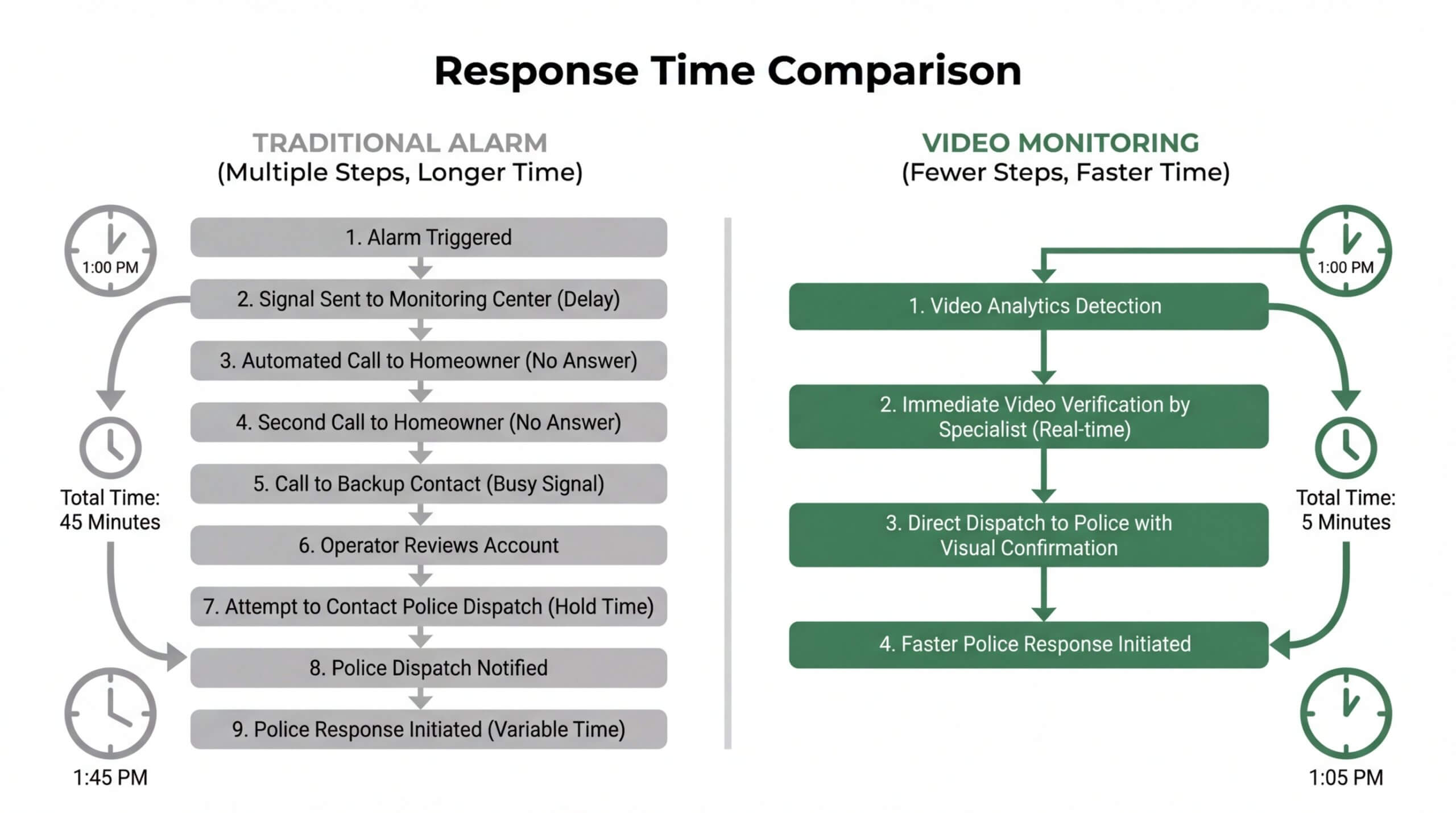
The standard alarm dispatch timeline from trigger to police arrival follows a multi-step sequence that introduces delays at each handoff. Traditional alarm systems rely on a Contact ID protocol that requires the system to open a phone line and wait for a dial tone before transmitting a signal to the monitoring center, according to Rapid Response Monitoring.
Once the signal reaches the central station, operators initiate Enhanced Call Verification, placing at least two phone calls to the site or responsible parties before requesting emergency dispatch. Each unanswered call adds minutes. After verification attempts fail, the operator contacts 911, and without visual proof of a crime, dispatchers often assign the call a low priority. Officers then respond when available. This chain of sequential delays means the gap between the initial trigger and police arrival can stretch well beyond what most property owners expect.
What Is the Live Video Monitoring Dispatch Timeline From Detection to Police Arrival?
The live video monitoring dispatch timeline from detection to police arrival compresses the response chain into near-simultaneous steps. AI-powered video analytics filter out routine movements like shadows or animals, allowing human guards to focus only on genuine security threats and reducing the verification time for 911 dispatch, as noted by Resolute Partners.
When a legitimate threat is detected, the live video guard visually confirms the intrusion within seconds and contacts 911 with real-time suspect descriptions, location details, and video evidence. Because the call arrives pre-verified, dispatchers assign it a higher priority. Active deterrence systems can also respond within 15 to 30 seconds of detection, using live voice warnings to deter trespassers immediately. The entire process from detection to dispatch often takes under a minute, compared to the multi-step delays inherent in traditional systems.
Where Do the Biggest Time Savings Occur Between the Two Systems?
The biggest time savings between the two systems occur at three critical points:
- Verification elimination. Standard alarms require two or more phone calls before dispatch. Live video guards verify threats visually in seconds, bypassing the call-back process entirely.
- Signal transmission. Traditional Contact ID protocols wait for a dial tone and transmit sequentially. AI-powered video systems send alerts instantly over IP connections.
- Dispatch priority upgrade. Unverified alarms receive low-priority classification from 911. Verified video calls with real-time evidence receive higher priority, meaning officers are dispatched sooner.
For most properties, the verification step alone accounts for the largest time reduction. Removing even a few minutes from this stage can mean the difference between catching an intruder on-site and arriving after the damage is done. With verified response policies expanding across U.S. law enforcement agencies, the dispatch priority advantage of live video monitoring will only grow more significant.
Why Do Police Departments Prioritize Verified Video Alarm Calls?
Police departments prioritize verified video alarm calls because visual confirmation of a crime in progress elevates dispatch urgency and eliminates wasted responses to false triggers. The following sections cover how verified response policies affect unverified alarms, what evidence live video guards provide dispatchers, and how real-time suspect descriptions accelerate officer response.
How Does Verified Response Policy Affect Unverified Alarm Calls?
Verified response policy affects unverified alarm calls by downgrading their dispatch priority or eliminating guaranteed police response entirely. According to Cloudastructure, verified alarms are often assigned Priority 1 or 2 status by 911 dispatchers, while unverified alarms may receive the lowest priority level, resulting in significantly longer wait times or no response at all.
Fifteen law enforcement agencies in the United States currently broadcast unverified alarms to officers but do not guarantee a police response. This growing trend means properties relying solely on traditional alarm systems face an increasing risk of being deprioritized when they need help most. For any property owner still using an unverified system, this policy shift represents a serious vulnerability that should not be ignored.
What Evidence Can a Live Video Guard Provide to a 911 Dispatcher?
A live video guard can provide a 911 dispatcher with real-time visual confirmation that a crime is actively occurring. This evidence transforms an alarm signal from an unverified alert into a verified emergency.
Key evidence a live video guard relays to dispatchers includes:
- Confirmation of unauthorized individuals on the property.
- The number of suspects and their current location on site.
- Descriptions of suspect behavior, such as forced entry, carrying tools, or loading stolen goods.
- Vehicle details including make, model, color, and license plate when visible.
- The direction suspects are moving or fleeing.
This level of detail gives dispatchers the verification needed to classify the call at the highest priority, which is something a standard alarm signal alone cannot achieve.
How Does Real-Time Suspect Description Speed Up Officer Response?
Real-time suspect description speeds up officer response by giving patrol units actionable intelligence before they arrive on scene. When a live video guard communicates physical descriptions, clothing details, and suspect movement patterns directly to a 911 dispatcher, responding officers can begin scanning for matches while en route.
Officers who arrive with specific details, such as “two males in dark hoodies moving toward the east fence line,” can act decisively rather than spending time assessing an unknown situation. This pre-arrival awareness reduces the gap between arrival and apprehension. Without real-time descriptions, officers approach a generic alarm call with no context, which slows their response posture considerably.
With dispatch priority established, the type of property being protected determines how much these faster response times matter.
What Types of Properties Benefit Most From Faster Police Dispatch?
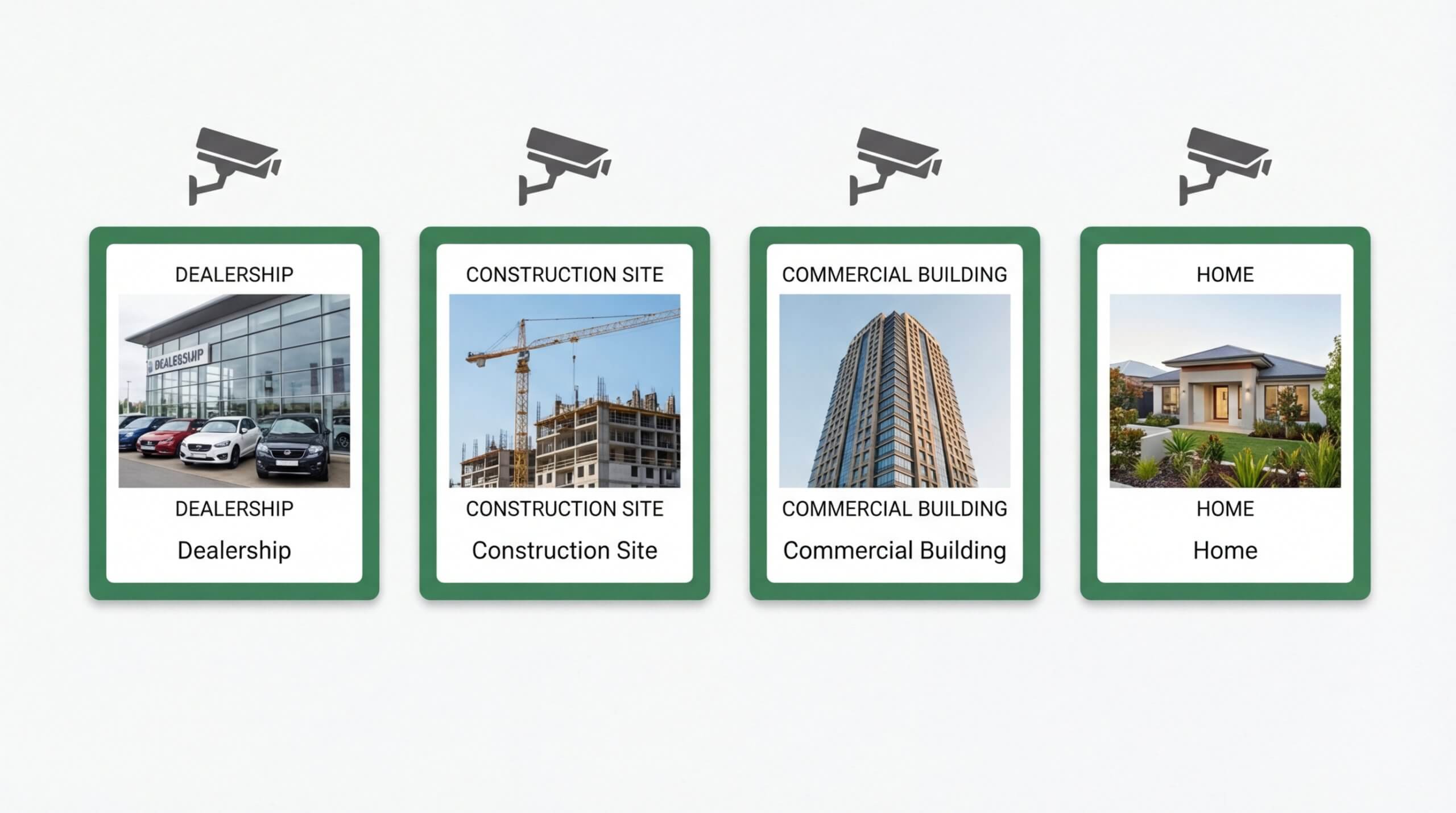
The types of properties that benefit most from faster police dispatch include auto dealerships, construction sites, commercial facilities, and residential homes. Each faces distinct after-hours vulnerabilities where verified video accelerates response.
How Does Faster Dispatch Protect Auto Dealerships After Hours?
Faster dispatch protects auto dealerships after hours by closing the window between intrusion and police arrival, when high-value inventory is most exposed. Dealership lots hold dozens of vehicles in open or semi-open areas, making them attractive targets for catalytic converter theft, vandalism, and full vehicle theft. Live video guards detect perimeter breaches instantly and provide 911 dispatchers with real-time suspect descriptions, vehicle details, and direction of travel. This verified information elevates the call priority, meaning officers respond faster than they would to an unverified alarm. For lots spanning multiple acres, that speed difference often determines whether suspects are intercepted on-site or escape undetected.
How Does Faster Dispatch Reduce Theft on Construction Sites?
Faster dispatch reduces theft on construction sites by verifying intrusions in real time, which triggers a higher-priority police response before equipment can be loaded and removed. According to SentryPODS, approximately 1,000 pieces of construction equipment are stolen every month in the United States, totaling roughly 12,000 thefts per year. Construction sites are especially vulnerable because they feature:
- Open perimeters with minimal physical barriers.
- Heavy equipment that sits unattended overnight and on weekends.
- Valuable materials like copper, lumber, and tools stored on-site.
When a live video guard spots unauthorized activity, the verified dispatch call gives officers actionable details, significantly reducing the time criminals have to extract equipment. Given the scale of monthly losses, even shaving minutes off response time can prevent thousands of dollars in theft per incident.
How Does Faster Dispatch Help Commercial Properties Prevent Loss?
Faster dispatch helps commercial properties prevent loss by ensuring police treat every alarm call as a confirmed threat rather than a probable false alarm. Warehouses, retail centers, and office complexes face after-hours break-ins where stolen goods, sensitive data, or damaged infrastructure drive significant costs. A live video guard who confirms forced entry and relays suspect count, entry point, and movement direction to 911 gives responding officers a tactical advantage. Without that verification, the call risks being deprioritized or delayed. Commercial properties with multiple access points benefit most because real-time camera coverage identifies the exact breach location, directing officers precisely where they are needed.
How Does Faster Dispatch Improve Residential Security Outcomes?
Faster dispatch improves residential security outcomes by replacing unverified sensor alerts with confirmed visual evidence that 911 dispatchers act on immediately. Most residential alarm triggers involve motion sensors or door contacts that cannot distinguish between a burglar and a pet, resulting in deprioritized responses. Live video verification eliminates that ambiguity. When a guard confirms a person attempting to force a door or window, the homeowner gains two advantages: a higher dispatch priority and a real-time audio deterrent that may stop the intruder before police arrive. For families, this combination of speed and intervention represents a meaningful upgrade over passive alarm systems that simply record events after the fact.
With the right property coverage in place, selecting a qualified live video monitoring provider ensures these response advantages are sustained.
Can Live Video Guards Deter Crime Before Police Are Even Needed?
Yes, live video guards can deter crime before police are even needed by combining real-time surveillance with immediate audio intervention. The sections below explain how live audio warnings stop intruders on the spot and why proactive monitoring outperforms reactive alarm systems.
How Does Live Audio Intervention Stop Intruders on the Spot?
Live audio intervention stops intruders on the spot by delivering a direct, real-time voice warning through on-site speakers the moment a threat is detected. A live video guard observes the intrusion via camera, confirms suspicious activity, and issues a verbal command that identifies the trespasser’s location and actions. This immediate human confrontation creates a psychological shock that passive alarms cannot replicate. Most intruders flee within seconds of hearing a live voice, eliminating the need for police dispatch entirely. As of October 2024, the Seattle Police Department became the 19th U.S. law enforcement agency to adopt a “verified response” policy, according to the Security Industry Association. Two-way audio capability transforms surveillance from a recording tool into an active crime prevention measure.
What Role Does Proactive Monitoring Play Compared to Reactive Alarms?
Proactive monitoring plays a fundamentally different role compared to reactive alarms by identifying and addressing threats before a crime is completed. Reactive alarms detect a breach after it occurs, then initiate a multi-step notification chain that introduces minutes of delay. Proactive monitoring, by contrast, positions trained video guards to watch for suspicious behavior in real time.
Key differences between the two approaches include:
- Timing of intervention: Proactive monitoring enables intervention during the approach phase, while reactive alarms activate only after entry or contact.
- Human judgment: Live guards assess context, intent, and threat level instantly, whereas alarm sensors cannot distinguish between a raccoon and a burglar.
- Escalation control: Guards can deter, warn, and document before deciding whether police dispatch is necessary, reducing unnecessary emergency calls.
For properties where preventing loss matters more than documenting it after the fact, proactive monitoring represents a more effective security posture. With deterrence capabilities established, the next step is choosing a monitoring provider that delivers these advantages consistently.
What Should You Look for in a Live Video Monitoring Provider?
You should look for AI-powered detection, US-based live guards, verified alarm dispatch capability, and proactive deterrence features. The sections below cover how Pioneer Security delivers these capabilities and the key takeaways from this article.
Can Pioneer Security’s AI-Powered Live Video Guards Protect Your Property?
Yes, Pioneer Security’s AI-powered live video guards can protect your property through real-time human surveillance combined with advanced threat detection. Founded in 1978, Pioneer Security integrates Nvidia GPU-powered AI hubs with 4K/8MP cameras to filter false triggers and escalate genuine threats instantly. US-based guards use two-way audio to confront intruders before entry occurs, and they dispatch police directly from the business address with verified visual evidence. This verified approach means 911 dispatchers receive suspect descriptions and live confirmation of criminal activity, elevating call priority above unverified alarms. Pioneer Security stops crime before it starts, covering commercial sites, auto dealerships, construction zones, and residential properties with proactive monitoring rather than reactive alarm recording.
What Are the Key Takeaways About How Live Video Guards Dispatch Police Faster Than a Standard Alarm?
The key takeaways about how live video guards dispatch police faster than a standard alarm center on three critical advantages: verification speed, dispatch priority, and proactive deterrence.
- False alarms cripple traditional response. Between 94% and 98% of burglar alarm activations are false, according to the Electronic Security Association, causing police departments to deprioritize unverified calls.
- Verification earns faster dispatch. Verified alarms receive Priority 1 or 2 classification from 911 dispatchers, while unverified alarms may be downgraded to the lowest tier or ignored entirely.
- AI eliminates wasted time. AI-powered video analytics filter shadows, animals, and routine motion so human guards assess only genuine threats, compressing the verification window to seconds rather than minutes.
- Live audio stops crime before police arrive. Two-way speaker intervention deters intruders on contact, often resolving incidents without requiring dispatch at all.
- Verified response policies are expanding. As of October 2024, 19 U.S. law enforcement agencies require video, audio, or human verification before sending officers, making unverified alarms increasingly unreliable.
For property owners weighing traditional alarms against live video monitoring, the dispatch speed gap will only widen as more cities adopt verified response mandates. Investing in a provider that combines AI detection with human verification positions any property for faster police response and stronger crime prevention today.