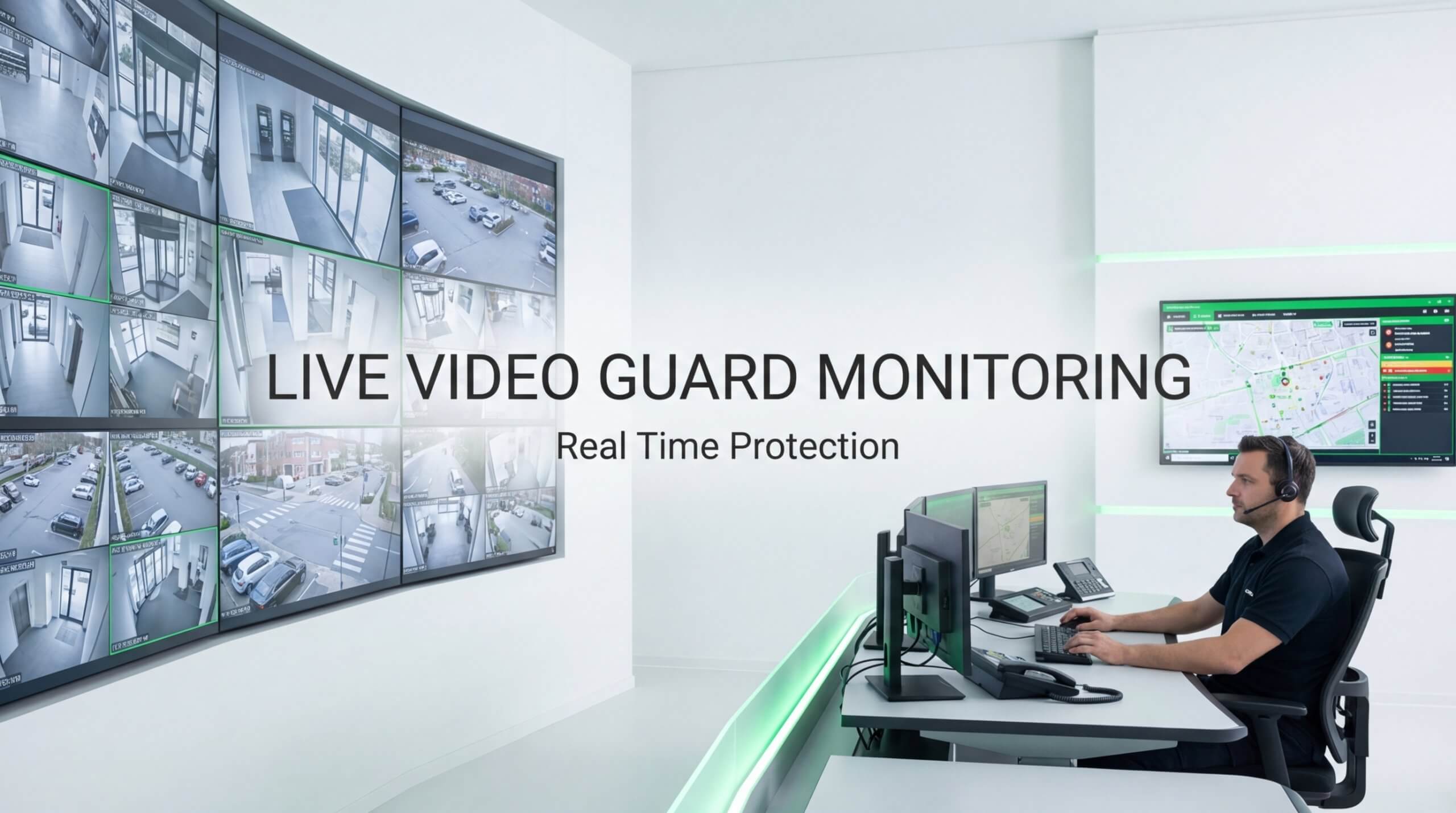
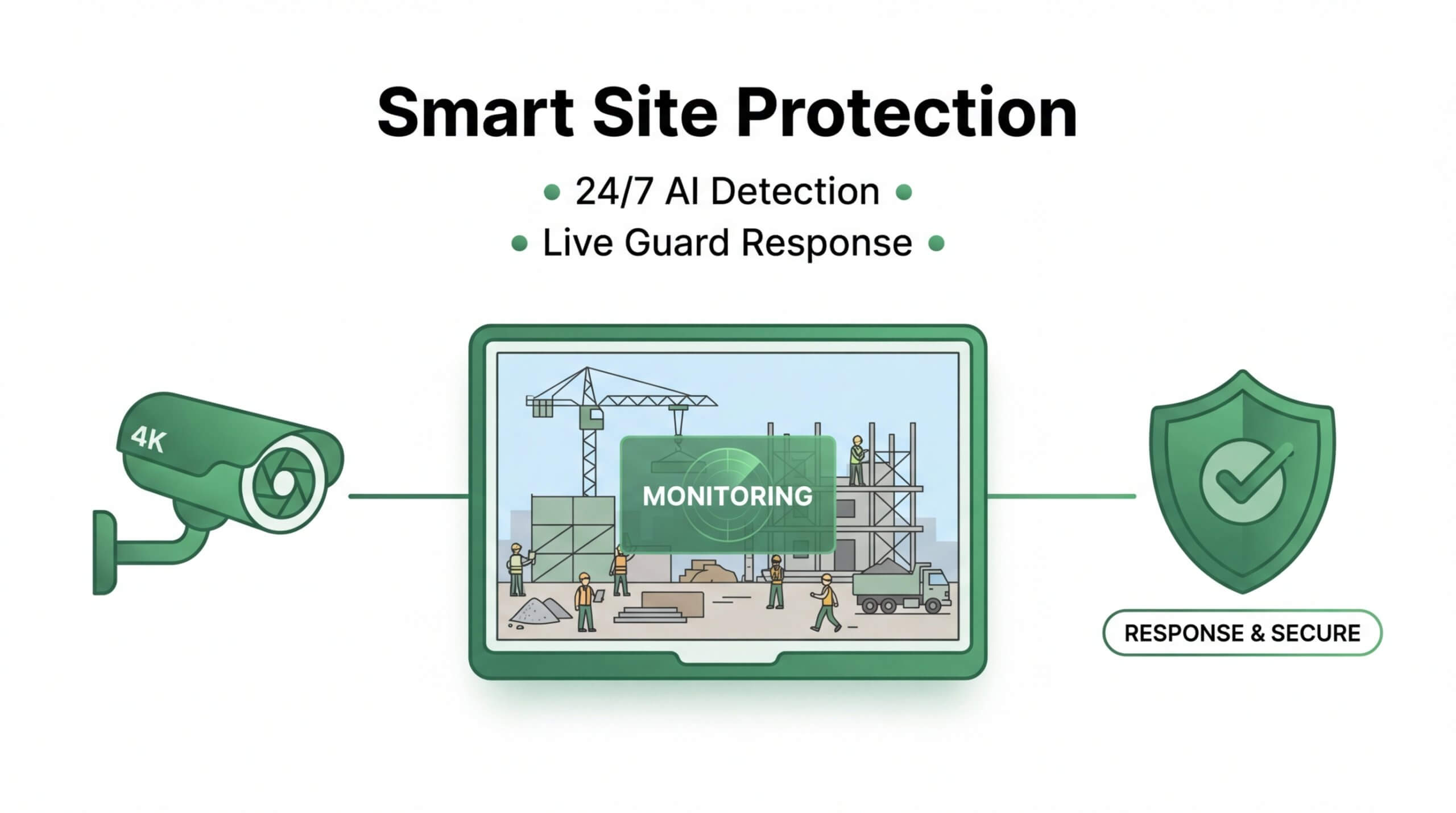
Live video guards are trained security operators who monitor construction site camera feeds in real time, using AI-powered detection and two-way audio to stop theft and vandalism before losses occur.
This guide covers why construction sites attract criminals, how live video guard technology works, theft and vandalism prevention strategies, which site types benefit most, and how to choose and integrate the right provider.
Construction sites combine high-value assets with limited off-hours supervision, making them prime targets. Tools account for nearly 40% of all reported theft incidents, heavy equipment recovery rates sit around only 20%, and the industry absorbs roughly one billion dollars in direct annual losses.
Live video monitoring systems layer high-resolution IP cameras, AI analytics that distinguish genuine threats from environmental motion, and centralized command centers staffed by trained operators. AI-powered detection reduces false alarm rates by over 80% compared to traditional motion-based systems, ensuring human attention focuses on real intrusions rather than wind or wildlife.
Theft prevention relies on three active layers: visible surveillance that deters opportunistic criminals, real-time operator response through voice-down commands that resolve over 99% of incidents without police dispatch, and proactive pattern analysis that identifies organized theft rings during their reconnaissance phase. These same capabilities stop vandalism mid-act through immediate, personalized audio confrontation.
Site types ranging from large commercial developments to residential subdivisions, public infrastructure projects, and specialized facilities housing six-figure machinery each present distinct vulnerabilities that live video guards address through scalable, AI-enhanced coverage. Compared to on-site guards costing over $18,000 monthly, remote monitoring delivers broader protection at $50 to $100 per camera monthly while coordinating faster law enforcement response.
Why Are Construction Sites Prime Targets for Theft and Vandalism?
Construction sites are prime targets for theft and vandalism because they combine high-value assets with limited security coverage during off-hours. The sections below examine which items thieves target most, when sites face the greatest risk, and how much these crimes cost the industry annually.
What Materials and Equipment Are Most Commonly Stolen?
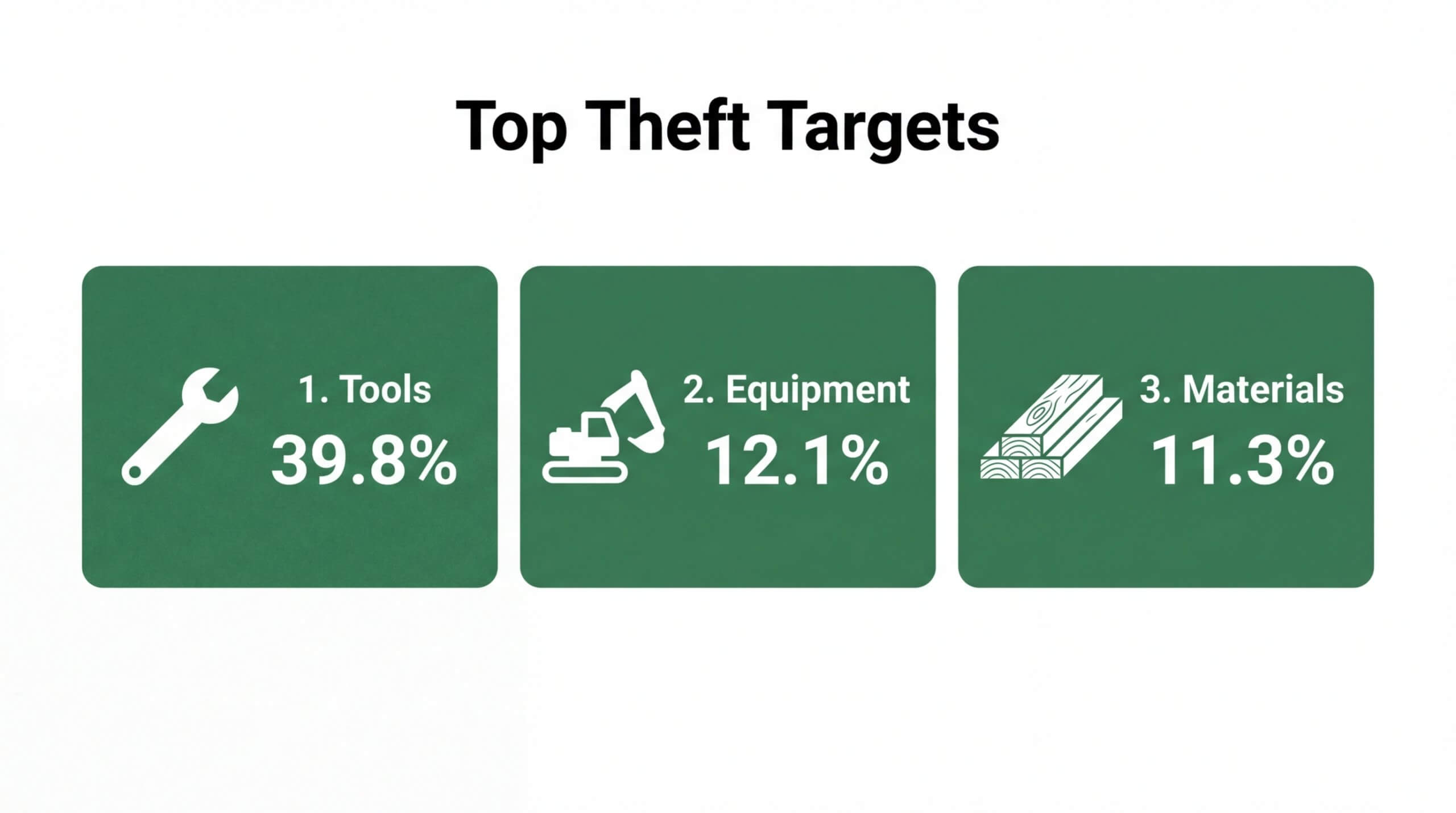
The materials and equipment most commonly stolen from construction sites are hand tools, power tools, heavy machinery, and raw building materials. According to the Associated Schools of Construction, tools were the most frequently stolen item, involved in 39.8% of all reported construction site theft incidents. Heavy construction equipment accounted for 12.1% of incidents, while building materials represented 11.3%.
What makes equipment theft particularly damaging is the low recovery rate. The National Insurance Crime Bureau reports that only about 20–21% of stolen heavy construction equipment is ever recovered by law enforcement. Without serial number registries or GPS tracking, stolen excavators, skid steers, and generators often disappear permanently. This combination of high value and low traceability makes construction sites especially attractive to organized theft operations.
When Are Construction Sites Most Vulnerable to Criminal Activity?
Construction sites are most vulnerable to criminal activity during overnight hours, weekends, and holidays, when workers leave and active supervision ends. Open perimeters, incomplete fencing, and unlit areas create easy access points for intruders once the crew departs. Many sites also lack reliable power connections during early project phases, raising a common concern: can security cameras work on construction sites without power? Solar-powered and cellular-connected camera systems now address this gap, enabling continuous surveillance even on sites without electrical infrastructure.
Seasonal factors compound the risk. Shorter daylight hours in winter extend the unsupervised window, while long holiday breaks leave sites unattended for days. For most project managers, these predictable vulnerability windows represent the highest-priority periods for security investment.
How Much Does Construction Site Crime Cost the Industry Each Year?
Construction site crime costs the U.S. construction industry approximately one billion dollars in direct annual losses each year, according to the Associated Schools of Construction. This figure covers stolen equipment, materials, and tools, but the true financial impact extends further when accounting for project delays, insurance deductibles, and replacement lead times.
Timing patterns reveal where losses concentrate. Approximately 67% of construction site thefts occur during specific high-risk windows, primarily overnight and on weekends. These predictable patterns suggest that targeted security measures during off-hours could prevent a significant share of annual losses.
Understanding the scale and timing of construction site crime clarifies why passive security measures alone fall short, and what makes active monitoring solutions worth evaluating.
What Is a Live Video Guard and How Does It Work?
A live video guard is a trained security operator who monitors construction site camera feeds in real time and intervenes actively when threats appear. The sections below explain the core technology, AI-powered detection and response, and two-way audio intervention.
What Technology Powers Live Video Monitoring Systems?
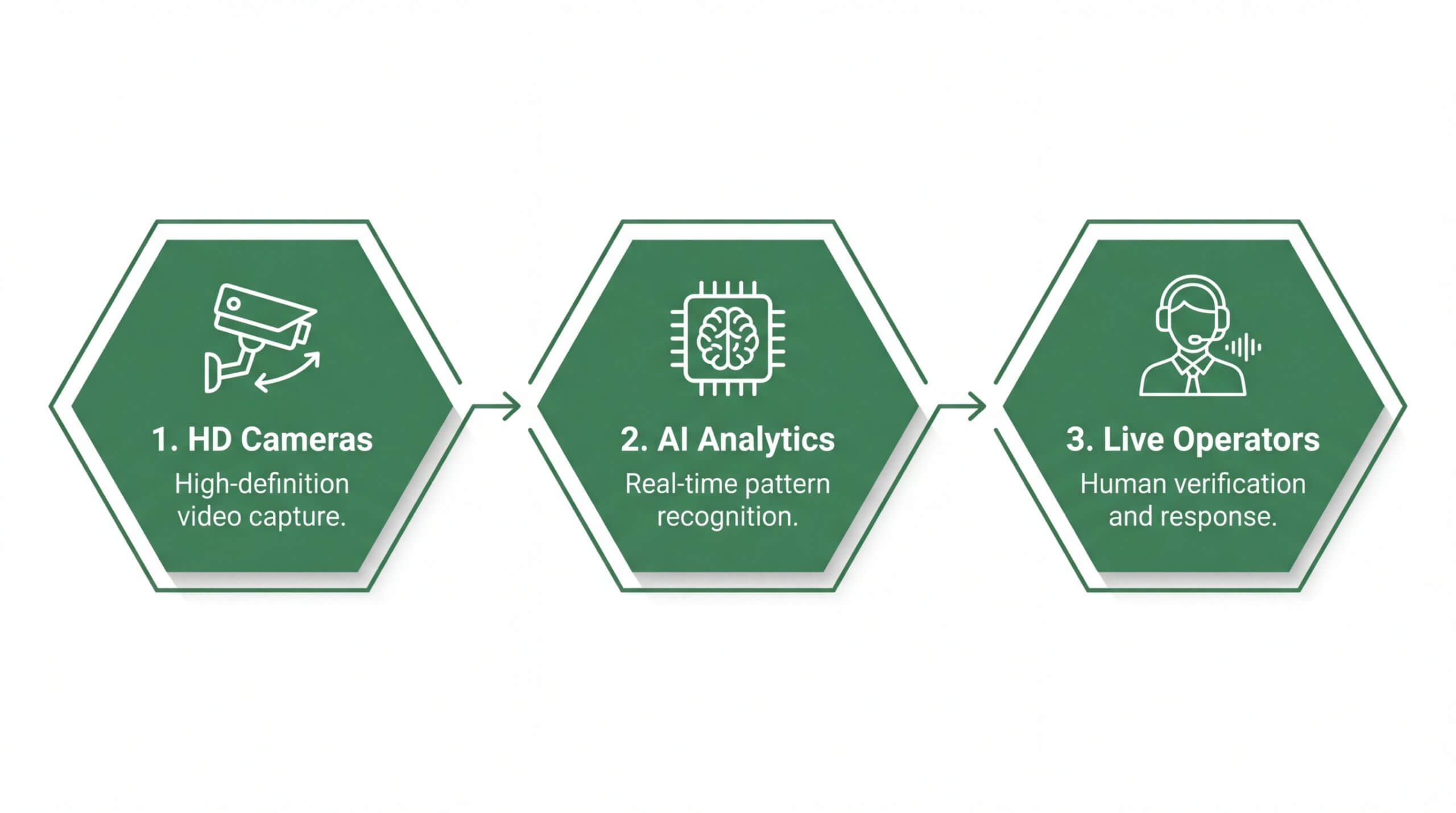
The technology that powers live video monitoring systems combines high-resolution IP cameras, AI analytics software, and centralized command centers staffed by trained operators. PoE (Power over Ethernet) camera hubs equipped with Nvidia GPUs process video feeds on-site, running object-detection algorithms that distinguish humans, vehicles, and animals from environmental motion like wind or shadows.
These components work together as a layered system:
- High-definition cameras (4K/8MP resolution) capture detailed footage across wide areas, even in low-light conditions.
- AI-powered analytics hubs filter raw video data and flag only genuine security events.
- US-based monitoring centers receive verified alerts, where live operators assess the situation and respond.
According to the Insurance Information Institute, verified security systems, including live-monitored video, can qualify businesses for insurance premium reductions ranging from 5% to 25%. This combination of intelligent hardware and human oversight makes live video monitoring far more effective than passive recording alone.
How Does AI-Powered Detection Trigger Real-Time Human Response?
AI-powered detection triggers real-time human response by analyzing camera feeds continuously and escalating only verified threats to live operators. When the system’s algorithms detect unauthorized movement, perimeter breaches, or loitering patterns, it generates a prioritized alert that appears instantly on the operator’s dashboard.
The operator then visually confirms the threat before taking action, which may include issuing voice warnings, activating sirens and strobes, or dispatching law enforcement. According to a Scematics AI case study, AI-powered threat detection systems can reduce false alarm rates from 85% down to 16%, representing an 81% reduction in alert fatigue for operators. This precision ensures that human attention is reserved for genuine incidents rather than wasted on false triggers caused by animals, debris, or weather.
What Role Does Two-Way Audio Intervention Play on Construction Sites?
Two-way audio intervention plays a critical role on construction sites by enabling live operators to speak directly to intruders through on-site speakers the moment a threat is confirmed. This immediate verbal confrontation disrupts criminal intent before physical damage or theft occurs.
When an operator spots an unauthorized person on camera, they issue a direct, personalized warning, often referencing the intruder’s specific location, clothing, or actions. That level of specificity signals active human surveillance and creates a powerful psychological deterrent. Industry data from Interface Systems shows that security systems utilizing voice-down commands have resolved over 99.86% of incidents without requiring police dispatch. For construction sites with expensive machinery and materials spread across open ground, two-way audio bridges the critical gap between detection and physical response.
How Do Live Video Guards Prevent Theft Before It Happens?
Live video guards prevent theft before it happens by combining constant real-time surveillance, immediate human intervention, and proactive pattern analysis. The subsections below cover how each layer works to deter opportunistic thieves, respond to suspicious activity, and disrupt organized theft rings.
How Does Real-Time Surveillance Deter Opportunistic Thieves?
Real-time surveillance deters opportunistic thieves by eliminating the perception that a construction site is unmonitored. Most opportunistic theft relies on the assumption that no one is watching, particularly during overnight and weekend hours. When visible cameras are paired with active monitoring, potential intruders recognize the risk of immediate detection.
According to research published in The Economic Journal, visible security surveillance systems are associated with a 25% reduction in overall crime rates on monitored properties. That deterrent effect intensifies when cameras are clearly marked with signage indicating live monitoring and two-way audio capability. Unlike passive recording systems that only document crimes after the fact, a live-monitored feed signals that someone will respond in real time. For most opportunistic criminals, that awareness alone is enough to redirect them toward an easier target.
How Do Live Operators Respond When Suspicious Activity Is Detected?
Live operators respond when suspicious activity is detected by following a rapid escalation protocol designed to stop threats before they become losses. The typical response sequence includes:
- Visual verification: The operator confirms whether the alert represents a genuine threat or a false trigger, such as an animal or debris.
- Voice-down command: Using two-way audio, the operator issues a direct verbal warning to the individual on site.
- Law enforcement dispatch: If the intruder does not leave, the operator contacts police with a verified crime-in-progress report.
This verified approach matters because traditional motion-based systems generate false alarm rates exceeding 98%, according to Ambient AI. Verified alerts cut through that noise, ensuring police treat the call as a priority. In practice, security systems utilizing voice-down commands have resolved over 99% of incidents without requiring police dispatch at all, making the operator’s intervention the most critical layer in the chain.
How Does Proactive Monitoring Stop Organized Equipment Theft Rings?
Proactive monitoring stops organized equipment theft rings by identifying reconnaissance behavior and coordinated patterns that passive systems miss entirely. Organized crews typically scout a site over multiple nights before executing a theft, testing response times and mapping camera blind spots.
Live video guards trained to recognize these patterns can flag repeated visits by the same individuals or vehicles, escalating the alert level before a theft attempt occurs. According to a 2016 report by the National Insurance Crime Bureau and the National Equipment Register, only about 20 to 21% of stolen heavy construction equipment is ever recovered. That dismal recovery rate makes prevention far more valuable than post-theft investigation. Proactive monitoring shifts the security posture from reactive documentation to active disruption, which is the single most effective defense against crews that treat construction site theft as a professional operation.
With theft prevention strategies in place, reducing vandalism requires a similarly proactive approach.
How Do Live Video Guards Reduce Vandalism on Active Job Sites?
Live video guards reduce vandalism on active job sites by combining immediate audio intervention with persistent visible monitoring. These two capabilities work together to stop acts in progress and prevent future incidents.
How Does Immediate Audio Warning Stop Vandals Mid-Act?
Immediate audio warning stops vandals mid-act by delivering a live, direct voice command through on-site speakers the moment destructive behavior is detected. Unlike a generic siren, a real human voice addressing the vandal’s specific actions creates an immediate psychological shock. The intruder realizes someone is watching in real time, which eliminates the anonymity that emboldens most vandalism.
According to Interface Systems, security systems utilizing voice-down commands have resolved over 99.86% of incidents without requiring police dispatch. This success rate reflects how powerfully targeted human intervention disrupts criminal intent. For active construction sites where crew schedules change daily, this live response fills the gap between shift changes when properties sit exposed.

How Does Visible Monitoring Infrastructure Discourage Repeat Offenses?
Visible monitoring infrastructure discourages repeat offenses by creating a persistent, recognizable deterrent across the job site perimeter. Clearly mounted cameras, signage, speaker systems, and strobe lights signal that the property is actively watched, not just passively recorded.
A study published in The Economic Journal found that visible security surveillance systems are associated with a 25% reduction in overall crime rates on monitored properties. Vandals who encounter live intervention once rarely return to a site displaying the same equipment. The combination of physical infrastructure and proven live response creates a compounding deterrent effect that passive cameras alone cannot achieve.
With vandalism deterrence strategies established, understanding which construction site types benefit most helps tailor these protections effectively.
What Types of Construction Sites Benefit Most from Live Video Guards?
The types of construction sites that benefit most from live video guards include large commercial developments, residential subdivisions, public infrastructure projects, and specialized sites housing expensive machinery. Each presents distinct security challenges addressed below.
Large-Scale Commercial Development Sites
Large-scale commercial development sites benefit significantly from live video guards because of their sprawling perimeters and extended project timelines. These projects, including office towers, retail centers, and mixed-use complexes, often span multiple acres with dozens of access points that are difficult to secure with physical guards alone.
Materials like structural steel, copper wiring, and HVAC systems sit exposed across wide areas for months. AI-powered cameras paired with live operators can monitor every zone simultaneously, triggering two-way audio intervention the moment unauthorized movement is detected. For general contractors managing multimillion-dollar budgets, even a single overnight theft event can cascade into costly schedule delays. Proactive video monitoring eliminates blind spots that traditional patrols inevitably leave behind.
Residential Housing and Subdivision Projects
Residential housing and subdivision projects are highly vulnerable because they feature multiple structures in various stages of completion spread across open lots. Framing lumber, appliances staged for installation, and copper plumbing create easy targets for opportunistic thieves.
Unlike a single commercial building, subdivisions may stretch across dozens of homes, making perimeter fencing impractical. Live video guards cover this dispersed footprint through strategically placed cameras with real-time human oversight. Voice-down commands can address trespassers across any lot without requiring a physical patrol to reach the scene. Builders working on tight per-unit margins cannot absorb repeated material losses, so continuous remote surveillance protects both inventory and project profitability.
Infrastructure and Public Works Sites
Infrastructure and public works sites, such as highway expansions, bridge repairs, and utility installations, benefit from live video guards because these projects operate along open corridors that cannot be fully enclosed. Heavy equipment like excavators and generators often remains on-site overnight in exposed locations.
According to the Associated General Contractors of America, 60% of highway construction firms report at least one vehicle crash into their work zones during the past year. Live video monitoring adds a layer of situational awareness that detects not only theft attempts but also unauthorized vehicles approaching active zones. Because public works projects carry taxpayer-funded budgets, preventing equipment loss and site damage directly protects public resources.
High-Value Specialized Sites with Expensive Machinery
High-value specialized sites with expensive machinery, such as data center construction, industrial plant buildouts, and energy facility installations, represent the highest per-asset risk in the construction industry. A single piece of specialized equipment on these sites can exceed six figures in value.
With recovery rates for stolen heavy construction equipment hovering around only 20 to 21% according to the National Insurance Crime Bureau, prevention is the only reliable strategy. Live video guards deliver real-time detection and immediate audio deterrence before a theft is completed. For project owners investing in precision equipment like turbines, transformers, or custom fabrication tools, the cost of remote monitoring is negligible compared to the replacement value at stake. These sites demand the most vigilant layer of protection available.
With the right site type identified, comparing live video guards to traditional security methods reveals where the greatest operational advantages emerge.
How Do Live Video Guards Compare to Traditional Security Methods?
Live video guards compare to traditional security methods by offering proactive, AI-enhanced intervention at a fraction of the cost of on-site personnel. The following sections break down how they stack up against on-site guards, passive cameras, and alarm-only setups.
How Do Live Video Guards Compare to On-Site Security Guards?
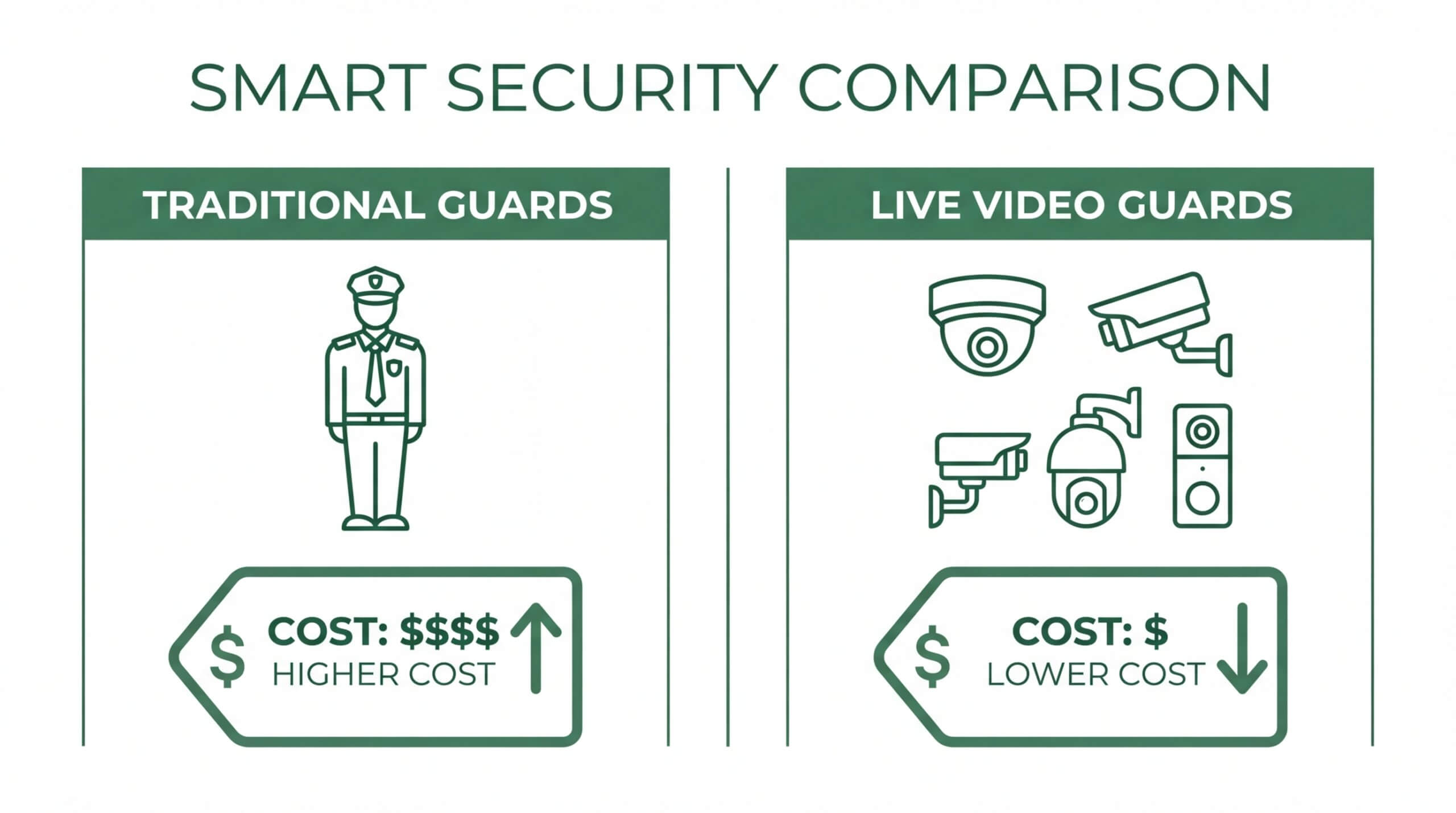
Live video guards compare to on-site security guards by delivering broader coverage, faster response coordination, and significantly lower costs. A single guard can only physically monitor one area at a time, while a remote video operator watches multiple camera feeds simultaneously across an entire site.
The cost difference is substantial. According to Digital Security Guard, on-site security guards for construction sites typically cost between $25 and $45 per hour in 2026, totaling over $18,000 monthly for 24/7 coverage. Live video monitoring eliminates this overhead while maintaining continuous surveillance.
Response speed also favors live video systems. AI-verified alerts enable law enforcement to prioritize dispatches as confirmed crimes in progress, increasing response speed by up to 75% compared to unverified calls. On-site guards, by contrast, must first observe an incident, then call for backup, often losing critical minutes.
For most construction sites, live video guards represent a stronger security investment because they combine the judgment of trained human operators with technology that never takes breaks, gets distracted, or leaves blind spots unpatrolled.
How Do Live Video Guards Compare to Passive Camera Systems?
Live video guards compare to passive camera systems by adding real-time human decision-making to recorded footage. Passive cameras capture video for later review, meaning theft or vandalism is only discovered after the damage is done.
Key differences include:
- Intervention capability: Live operators issue two-way audio warnings the moment suspicious activity appears, often stopping incidents before property loss occurs.
- Intelligent filtering: AI-powered detection screens out false triggers like animals or debris, so operators focus on genuine threats rather than reviewing hours of irrelevant footage.
- Law enforcement coordination: Operators dispatch police with verified visual confirmation, which passive systems cannot provide.
Passive cameras serve as useful evidence-gathering tools after an incident. However, they lack the proactive deterrence that makes live video monitoring effective at preventing crime rather than merely documenting it.
How Do Live Video Guards Compare to Alarm-Only Setups?
Live video guards compare to alarm-only setups by providing visual verification and human intervention that standalone alarms cannot deliver. Alarm-only systems detect breaches through motion sensors or contact switches, then trigger audible alerts or send automated notifications. Without visual confirmation, these alerts are frequently dismissed.
Traditional motion-based systems generate false alarm rates exceeding 98%, according to Ambient AI. This overwhelming volume of unverified alerts leads to slower police response and wasted resources. Live video guards solve this by visually confirming each alert before escalating, ensuring dispatchers treat every call as a verified emergency.
Alarm-only setups also lack any ability to communicate directly with intruders. Live operators use voice-down commands to confront trespassers in real time, resolving the vast majority of incidents before police involvement becomes necessary. For construction sites with high-value equipment exposed overnight, this layer of active human response makes the difference between a triggered siren that gets ignored and an intervention that stops a theft in progress.
What Should You Look for When Choosing a Live Video Guard Provider?
You should look for AI-enhanced detection, real-time human monitoring with audio intervention, and proven experience securing commercial and high-value sites. These three capabilities separate effective providers from basic surveillance vendors.
Does the Provider Use AI-Enhanced Detection or Camera-Only Feeds?
The provider should use AI-enhanced detection rather than camera-only feeds. AI-powered analytics distinguish genuine threats from irrelevant motion, such as animals, wind-blown debris, or shifting shadows. Camera-only systems rely on basic motion triggers that generate overwhelming numbers of false alerts. According to Ambient AI, traditional motion-based surveillance systems generate false alarm rates exceeding 98%, often leading to delayed emergency responses and straining resources. AI detection filters these alerts before they reach human operators, ensuring that only verified threats demand attention. For construction sites with constant environmental movement, this distinction determines whether your monitoring team catches real intrusions or drowns in noise.
Does the Provider Offer Real-Time Human Monitoring with Audio Response?
The provider should offer real-time human monitoring paired with two-way audio response. AI detection identifies threats, but trained operators make critical decisions: assessing intent, issuing verbal warnings, and dispatching law enforcement when necessary. Two-way audio allows operators to confront trespassers directly through on-site speakers before damage occurs or equipment leaves the premises.
This combination matters because voice-down intervention resolves the vast majority of incidents without requiring police dispatch. A provider staffing U.S.-based monitoring centers ensures faster communication, clearer judgment under pressure, and accountability throughout every interaction.
How Experienced Is the Provider with Commercial and High-Value Sites?
The provider should have documented experience securing commercial developments, infrastructure projects, and sites storing expensive machinery. Construction environments present unique challenges: shifting perimeters, temporary power sources, multiple access points, and equipment that moves daily. Providers without this background often deploy generic configurations that miss critical vulnerabilities.
- Ask for case studies or references from similar project types.
- Verify the provider holds proper state licensing and industry certifications.
- Confirm the team understands phased construction timelines and can adjust camera placement as sites evolve.
- Evaluate whether the provider offers scalable solutions that grow with project scope.
Selecting the right provider ensures your monitoring investment translates into measurable site protection from day one.
How Can You Integrate Live Video Monitoring into Your Construction Security Plan?
You can integrate live video monitoring into your construction security plan by assessing site vulnerabilities, selecting AI-powered cameras, and partnering with a provider that offers real-time human response. Remote live video monitoring services generally range from $50 to $100 per camera monthly, according to a 2025 Digital Security Guard pricing guide, significantly reducing total security expenditures compared to on-site guards.
Can Pioneer Security’s AI-Powered Live Video Monitoring Secure Your Construction Site?
Yes, Pioneer Security’s AI-powered live video monitoring can secure your construction site through real-time human surveillance and proactive intervention. Pioneer Security combines Nvidia GPU-powered AI detection with 4K/8MP cameras, two-way audio, and US-based live video guards who respond to threats before break-ins occur. Founded in 1978 and operating nationally for over 45 years, Pioneer Security stops crime before it starts. Visible surveillance systems are associated with a 25% reduction in overall crime rates on monitored properties, according to research cited by TrueLook. Pioneer Security offers free security evaluations to assess each site’s unique risks, camera placement needs, and coverage gaps. For construction sites with high-value equipment, this proactive approach replaces passive recording with verified, real-time protection.
What Are the Key Takeaways About How Live Video Guards Protect Construction Sites?
The key takeaways about how live video guards protect construction sites center on deterrence, speed, and cost efficiency. Live video guards combine AI-powered detection with real-time human judgment to stop theft and vandalism before losses occur. Construction sites face roughly one billion dollars in annual theft losses industry-wide, and most incidents happen overnight or on weekends when sites sit unattended. Proactive monitoring addresses this vulnerability directly.
The most important lessons from this guide include:
- AI detection paired with trained operators dramatically reduces false alarms while accelerating law enforcement response.
- Two-way audio intervention resolves the vast majority of incidents without requiring police dispatch.
- Live video monitoring costs a fraction of traditional on-site guard services while providing continuous, multi-point coverage.
- Visible camera infrastructure discourages repeat offenses and deters opportunistic criminals.
For construction firms seeking reliable, technology-driven protection, Pioneer Security delivers AI-powered live video monitoring backed by over 45 years of industry experience.