Banks use live video monitoring to eliminate loitering by combining AI-powered cameras with trained, US-based video guards who detect suspicious behavior and intervene through two-way audio in real time. This proactive system stops loitering before it escalates into theft, vandalism, or assault.
This guide covers loitering as a bank security threat, how live video monitoring technology works, high-risk zones on bank properties, comparisons to traditional security methods, proactive intervention techniques, and measurable results banks can expect.
Loitering at banks is far more than a nuisance. It serves as a reliable precursor to criminal activity, giving offenders time to surveil operations and select targets. Unaddressed loitering also exposes banks to premises liability claims, especially as incidents involving aggressive behavior and property damage at ATM vestibules continue to rise.
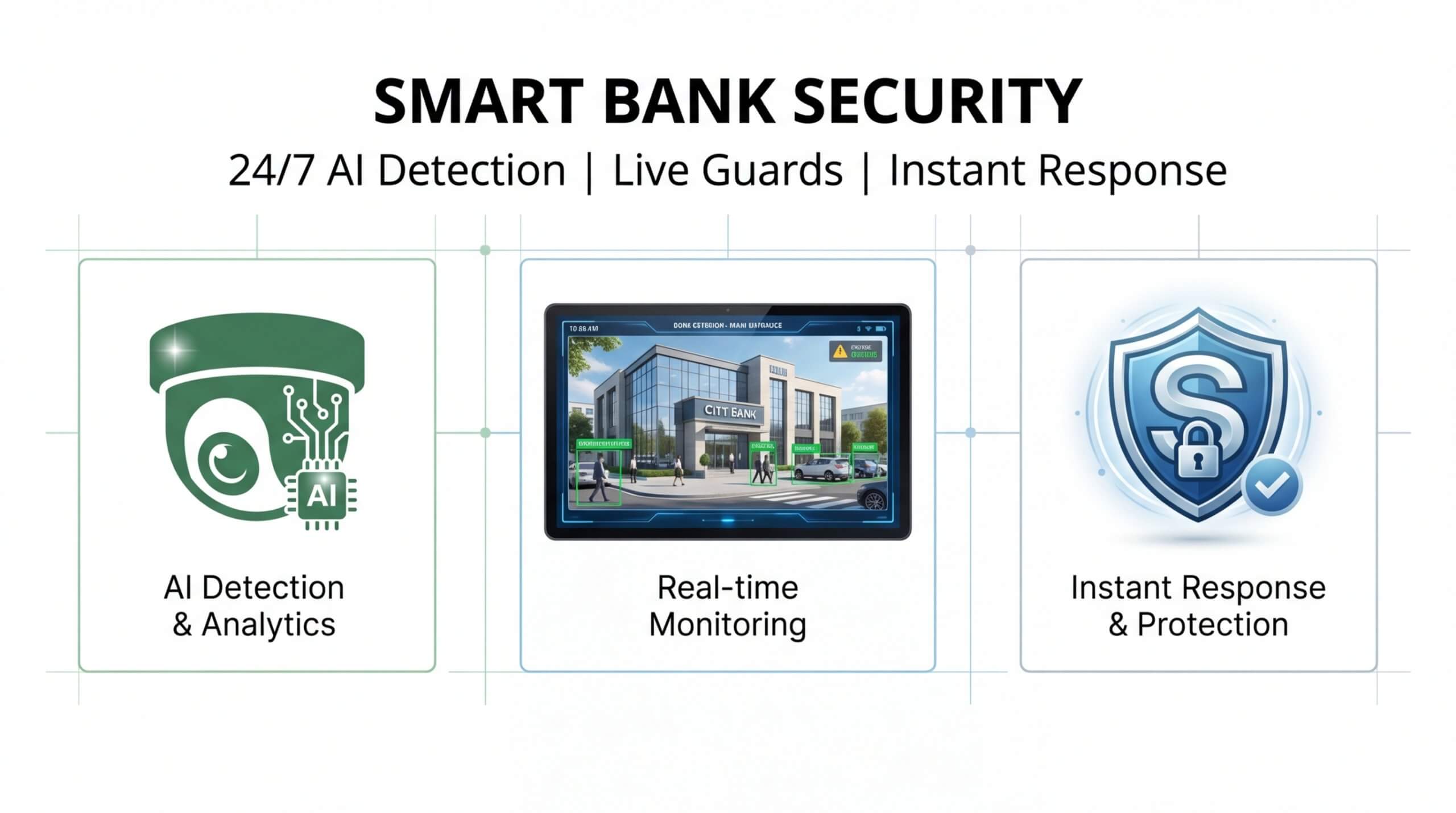
Live video monitoring operates through three layers: AI analytics that flag behavioral anomalies like prolonged presence in restricted zones, human guards who verify threats on live feeds, and a structured escalation protocol that moves from verbal warnings to law enforcement coordination within seconds.
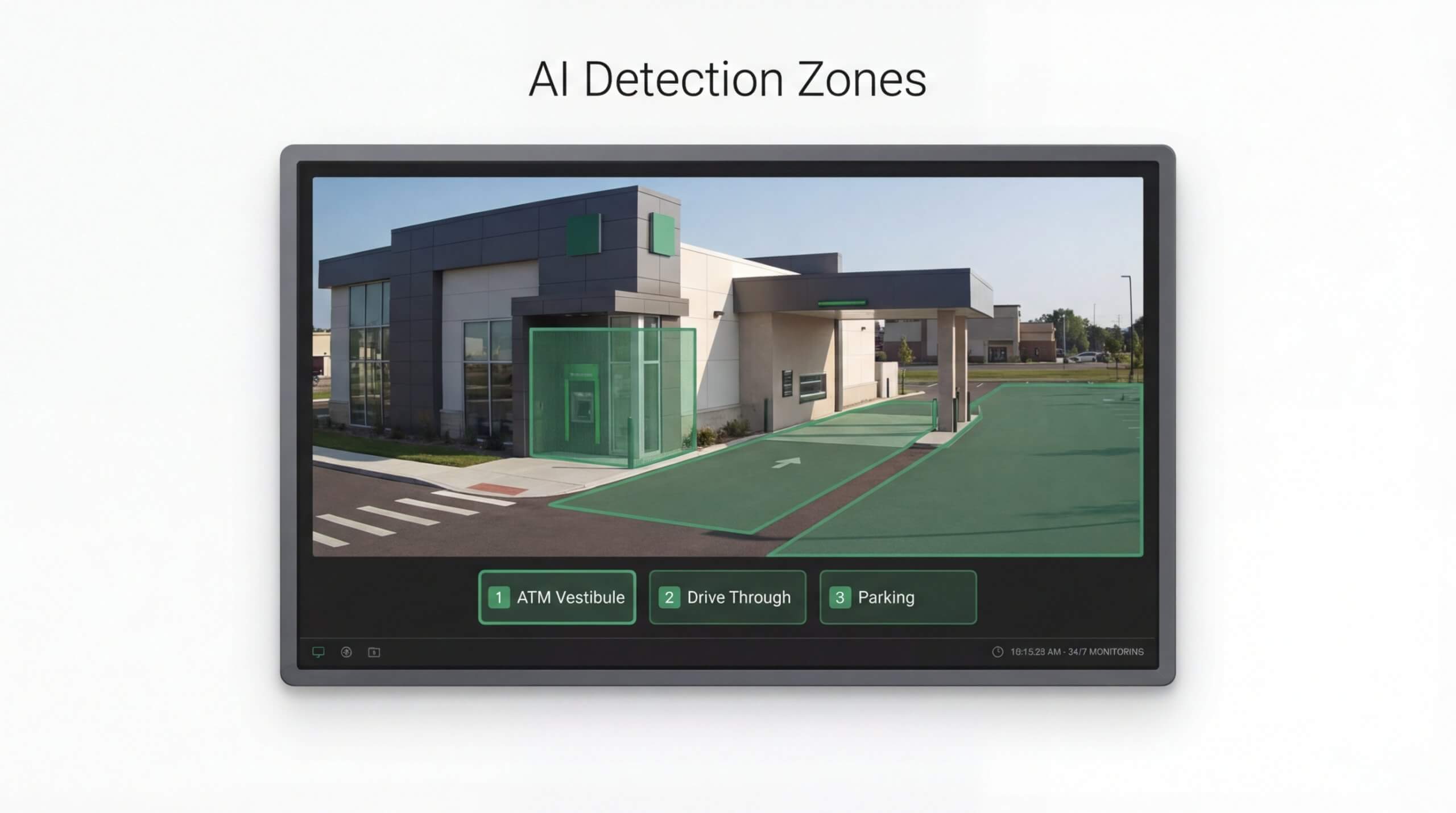
ATM vestibules, after-hours drive-through lanes, parking lots, and lobby entrances each present distinct vulnerabilities. Effective monitoring tailors detection thresholds and response strategies to each zone’s specific risk profile.
Compared to on-site guards, passive CCTV, and alarm-only systems, live monitoring closes the gap between detection and intervention. Two-way audio warnings resolve most incidents instantly, while verified visual evidence accelerates police dispatch when escalation is necessary.
Banks deploying live monitoring typically see loitering incidents drop within the first 30 to 90 days, with potential cost savings of up to 90% compared to traditional guard services and measurable reductions in overall branch crime rates.
Why Is Loitering a Serious Security Concern for Banks?
Loitering is a serious security concern for banks because it creates conditions for criminal escalation, increases institutional liability, and drives customers away. The following sections examine how loitering progresses into crime, the legal exposure banks face, and the impact on customer confidence.
How Does Loitering Escalate Into Criminal Activity at Banks?
Loitering escalates into criminal activity at banks by giving potential offenders time to surveil operations, identify vulnerabilities, and select targets. Individuals who linger near ATMs, entrances, or parking lots often use that period to assess security gaps before committing robbery, fraud, or assault. What begins as someone standing idle near a drive-through ATM can quickly shift to intimidation or theft once a suitable victim arrives. According to research from the Center for Problem-Oriented Policing at Arizona State University, some ATM robbers specifically loiter around machines waiting for a suitable victim, and bank survey data confirm that robbers often loiter near drive-through ATMs in parking lots adjacent to roads. This pattern makes unaddressed loitering a reliable precursor to violent crime at financial institutions.
What Liability Risks Do Banks Face From Unaddressed Loitering?
Banks face significant liability risks from unaddressed loitering, including premises liability claims, regulatory scrutiny, and workers’ compensation exposure. When a bank fails to address known loitering, it can be held responsible for foreseeable harm to customers and employees. According to a 2021 ASIS International report, security professionals have observed increasing aggressiveness among individuals loitering in ATM vestibules, including physical assaults on staff attempting to remove them and property damage such as fires and pulled-down ceilings. These incidents create direct legal exposure. Every documented assault or property loss tied to a known loitering problem strengthens a negligence claim against the institution, making proactive intervention far less costly than litigation.
How Does Loitering Affect Customer Confidence and Branch Traffic?
Loitering affects customer confidence and branch traffic by creating an environment that feels unsafe, which discourages in-person banking. Customers who encounter individuals lingering near ATMs, entrances, or parking areas often choose to avoid the branch entirely, shifting transactions online or switching institutions. Over time, this erosion compounds. Fewer visits mean reduced opportunities for cross-selling financial products, lower engagement with branch staff, and declining revenue per location. For banks investing in physical branch networks, tolerating loitering undermines the very purpose of maintaining a brick-and-mortar presence. Addressing loitering proactively protects both the customer experience and the branch’s financial viability, which is where live video monitoring becomes essential.
What Is Live Video Monitoring and How Does It Work at Banks?
Live video monitoring is a security approach that combines AI-powered cameras with off-site human guards who detect and respond to threats in real time. At banks, this system works through three core layers: intelligent analytics, trained video guards, and a structured intervention protocol.
What Role Do AI-Powered Analytics Play in Detecting Loiterers?
AI-powered analytics play the role of the system’s first line of detection, automatically identifying suspicious behavior before a human guard ever reviews the footage. Deep learning in video analytics uses layered filters that enhance object detection and rule-violation recognition, allowing a person to be detected loitering in a restricted zone, according to AllGoVision Technologies. These algorithms continuously analyze camera feeds for behavioral patterns, such as someone lingering near an ATM vestibule or pacing along a building perimeter. When AI flags an anomaly, it instantly alerts the monitoring center, filtering out irrelevant motion so guards focus only on genuine threats. This automated triage is what separates proactive monitoring from passive CCTV, which simply records without analysis.
How Do US-Based Video Guards Respond to Loitering in Real Time?
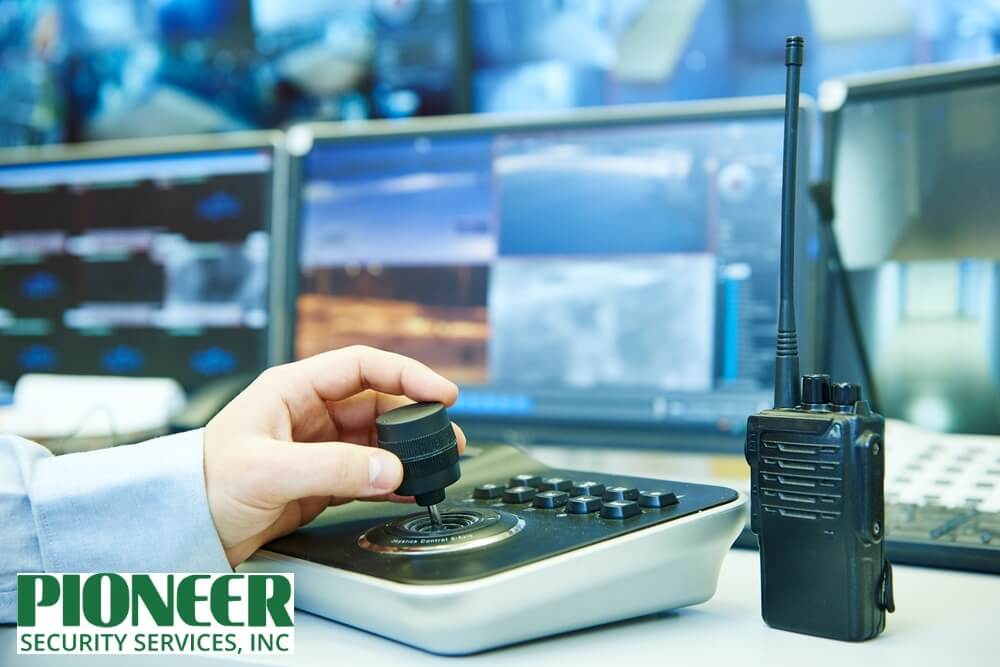
US-based video guards respond to loitering by receiving AI-generated alerts, visually confirming the situation on live camera feeds, and taking immediate verbal action through two-way audio speakers. Once a guard verifies that someone is loitering, they can issue a direct voice warning through on-site speakers, informing the individual they are being watched and must leave the premises. This real-time human judgment is critical; the guard assesses context, such as whether the person appears disoriented or potentially dangerous, before choosing the appropriate response. If verbal warnings fail, the guard escalates by contacting local law enforcement with verified visual evidence, which typically accelerates police dispatch compared to unverified alarm calls.
What Happens Between Detection and Intervention During an Incident?
Between detection and intervention, a structured escalation sequence unfolds within seconds. The process follows a consistent chain:
- AI analytics flag unusual activity, such as prolonged presence in a restricted zone, and generate an alert.
- A US-based video guard receives the alert and pulls up the live camera feed to visually verify the threat.
- The guard issues a first verbal warning through two-way audio, identifying that the individual is on camera.
- If the individual does not comply, the guard activates secondary deterrents such as sirens or strobe lights.
- The guard contacts law enforcement with real-time video evidence if the situation escalates further.
This layered response ensures each incident receives a proportional reaction, reducing false alarms while keeping genuine threats contained. Understanding this detection-to-intervention pipeline clarifies why live monitoring outperforms traditional security methods at banks.
Where Are Loitering Problems Most Common on Bank Properties?
Loitering problems are most common at ATM vestibules, drive-through lanes, parking lots, building perimeters, and lobby entrances. Each zone presents distinct vulnerabilities that require tailored monitoring strategies.
How Is Loitering Managed at ATM Vestibules and Kiosks?
Loitering at ATM vestibules and kiosks is managed through a combination of AI-powered detection, two-way audio intervention, and environmental design. ATM vestibules are among the highest-risk zones on any bank property because they offer shelter, limited visibility, and direct proximity to customers handling cash.
According to ASIS International, security professionals have observed an increase in aggressiveness among individuals loitering in ATM vestibules, including unpredictable behavior leading to physical assaults on staff and property damage such as fires and pulled-down ceilings. Live video monitoring addresses this by detecting extended occupancy and triggering immediate audio warnings before confrontations develop. For most banks, vestibule monitoring after hours is the single highest-impact investment in loitering prevention.
How Is Loitering Managed at Drive-Through Lanes After Hours?
Loitering at drive-through lanes after hours is managed by combining motion-triggered analytics with real-time guard response. Drive-through areas become particularly vulnerable once branches close, as low foot traffic and secluded positioning attract individuals who use the lanes for shelter or surveillance of potential victims.
Research from the Center for Problem-Oriented Policing at Arizona State University found that some ATM robbers loiter around drive-through ATMs in parking lots adjacent to roads, waiting for suitable victims. Live video guards counter this pattern by identifying unusual presence in these lanes and issuing audio deterrents before criminal intent can materialize. Consistent after-hours monitoring transforms drive-through lanes from blind spots into actively defended zones.
How Is Loitering Managed at Parking Lots and Building Perimeters?
Loitering at parking lots and building perimeters is managed through wide-area AI surveillance paired with proactive intervention protocols. These open zones present the largest physical footprint for banks to secure, and their accessibility from public sidewalks and adjacent roads makes them natural gathering points.
Increased loitering in these areas can cause a rise in theft, vandalism, and altercations, which potentially drives a decline in customer foot traffic and branch revenue. Video guards monitoring perimeter cameras can detect individuals lingering near entrances, loading areas, or secluded corners and deliver targeted audio warnings. Perimeter zones are often underestimated, yet they represent the first line of defense for the entire property.
How Is Loitering Managed at Bank Lobby Entrances and Foyers?
Loitering at bank lobby entrances and foyers is managed through interior-facing cameras with behavioral analytics that flag prolonged stationary presence near entry points. These areas are critical because they serve as the transition between public space and the secure banking environment, making them natural bottlenecks where loitering directly impacts customer experience.
Key management strategies for lobby entrances include:
- AI analytics detecting individuals who remain stationary beyond a set time threshold near doors or seating areas.
- Live video guards issuing verbal prompts through two-way speakers before staff intervention becomes necessary.
- Coordinated escalation with local law enforcement when repeated warnings fail.
Lobby monitoring is especially valuable during peak hours, when loitering most visibly erodes customer confidence. With high-risk zones identified, banks can evaluate why live monitoring outperforms traditional security methods.
Why Is Live Video Monitoring More Effective Than Traditional Bank Security?
Live video monitoring is more effective than traditional bank security because it combines real-time detection with immediate human intervention, stopping threats before they escalate. The following sections compare live monitoring against on-site guards, passive CCTV, and alarm-only systems.
How Does Live Monitoring Compare to On-Site Security Guards?
Live monitoring compares to on-site security guards by offering continuous, multi-site coverage without the physical limitations of a single stationed officer. A guard can watch one entrance or lobby at a time, leaving ATM vestibules, parking lots, and drive-through lanes unprotected during the same shift. Remote video guards monitor every camera feed simultaneously across an entire property.
Cost differences are also significant. According to Interface Systems, trained virtual security guards can provide remote monitoring with two-way audio intervention at a potential cost savings of up to 90% compared to traditional on-site guard services. That savings allows banks to reallocate budgets toward broader coverage rather than staffing a single post. For most branches, the combination of wider surveillance reach and lower operating cost makes live monitoring a stronger long-term investment than rotating physical guards.
How Does Live Monitoring Compare to Passive CCTV Cameras?
Live monitoring compares to passive CCTV cameras by adding real-time human decision-making to what would otherwise be a recording-only system. Passive CCTV captures footage for review after an incident has already occurred. No one watches the feed as it happens, so loiterers, trespassers, and suspicious behavior go unchallenged in the moment.
Live monitoring pairs those same camera feeds with trained operators who assess threats as they develop. When a loiterer lingers near an ATM vestibule, a video guard can issue a voice warning through two-way audio within seconds. Passive cameras simply cannot intervene. They document crimes rather than prevent them, which makes them a reactive tool in a situation that demands proactive response.
How Does Live Monitoring Compare to Alarm-Only Systems?
Live monitoring compares to alarm-only systems by eliminating the verification gap that delays police response. Alarm-only setups trigger a signal when a sensor is tripped, but dispatchers often lack context about whether the alert is genuine. This leads to slower prioritization and frequent false alarms that erode law enforcement trust over time.
According to Netwatch North America, live audio warnings delivered by intervention specialists during proactive video monitoring deter 98% of intruders before a crime has a chance to occur. That statistic highlights a fundamental difference: alarms react after a boundary is breached, while live monitoring intervenes during the approach. Banks that rely solely on alarms miss the critical window where verbal deterrence resolves the situation without requiring a police dispatch at all.
With these advantages over traditional methods established, understanding the specific intervention techniques video guards use reveals how deterrence works in practice.
What Proactive Intervention Methods Do Video Guards Use?
Video guards use proactive intervention methods such as two-way audio warnings, law enforcement coordination, and real-time escalation protocols. Each method targets a different stage of a loitering incident.
How Do Two-Way Audio Warnings Deter Loiterers at Banks?
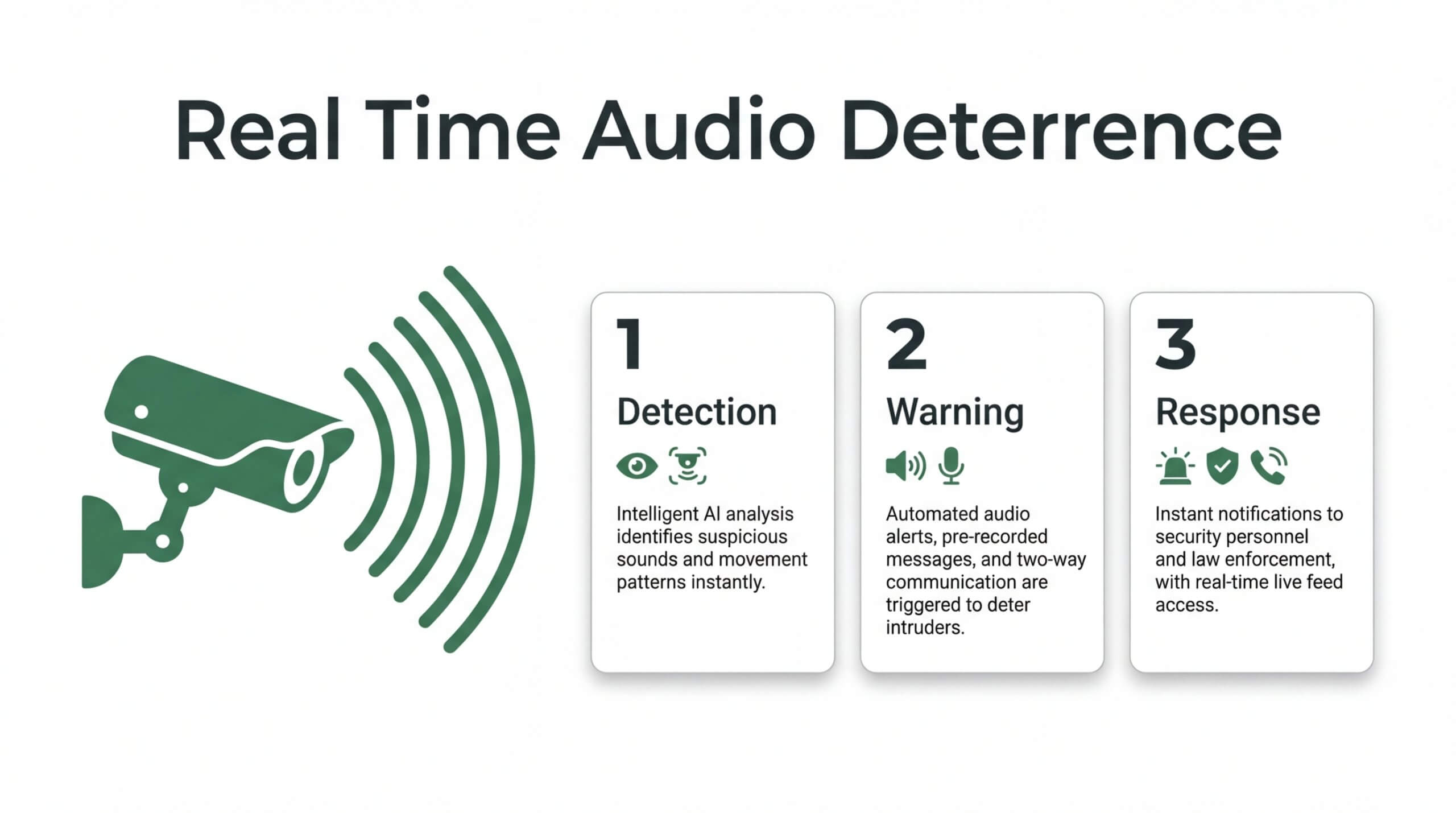
Two-way audio warnings deter loiterers at banks by delivering immediate, direct verbal commands through camera-mounted speakers the moment suspicious behavior is detected. A trained video guard observes the individual on a live feed, then issues a clear voice warning identifying the person and instructing them to leave the property.
This approach works because it eliminates anonymity. Loiterers who believe they are unobserved often escalate their behavior, but a live human voice signals active surveillance and removes that assumption. According to Netwatch North America, live audio warnings delivered by intervention specialists during proactive video monitoring deter 98% of intruders before a crime occurs. For most banking environments, two-way audio represents the single most effective first-response tool because it resolves incidents in seconds without requiring physical confrontation.
When Do Video Guards Coordinate With Local Law Enforcement?
Video guards coordinate with local law enforcement when verbal warnings fail to resolve a loitering situation or when observed behavior indicates an imminent criminal threat. Coordination typically begins after one or two audio warnings go unheeded, or immediately if the individual displays aggressive, erratic, or weapon-related behavior.
During coordination, the video guard contacts local police dispatch directly, providing real-time details: the subject’s physical description, exact location on the property, current actions, and the number of individuals involved. Because the guard is watching the incident live, officers receive verified, actionable intelligence rather than a delayed alarm signal. This verified-crime-in-progress approach typically results in faster police response and higher prioritization by dispatchers. Banks that pair live monitoring with law enforcement coordination close the gap between detection and physical response.
How Does Real-Time Escalation Protocol Prevent Repeat Offenders?
Real-time escalation protocol prevents repeat offenders by creating a documented, progressive response system that increases consequences with each incident. The protocol typically follows a structured sequence: initial audio warning, followed by a second warning with explicit trespass notification, then law enforcement dispatch with incident documentation.
Each encounter is logged with timestamped video, audio recordings, and written reports. This documentation builds a case history for individual repeat offenders, giving banks and law enforcement the evidence needed for trespass orders or criminal charges. When a previously documented individual returns, the video guard recognizes the pattern and can escalate directly to police dispatch, bypassing initial warnings. Over time, this consistent enforcement signals to repeat offenders that the property is actively protected, making it a less attractive target.
With these intervention layers in place, measurable results become the next consideration for banks evaluating live monitoring.
What Results Can Banks Expect After Deploying Live Monitoring?
Banks can expect measurable declines in loitering, significant cost reductions, and lower overall branch crime rates after deploying live monitoring. The following subsections break down incident timelines, cost savings, and crime impact.
How Quickly Do Loitering Incidents Decline After Installation?
Loitering incidents decline rapidly after installation, with most banks reporting noticeable reductions within the first few weeks. AI-powered cameras begin detecting loiterers immediately, and live audio warnings create an active deterrence presence from day one. Once word spreads that a location is actively monitored, repeat offenders tend to avoid the property entirely.
The steepest drop typically occurs in the first 30 to 90 days as the system establishes a consistent intervention pattern. ATM vestibules, parking lots, and after-hours drive-through lanes often see the fastest improvements because these areas benefit most from around-the-clock coverage that traditional staffing cannot sustain.
What Cost Savings Do Banks See Compared to Manned Guard Services?
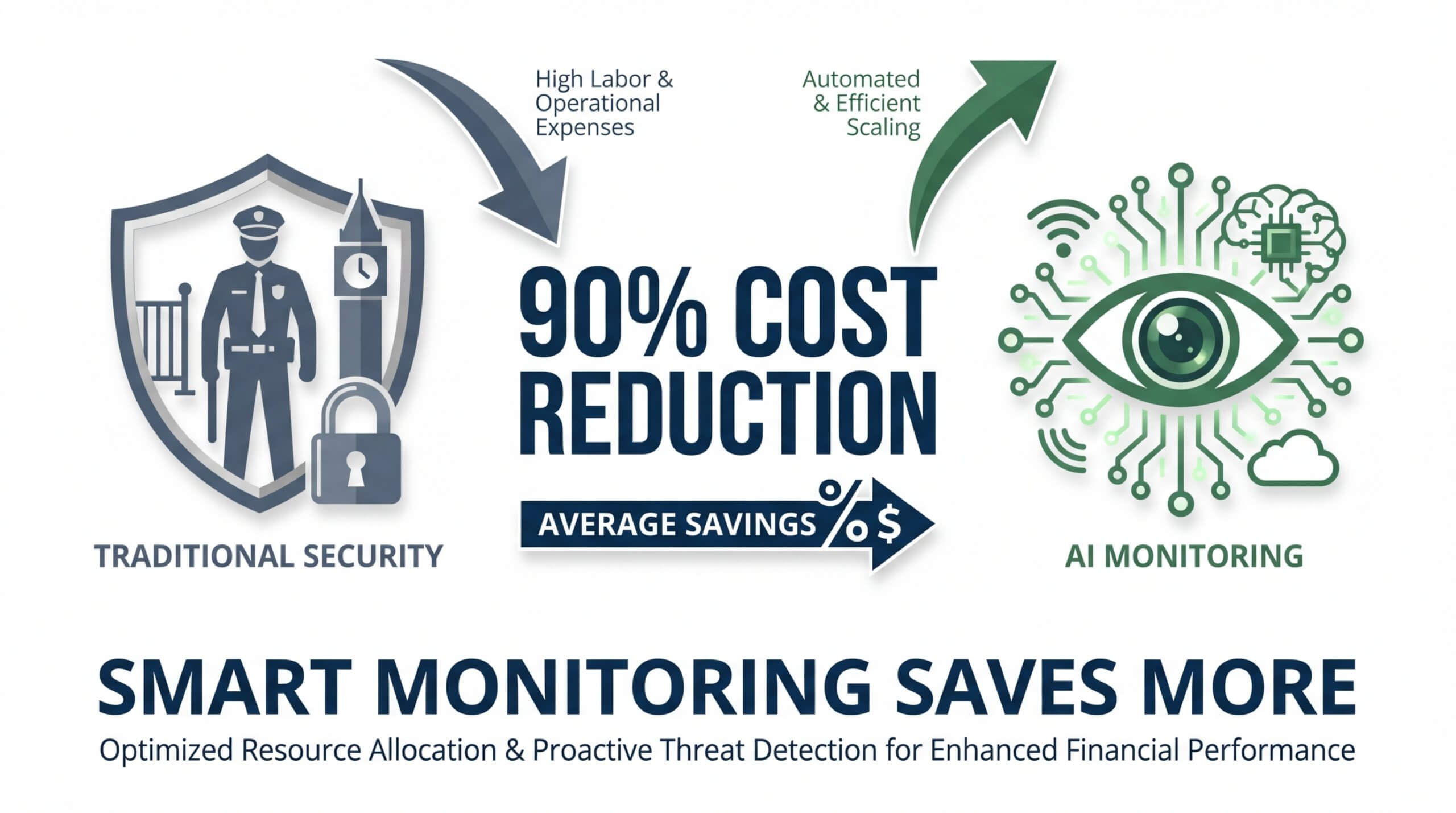
Banks see substantial cost savings compared to manned guard services when switching to remote live video monitoring. According to Interface Systems, trained virtual security guards can monitor locations remotely and deter unauthorized individuals via two-way audio, providing potential savings of up to 90% compared to traditional on-site guard services.
These savings stem from eliminating expenses tied to:
- Guard wages, overtime, and benefits across multiple shifts.
- Staffing gaps caused by absences, turnover, and training cycles.
- Liability insurance premiums associated with physical security personnel.
Banks still maintain compliance with frameworks like the Bank Secrecy Act, since live monitoring supports recordkeeping through continuous video documentation. For institutions operating dozens of branches, consolidating physical guard contracts into a centralized monitoring solution compounds savings considerably.
How Does Reduced Loitering Impact Overall Branch Crime Rates?
Reduced loitering impacts overall branch crime rates by removing the conditions that precede most property offenses. Loitering often serves as a precursor to theft, vandalism, and altercations; when it is eliminated early, the entire chain of escalation is disrupted.
Branches that actively deter loiterers typically experience fewer incidents of:
- ATM skimming and robbery attempts.
- Vandalism to exterior fixtures and signage.
- Aggressive confrontations between loiterers and staff or customers.
Lower crime rates also restore customer confidence, which can reverse declines in foot traffic and branch revenue caused by persistent security concerns. For banks weighing the ROI of live monitoring, the downstream effect on crime prevention often delivers value well beyond the direct cost savings.
How Should Banks Approach Loitering Prevention With AI-Powered Live Video Monitoring?
Banks should approach loitering prevention by combining AI-powered detection with real-time human intervention through live video monitoring. The sections below cover how Pioneer Security delivers this solution and the key takeaways from this article.
Can Pioneer Security’s Live Video Monitoring Help Banks Stop Loitering Before It Escalates?
Yes, Pioneer Security’s live video monitoring can help banks stop loitering before it escalates. Pioneer Security combines 24/7 AI-powered detection with U.S.-based guards who speak through cameras to instantly address threats in real time. This proactive approach eliminates the delay between detection and response that passive CCTV systems create.
According to Netwatch North America, live audio warnings delivered by intervention specialists during proactive video monitoring deter 98% of intruders before a crime has a chance to occur. Pioneer Security applies this same proactive model, using two-way audio and AI-driven analytics to identify loitering the moment it begins at ATM vestibules, parking lots, and branch entrances.
For banks seeking a solution that replaces reactive security with prevention-first protection, Pioneer Security’s live video monitoring addresses the full loitering lifecycle, from initial detection through real-time deterrence and law enforcement coordination when needed.
What Are the Key Takeaways About How Banks Use Live Video Monitoring to Eliminate Loitering?
The key takeaways about how banks use live video monitoring to eliminate loitering are:
- Loitering at banks is not a nuisance issue; it escalates into theft, vandalism, assaults, and reduced customer foot traffic when left unaddressed.
- AI-powered video analytics detect loitering behavior in real time using deep learning filters that identify people lingering in restricted zones.
- U.S.-based video guards respond immediately through two-way audio, deterring loiterers before incidents escalate to criminal activity.
- Live video monitoring delivers significant cost savings over traditional on-site guard services while providing continuous, consistent coverage.
- ATM vestibules, drive-through lanes, parking lots, and lobby entrances each require tailored monitoring strategies based on their unique vulnerability profiles.
Proactive intervention, not passive recording, is what separates effective bank security from systems that simply document incidents after the fact. Banks that invest in AI-powered live video monitoring position themselves to protect customers, staff, and revenue simultaneously.